- Erstwhile Federally Administered Tribal Areas (FATA) will get courts and police after merger with Khyber Pakhtunkhwa (KP) province
- Fear of possible chaos from the the new system looms large in these districts
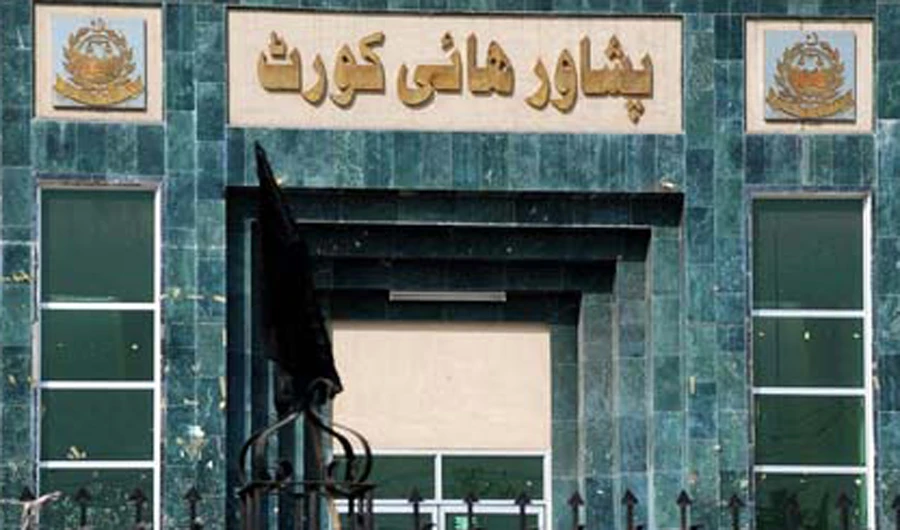
PESHAWAR: In a historic first, judicial system in Pakistan's erstwhile Federally Administered Tribal Areas (FATA) -- the terror-torn belt once home to notorious Tehrik-e-Taliban Pakistan (TTP) -- will start functioning from Monday, according to a notification issued by the Peshawar High Court (PHC) Thursday.
“The honorable Chief Justice Mr. Justice Waqar Ahmad Seth had directed to forthwith ensure that district judiciary is to function in those newly merged districts at the earliest,” excerpts from the notification, quoting PHC Registrar Khawaja Wajihuddin, read.
Initially, a total of 28 judicial officers and 18 prosecutors will be sent to these tribal districts, read the official handout, adding that the judges have already been advised to issue verdicts in Urdu instead of English.
The judicial officers would work under “makeshift arrangements” which should be for a maximum period of five to six months and hopefully there would be a swift transition to the newly-merged districts as well, Wajihuddin said.
However, tribal men and women say that since the judicial system is new for the local populace, it could cause confusion due to a lack of awareness and inadequate knowledge about courts and their functioning.
Noreen Saif, a student from the South Waziristan district, who is currently studying L.L.B. Sharia Law in Islamabad, told Arab News that the newly-extended judicial system could create mayhem and confusion for that very reason.
“We appreciate the extension of judiciary because people were living under a repressive Frontier Crimes Regulations (FCR) -- a British-era law [which would] detain an entire tribe over a crime committed by an individual. But the government should have arranged a seminar to create awareness among people prior to the extension of the system,” she said.
The PHC has posted Judicial Officers to Khyber, Mohmand, Bajaur, Orakzai, Kurram, North Waziristan, and South Waziristan tribal districts.
According to the 2017 census compiled by the Pakistan Bureau of Statistics, the population of erstwhile FATA stands at five million as compared to 3.2 million reflected in the 1998 census.
Located along the porous Pak-Afghan border, the tribal region experienced militants’ violence for several years after the US and NATO forces invaded Afghanistan in the wake of the September 11 attacks in the United States.
Consequently, Pakistani forces swung into action and launched an anti-Taliban operation to flush out foreign insurgents and their local collaborators from the area and destroy the militants' training camps.
After restoring stability in these tribal areas, the government decided to include the region and its population in the mainstream by announcing its merger with the neighboring KP province last May.
However, this required several administrative and political initiatives such as the extension of judiciary and police force to these areas.
Last week, Wajihuddin said that an orientation program was arranged for the judicial officers to educate them about tribal traditions and norms.
“A special cell has been created at the PHC to receive around 4,000 pending litigation cases in tribal districts,” said another judicial official, requesting anonymity as he was not authorized to speak to the media.
Rahim Wazir, a senior Islamabad-based lawyer from tribal areas, said that while the move is of paramount importance, it entails a host of problems for locals at least in the initial stage.
“For courts extension, it is a prerequisite to have in place components of a proper criminal justice system. The administration of tribal areas should have arranged seminars to educate tribal people about judicial matters to ensure a smooth flow of the system,” Wazir said.
As part of the first phase, a District and Sessions Judge, two Additional District and Sessions Judge and one Senior Civil Judge have been posted for each newly-merged district. In due course, civil judges who will double up as judicial magistrates will also be transferred.
Javed Iqbal Wazir, a tribal elder and politician, lamented the fact that the entire process was carried out in haste without proper contemplation and comprehensive reforms.
“For the last one decade, with the commencement of military operations against militants followed by mass exodus of local families, the tribal people have been facing immense problems due to legal void in the area,” he noted.
Last Wednesday, as part of government's mainstreaming measures, the home and tribal affairs department notified 25 police stations would be established throughout the newly-merged tribal districts, with each district getting police stations according to its respective population.
The newly-installed judicial officers have been directed to relinquish the charge of their present posts with immediate effect so as to ensure that the vacuum prevailing at the newly-merged districts ends at the earliest, said Wajihuddin.
There are currently 907 posts available for the support staff of these districts; however, as per rules, the recruitment of the support staff should be carried out from among the bona fide domiciled residents of these districts, says Wajihuddin.