- Iran’s president meets Pakistani, Saudi, Turkish officials after their talks with his security chief
- Diplomacy comes as Houthi attacks hit Saudi Arabia and fears grow of renewed US-Iran fighting
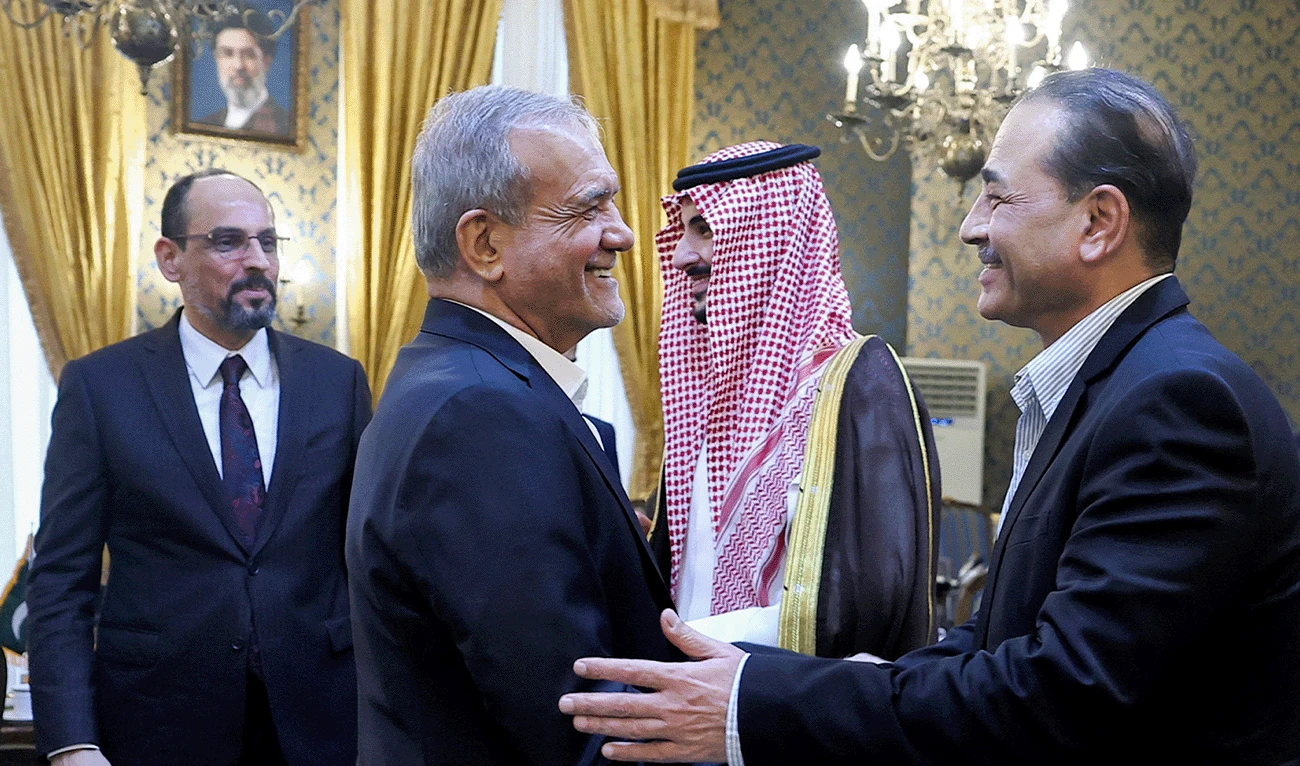
ISLAMABAD: Iranian President Masoud Pezeshkian met senior officials from Pakistan, Saudi Arabia and Türkiye in Tehran on Monday and voiced support for understandings that would strengthen regional security, as the countries sought to contain a conflict spreading across the Middle East.
The meeting followed discussions between the three delegations and Mohsen Rezaei, secretary of Iran’s Supreme National Security Council. Pakistan was represented by army chief Field Marshal Asim Munir, Saudi Arabia by Defense Minister Prince Khalid bin Salman and Türkiye by intelligence chief Ibrahim Kalin. Pakistani Interior Minister Mohsin Naqvi also accompanied Munir, according to Iran’s state news agency IRNA.
The diplomatic push comes amid fears of renewed large-scale fighting between Iran and the United States and Israel. The war began with US and Israeli strikes on Iran in February and has since drawn in other parts of the region. Iranian attacks have hit infrastructure in Gulf countries, including the UAE, while Yemen’s Iran-aligned Houthis have intensified strikes on Saudi airports and energy facilities. Attacks and restrictions on shipping have disrupted trade through the Strait of Hormuz and kept pressure on energy prices.
“The Islamic Republic of Iran supports any understanding aimed at strengthening the unity and cohesion of Islamic nations,” Pezeshkian said during the meeting, according to IRNA.
IRNA said Foreign Minister Abbas Araqchi and Rezaei were also present. Pezeshkian said Iran was ready to deepen regional cooperation, resolve differences and support understandings that strengthened security and development. The agency did not report an agreement or say whether the delegations had made progress on the disputes driving the conflict.
Earlier, IRNA reported that the Pakistani, Saudi and Turkish delegation heads had held “intensive and detailed discussions” with Rezaei. Pakistan’s military confirmed Munir’s visit but gave no account of the talks.
The meeting brought Iran together with the three signatories to the Makkah Joint Defense Agreement, signed in August by Pakistan, Saudi Arabia and Türkiye. Under the pact, an armed attack on one member is considered an attack on all three. It is their first high-level meeting with Iran in this four-country format since Houthi attacks on Saudi Arabia intensified.
A Houthi attack claimed against Riyadh’s main airport earlier this month killed 13 people and halted operations there. Saudi Arabia said two terminals resumed operations on Sunday despite renewed Houthi threats. The attacks have added urgency to efforts to prevent the war with Iran from widening further.
Ali Bagheri Kani, deputy secretary of Iran’s Supreme National Security Council, had said ahead of the talks that the meeting could help shape a regional security framework.
“This four-country meeting in Tehran can certainly be an effective and important step in shaping an indigenous regional security framework,” he told Iranian state television.
Pakistan has separately worked with Qatar to mediate between Washington and Tehran. An interim agreement brokered in June was intended to restore shipping through the Strait of Hormuz and open talks on a broader settlement, but subsequently unraveled.
Iran’s ambassador to Pakistan said on Sunday that Tehran remained open to talks with the United States.