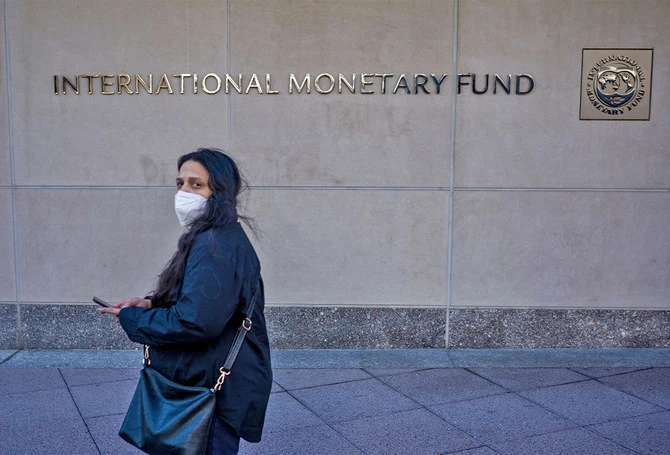
- The IMF emphasizes the urgency of concrete policy actions, including removal of subsidies announced by ex-PM Khan
- The Fund recognizes the need to address high inflation while ensuring adequate protection for the most vulnerable
KARACHI: Pakistan failed to make a breakthrough in its talks with the International Monetary Fund (IMF) for the revival of a $6 billion loan program as the global lending agency remained concerned about fuel subsidies introduced by the previous administration, said a statement issued on Wednesday night.
The IMF mission led by Nathan Porter held in-person and virtual discussions with Pakistani authorities in Doha, Qatar, between May 18 and 25 on policies to secure macroeconomic stability and sustainable growth in Pakistan.
“The mission has held highly constructive discussions with the Pakistani authorities aimed at reaching an agreement on policies and reforms that would lead to the conclusion of the pending seventh review of the authorities’ reform program, which is supported by an IMF Extended Fund Facility arrangement,” Porter said in statement circulated by the Fund.
“The team emphasized the urgency of concrete policy actions, including in the context of removing fuel and energy subsidies and the FY2023 budget, to achieve program objectives,” he added.
The IMF mission head said considerable progress was made during the talks, including recognition of the need to address high inflation and elevated fiscal and current account deficits while ensuring adequate protection for the most vulnerable.
In this context, he continued, the recent increase in policy rate was a welcome step.
“On the fiscal side, there have been deviations from the policies agreed in the last review, partly reflecting the fuel and power subsidies announced by the authorities in February,” he added.
Pakistani analysts said the government would need to comply with the program objectives for the resumption of the loan facility which was desperately needed by the country.
“They [the government] will have to comply with the program conditions,” Samiullah Tariq, director research at Pakistan Kuwait Investment Company, told Arab News. “We don’t have any other choice but to go into the IMF program.”
During the discussion with the IMF team, the Pakistani authorities sought program extension until June 2023 with increased loan size of up to $8 billion.
The fate of the loan facility, however, hangs in the balance as the government is reluctant to remove the fuel subsidies of nearly $1.7 billion since it fears public backlash.
“The IMF team looks forward to continuing its dialogue and close engagement with Pakistan’s government on policies to ensure macroeconomic stability for the benefit all of Pakistan’s citizens,” the statement said.
The revival of the program is expected to bring stability to the capital markets and strengthen the country’s rapidly falling currency amid its depleting foreign exchange reserves which currently stand at $10.2 billion and can only cover less than two months of imports.