Recent Houthi attacks on Saudi Arabia have sounded alarm bells around the world. The attacks on Najran and Abha airports were a serious violation of the Kingdom’s sovereignty and an attempt to damage its economic infrastructure. But Saturday’s deadly attack on King Khalid International Airport was more ominous still. It damaged a major international airport in the capital and showed the Houthi militia’s brazen audacity. The attack was condemned by the UN secretary-general, the United States, Britain, the European Union, the Arab League, Russia and many other states. Prime Minister Shehbaz Sharif called it a heinous crime.
Any damage to Gulf economies has international repercussions. The Gulf is much more than a major supplier of energy to the world, and the Strait of Hormuz has emerged as a strategic chokepoint for global supply chains. Beyond energy, the region is an important source of plastics, fertilizers and construction materials, and its prosperous economies keep its ports busy with imports and exports. The Gulf also employs millions of foreign workers, including five million Pakistanis. It is therefore Pakistan’s single largest source of remittances, accounting for 54.4 percent of the total.
Saudi Arabia is the largest country in the Arabian Peninsula, with coastlines on two seas. Its size and geography make all three branches of its armed forces important to its defense. The Royal Saudi Air Force plays a vital role because of its speed and reach, but the Royal Saudi Naval Forces have become just as important as the Houthis emerge as a potent threat at Bab Al-Mandab. The Pakistan Navy has long operated in these waters, both independently and with partners. The Gulf of Oman and the Arabian Sea lie on Pakistan’s doorstep, and recent events have made the Strait of Hormuz important to the world in general and Pakistan in particular.
Developments around Hormuz affect Pakistan directly, since the bulk of its energy imports pass through the strait. But the threat in the Gulf of Aden is of equal concern. After shipping through Hormuz was disrupted, the Kingdom began exporting most of its oil to Asian markets, including Pakistan, through the Red Sea. Houthi threats to ships passing through Bab Al-Mandab have hurt those exports. The Pakistan Navy has operated in the area for decades as part of the Bahrain-based Combined Maritime Forces, and could help keep the Red Sea open in coordination with the Royal Saudi Naval Forces.
Militias and proxies have done enormous harm to the world and to the international order.
Javed Hafeez
Under international law, international waterways must remain open to shipping. Any attempt to disrupt navigation is therefore a violation of international law, and when it is carried out by a proscribed militia, it is a double crime. Because Houthi activity around Bab Al-Mandab threatens global trade, the Kingdom’s position enjoys wide international support. Some countries, including the United States, have signaled willingness to support Saudi-backed Yemeni government forces in keeping the chokepoint open.
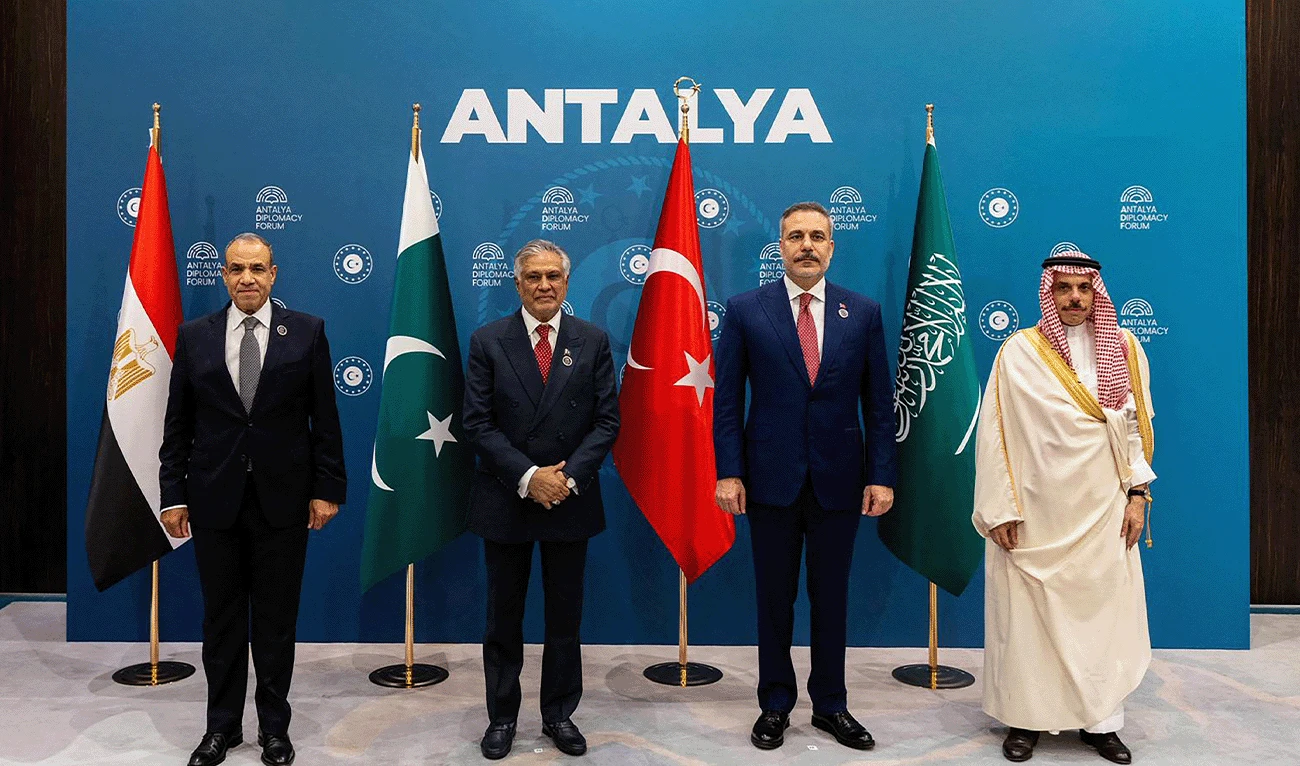
Under the Makkah Joint Defense Agreement, Pakistan and Turkiye can support Saudi Arabia’s defense against Houthi attacks. Because the Houthis are a militia rather than a regular army, the partners’ response should be robust but carefully considered. Together, they can make the
Kingdom’s air defenses impregnable. Turkiye has the technology and Pakistan the expertise to stop Houthi missiles and drones before they reach Saudi airspace, and the Pakistani and Turkish navies have the means to keep Bab Al-Mandab open in line with international law.
The region has seen unprecedented tensions in recent months. These disruptions have sharpened regional and international rivalries and dealt severe blows to the global economy. Energy prices are high worldwide, supply chains are disrupted, and transport costs and insurance premiums have soared because of events in the Gulf and the Red Sea. Those responsible have done no service to the global economy or to humanity at large. Militias and proxies have done enormous harm to the world and to the international order.
Pakistan has an abiding interest in regional peace and stability, and it is fully committed to the Kingdom’s defense under the bilateral and trilateral agreements it has signed. For every Pakistani, keeping the Haramain safe from any evil designs is an act of faith. Beyond these eternal spiritual ties, Pakistan has a deep economic stake in the Kingdom, its single largest source of remittances, accounting for about a quarter of all money sent home by Pakistanis abroad. Defending the Kingdom is a matter of both faith and national interest.
Javed Hafeez is a former Pakistani diplomat with much experience of the Middle East. He writes weekly columns in Pakistani and Gulf newspapers and appears regularly on satellite TV channels as a defense and political analyst. X: @JavedHafiz8