KARACHI: An estimated 16,000 skilled workers have lost their jobs and hundreds of factories have closed down as Pakistan’s embroidery industry is gripped by crisis. “Up to 400 embroidery factories have been closed in the last one year, of about 2,500 such units across the country,” says A. Abdullah Zaki, the former Chairman of the Pakistan Yarn Merchant Association.
Though no official data of such industrial units, which are scattered across the country, is available, Zaki claims that around 16,000 workers have lost their jobs because of the factory closures.
“The embroidery sector provides jobs to around 100,000 workers in Pakistan, while a big number of families directly or indirectly depend on the sector,” he added.
Yarn merchants’ sales have also significantly declined, while some are forced to sell imported, mostly Chinese, threads that are extensively used in embroidery work.
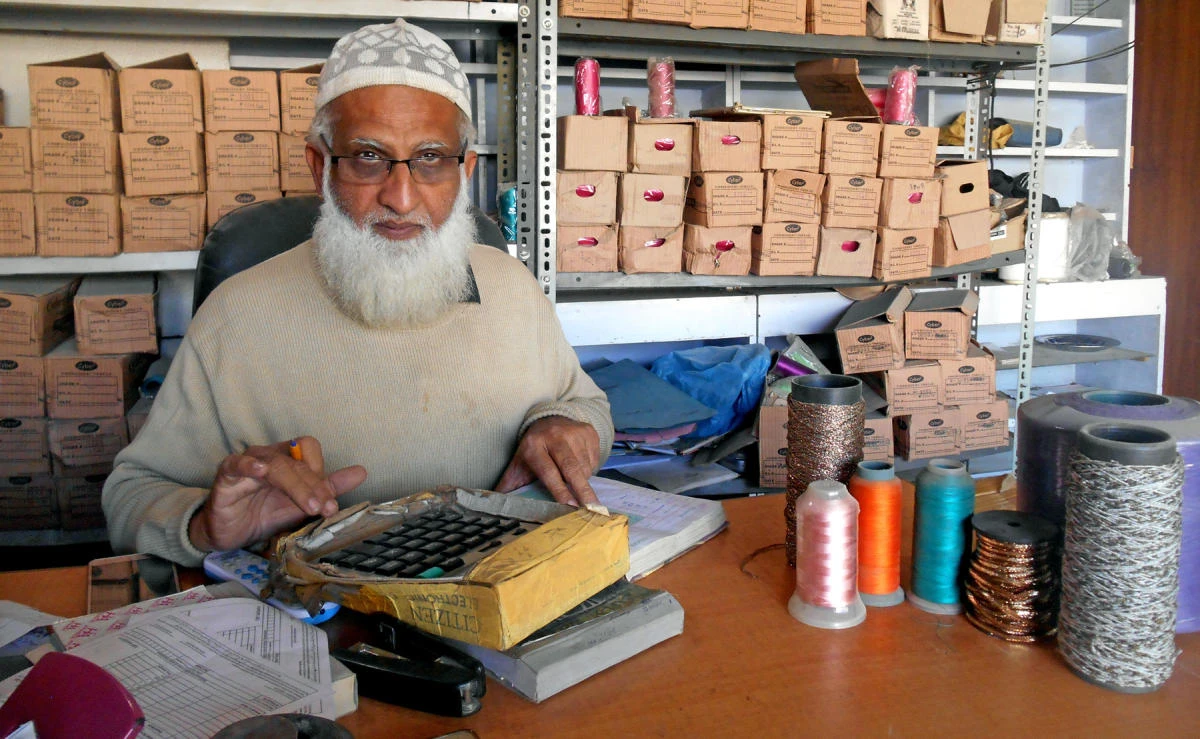
“A couple of years back my monthly sale was up to 30,000 pieces of locally manufactured threads, but now it has gone down to almost zero,” said merchant Mohammed Irfan, as he pointed toward a dust-covered stockpile of unsold thread spools.
Pakistan’s embroideries are popular in Europe, the US and GCC countries, mainly among Pakistani expats.
Irfan, who was running a small manufacturing unit, had to close down and sell the machines, just like many others in the industry. He invested the money he received in vehicles that are now being used for an app-based ride-sharing service.
There were around 14 shops in the Mehmoodabad area of the city, but now only five remain open, lamented Irfan.
The machines cost between two million and 50 million rupees ($18,000 to $45,000) but, disappointed with their future prospects, large numbers of embroiderers have sold up at throw-away prices and invested in property and stocks, according to Irfan.
However, demand for multi-colored yarn or thread, widely used in female garments and wedding dresses in particular, remains strong.
“Eighty percent is used in ladies wear, while only 20 percent is used for male wear,” Mukhtar Ahmed, 40, a professional tailor in the Tariq Road neighborhood, told Arab News.
Zaki told Arab News that there must be checks on illegal imports of yarn brought into the country via the Afghan Transit Trade (ATT) agreement.
“Many goods imported via the ATT facility including yarn fabrics are smuggled into Pakistan, which badly affects the local manufacturers and make them uncompetitive,” he said.
As Zaki called for the imposition of duty on imports under ATT to discourage smuggled goods, economist Asif Rehman said that the porous border between Pakistan and Afghanistan means it would be hard to stop the influx of smuggled goods.
“There is no organized market in Afghanistan and eventually goods, mainly fabrics, end up back in Pakistan,” said Rehman.
Apart from the inflow of cheaper smuggled goods, the high input cost has also affected the industry in Pakistan.
“The cost of electricity, water and gas are too high when compared with China,” Zaki complained.
“No doubt the cost of doing business is high in Pakistan”, Rehman agreed. “Pakistan must give a tax holiday of five to 10 years so that the local industry can gain roots.”
Businessmen suggest that the duty-free import of modern machinery and provisions of basic infrastructure are vital for the development of the industry.
And Zubair Tufail, President of the Federation of Pakistan Chambers of Commerce and Industry (FPCCI) says that Rs12 (10c) per unit of electricity for businesses is too high.
“We have demanded a reduction in rates and hopefully the government will reduce rates in early 2018 to Rs9 per unit for industries,” he said.
Though no official data of such industrial units, which are scattered across the country, is available, Zaki claims that around 16,000 workers have lost their jobs because of the factory closures.
“The embroidery sector provides jobs to around 100,000 workers in Pakistan, while a big number of families directly or indirectly depend on the sector,” he added.
Yarn merchants’ sales have also significantly declined, while some are forced to sell imported, mostly Chinese, threads that are extensively used in embroidery work.
“A couple of years back my monthly sale was up to 30,000 pieces of locally manufactured threads, but now it has gone down to almost zero,” said merchant Mohammed Irfan, as he pointed toward a dust-covered stockpile of unsold thread spools.
Pakistan’s embroideries are popular in Europe, the US and GCC countries, mainly among Pakistani expats.
Irfan, who was running a small manufacturing unit, had to close down and sell the machines, just like many others in the industry. He invested the money he received in vehicles that are now being used for an app-based ride-sharing service.
There were around 14 shops in the Mehmoodabad area of the city, but now only five remain open, lamented Irfan.
The machines cost between two million and 50 million rupees ($18,000 to $45,000) but, disappointed with their future prospects, large numbers of embroiderers have sold up at throw-away prices and invested in property and stocks, according to Irfan.
However, demand for multi-colored yarn or thread, widely used in female garments and wedding dresses in particular, remains strong.
“Eighty percent is used in ladies wear, while only 20 percent is used for male wear,” Mukhtar Ahmed, 40, a professional tailor in the Tariq Road neighborhood, told Arab News.
Zaki told Arab News that there must be checks on illegal imports of yarn brought into the country via the Afghan Transit Trade (ATT) agreement.
“Many goods imported via the ATT facility including yarn fabrics are smuggled into Pakistan, which badly affects the local manufacturers and make them uncompetitive,” he said.
As Zaki called for the imposition of duty on imports under ATT to discourage smuggled goods, economist Asif Rehman said that the porous border between Pakistan and Afghanistan means it would be hard to stop the influx of smuggled goods.
“There is no organized market in Afghanistan and eventually goods, mainly fabrics, end up back in Pakistan,” said Rehman.
Apart from the inflow of cheaper smuggled goods, the high input cost has also affected the industry in Pakistan.
“The cost of electricity, water and gas are too high when compared with China,” Zaki complained.
“No doubt the cost of doing business is high in Pakistan”, Rehman agreed. “Pakistan must give a tax holiday of five to 10 years so that the local industry can gain roots.”
Businessmen suggest that the duty-free import of modern machinery and provisions of basic infrastructure are vital for the development of the industry.
And Zubair Tufail, President of the Federation of Pakistan Chambers of Commerce and Industry (FPCCI) says that Rs12 (10c) per unit of electricity for businesses is too high.
“We have demanded a reduction in rates and hopefully the government will reduce rates in early 2018 to Rs9 per unit for industries,” he said.