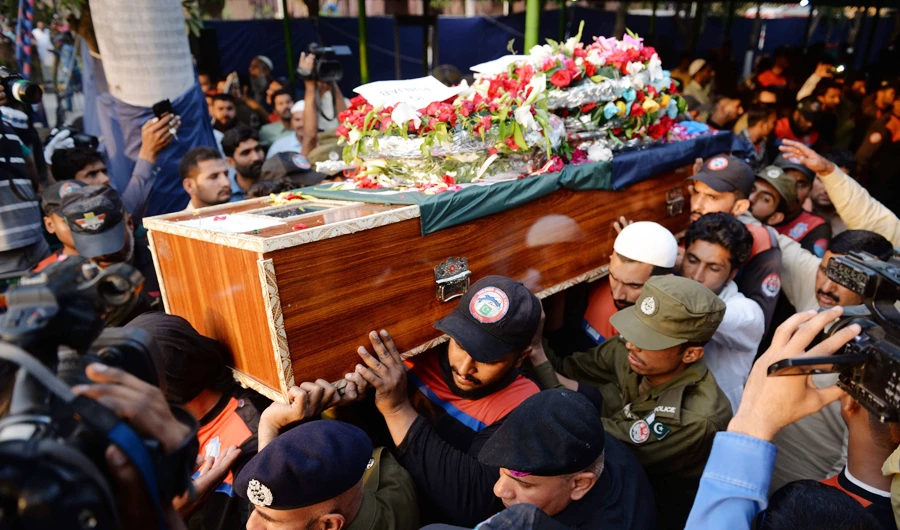
- Suicide bomber targeted police vehicle outside Lahore’s famed Data Darbar shrine on Wednesday
- The shrine was last attacked by suicide bombers in 2010, killing 42
ISLAMABAD: The death toll from an attack on Wednesday outside a famed Pakistani shrine in the eastern city of Lahore rose to 12, local media reported on Friday, as officials scrambled to investigate and make arrests in an assault that has shattered a period of improving security in the country.
On Wednesday, a suicide bomber had targeted policemen deployed outside Data Darbar, one of the largest shrines in South Asia and arguably the most popular one in Pakistan.
A major Pakistani newspaper, The News, quoted hospital officials as saying the death toll had increased to 12 after an injured teenager succumbed to his wounds on Friday morning. The nineteen-year-old boy was identified by local media only by his first name, Mudassar, and was a resident of Mori Gate, Lahore.
Around 25 others were still being treated for their injuries, The News said, quoting hospital officials.
Shahbaz Gill, spokesperson for the chief minister of Punjab province, of which Lahore is the capital, told Geo News channel that the suicide bomber was a 15-year-old boy who had targeted an ‘Elite Force’ police van stationed outside the 11th century shrine.
In February 2017, an explosion near the Punjab provincial assembly in Lahore had killed at least 13 people, five of them policemen.
Security in Pakistan has vastly improved in recent years but Islamist groups such as the Pakistani Taliban and Daesh still pose a threat and have carried out mass attacks.
Data Darbar was last attacked in July 2010 by three suicide bombers, killing at least 41 people and wounding more than 120. The deadliest attack against a shrine in Pakistan took place in February 2017, when 72 were killed in a suicide bombing at the Lal Shahbaz Qalandar shrine in Pakistan’s southern Sindh province. That attack was claimed by Daesh, also known as Daesh.
An ancient mystic branch of Islam, Sufism has been practiced in Pakistan for centuries. Hundreds of devotees visit the marble shrine of the 11th century Persian Sufi saint, Syed Ali Hajjwairi, commonly known as Data Gunj Bakhsh, in the heart of Lahore. The number of devotees goes up during religious occasions like Ramadan and on Thursdays.
Most of Pakistan’s myriad radical militant groups, including the Pakistani Taliban’s various factions and Daesh loyalists, consider Sufis and other religious minorities as heretics.