- Punjab Law Minister hints at limited use of force if situation deteriorates, as activists block many roads.
- Party demands legal actions against its leaders be dropped, but officials say their hands are tied by the court.
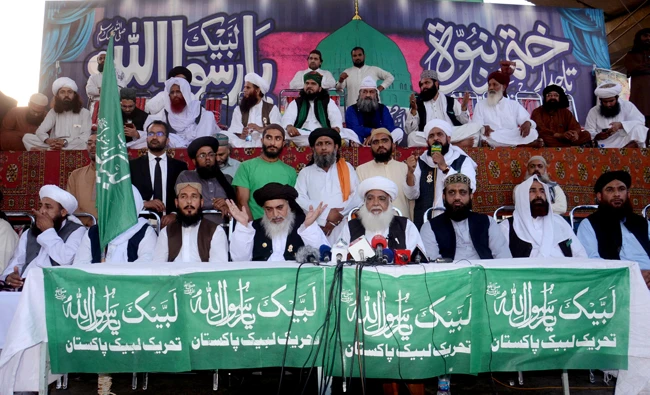
LAHORE: The Punjab provincial administration is mediating talks between the federal government and leaders of Tehreek-e-Labaik in an attempt to help both sides resolve their differences and reach a peaceful settlement.
Punjab’s Minister for Law and Parliamentary Affairs, Rana Sanaullah Khan, said provincial leaders would try to avoid using force against the religio-political party, which has blocked a number of roads in the city. However, he did not rule out the possibility of using coercive means “in a proportionate way” to deal with its activists if the situation deteriorated.
“The issue is between the federal government and Tehreek-e-Labaik and the Punjab provincial administration is not a party to their agreement,” he said. “All their demands — such as the withdrawal of cases against their members, implementation of an army-brokered agreement and publication of the Raja Zafarul Haq report — are addressed to the federal government. We are trying to provide them a place to sit together and reach a peaceful solution.”
The Punjab government invited Islamabad’s chief commissioner and deputy commissioner to Lahore to talk with leaders of Tehreek-e-Labaik, who want cases against prominent party members dropped. The federal authorities say they are powerless to act because the court is acting under its own initiative, and so they have no option but to wait for its decision.
Discussions were continuing on April 12 but two previous rounds of talks proved indecisive.
Earlier in the day, without waiting for the outcome of the peace talks, Tehreek-e-Labaik activists started blocking roads in Pakistan’s cultural capital, Lahore, causing problems for residents and bringing business activities to a halt.
Party members have been sitting in front of Data Darbar, one of the best-known Sufi shrines in the country, for 11 consecutive days to highlight their demands.
On April 12, the activists expanded the protests throughout the city, staging sit-ins at various entry and exit points in Lahore.
“We have blocked 66 main points in the country and will not leave them until our demands are met,” the party’s media coordinator, Sahibzada Usman Ali, told Arab News.
“The government is not sincere in resolving the issue,” he added. “They are making lame excuses for not accepting our demands. We will not end our protest like this.”
However, the problems caused by the protests caused many residents to criticize the party and its leadership.
“What is it that they are doing in the name of Islam?,” said Saba Noreen, a clerk at a public office. “They are going against the teachings of their own religion since it tells us to be considerate to others and make their lives easy. I left my office 90 minutes ago and I still have not reached my home where my children are waiting for me.”