- Farooq Naek argues lawmakers are ‘not slaves’ who are required to follow every party directive
- Says Pervez Musharraf granted great deal of power to party heads through the 14th amendment
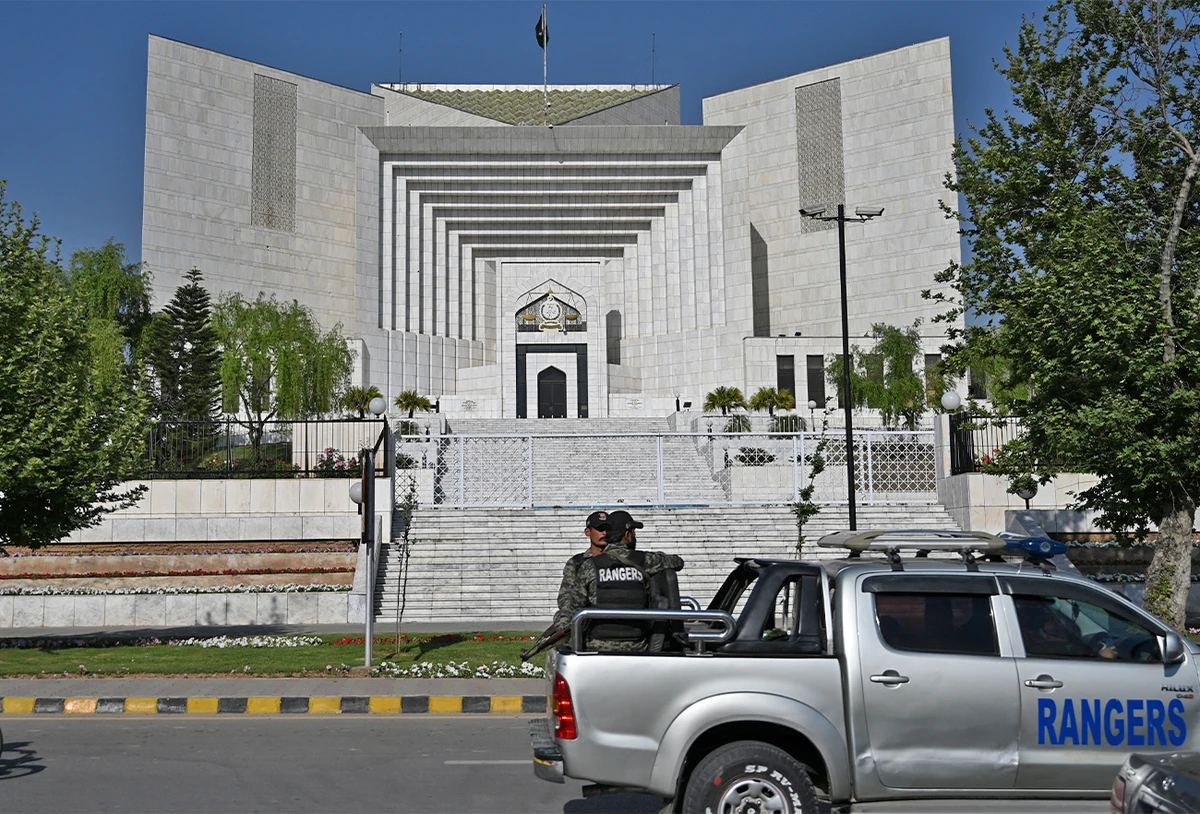
ISLAMABAD: Pakistan’s top court on Wednesday described loyalty as a fundamental constitutional principle while hearing a presidential reference seeking the interpretation of Article 63-A which sets down rules for the disqualification of lawmakers in the case of defection and violation of party policy.
The reference was filed at a time when former prime minister Imran Khan was facing a no-confidence motion and more than a dozen of his party lawmakers had showed willingness to vote against him during the National Assembly proceedings.
Chief Justice of Pakistan Umar Ata Bandial made the observation about loyalty as the Pakistan Peoples Party counsel Farooq Naek presented his arguments.
“Loyalty is the basic constitutional principle,” Geo News quoted him as saying. “Article 5 states that every party member must be loyal to the state.”
He further noted that Article 63-A was meant “to ensure loyalty toward the party.”
Justice Ijazul Ahsan also maintained that a lawmaker took oath as a party member and was bound by the policies determined and pursued by his political faction.
However, Naek argued that a lawmaker was “not a slave” who was required to abide by every order.
He recalled that Pakistan’s former military ruler General (r) Pervez Musharraf had granted wide range of powers to party heads under the 14th amendment, and even the Election Commission of Pakistan (ECP) did not have the power to dismiss his relevant decisions.
This, he said, was later reversed and the ECP was given the right to investigate the claim of a party chief against his lawmakers.
Naek resisted an observation by the court that “disloyalty” could also be viewed as “dishonesty” in the given context which could automatically lead to disqualification for the next elections.
“This is not written in the constitution anywhere,” he said. “Show this and I will leave the rostrum.”
At one point, when the court observed that dissident members were sometimes taken back by party leaders, Naek attributed it to “flexibility in politics,” saying a stringent attitude could lead to “anarchy.”
The presidential reference, a copy of which is available with Arab News, called defections from a political party a “morally reprehensible and destructive act which shakes the confidence of the public in the democratic process.”
It also requested the court to give its opinion on whether a defector should be disqualified for life from electoral activity or public office and if his or her vote, after defecting, should be counted in a parliamentary motion.
The court later adjourned its hearing till Thursday.