BEIRUT: Turkey shelled positions held by the main Kurdish militia in northern Syria for a second day Sunday, drawing condemnation from the Syrian government and adding complexity to an inflamed situation in the area where Russian-backed Syrian government forces are also on the march, opposition activists said.
The Syrian Observatory for Human Rights activist group said two fighters from the Syrian Democratic Forces — a coalition of Kurdish and Arab fighters — have been killed and seven others wounded in the shelling.
There was no confirmation by the group, which is dominated by Kurdish fighters from the People’s Protection Units known as the YPG.
The group has seized a number of villages in the northern province of Aleppo near the Turkish border in recent days, and appears poised to move to the border town of Azaz, an opposition stronghold. That has alarmed Turkey, which considers the group to be an affiliate of the Kurdish PKK movement which it considers to be a terrorist organization.
Opposition groups said Saturday that Turkish troops fired artillery shells that targeted the Mannagh air base in Aleppo province, which was captured by Kurdish fighters and their allies earlier this week.
Turkish Prime Minister Ahmet Davutoglu said late Saturday that his country’s military fired at Kurdish fighters in northern Syria in response to a provocation along the border. He said Turkish forces retaliated against a Kurdish faction “that presented a threat in Azaz and its environs” in line with the country’s rules of engagement.
He accuses the Kurdish People’s Protections Units, or YPG, of carrying out “harassing actions” along the border.
The Syrian government condemned Turkey’s shelling of Syrian territory, describing it as an attempt to raise the morale of “terrorist” groups it supports.
In two messages sent Sunday to the United Nations secretary general and the president of the UN Security Council, Damascus also denounced recent statements made by Davutoglu and urged the Security Council to put an end to the “crimes of the Turkish regime.”
Turkish troops have bombarded areas under the control the YPG, Syria’s main Kurdish military, multiple times in the past.
In this instance, Ankara appears to be worried that Kurdish fighters might reach Azaz, which is home to a major border crossing point that has been controlled by militants since 2012.
Both the Kurds and Syrian troops have advanced toward Azaz in separate offensives in the area. In addition to sealing the Turkish border, Syrian troops are trying to encircle rebel-held parts of Aleppo, Syria’s largest city. If they are able to do so, it will be the biggest defeat for insurgents since the conflict began in March 2011.
Opposition activists reported heavy Russian and Syrian army airstrikes on the villages of Hayan, Anadan and Hreitan north of Aleppo.
The developments come after the United States and Russia announced a plan to halt the violence within a week, but prospects for that happening appear dim.
Also Sunday, Iran’s air defense chief said his country is ready to help defend Syria’s airspace, marking the first time Iran has offered to assist with Syrian air defenses.
The semi-official Tasnim news agency quoted Gen. Farzad Esmaili as saying “we will help Syria in a full-fledged manner if the Syrian government requests help.” He said any such aid would be provided in an “advisory” capacity.
Iran is a close ally of Syrian President Bashar Assad and has sent weapons, money and military advisers to Syria to help bolster his forces.
Esmaili’s remarks came after Turkey and Saudi Arabia — leading supporters of the rebels battling to topple Assad — said they were open to sending ground troops into Syria to battle the Daesh group. Turkey’s foreign minister, Mevlut Cavusoglu, said also said Saturday that Saudi Arabia is “ready to send both jets and troops” to Turkey’s Incirlik air base.
___
Associated Press writer Albert Aji in Damascus and Nasser Karimi in Tehran contributed to this report.


![]()
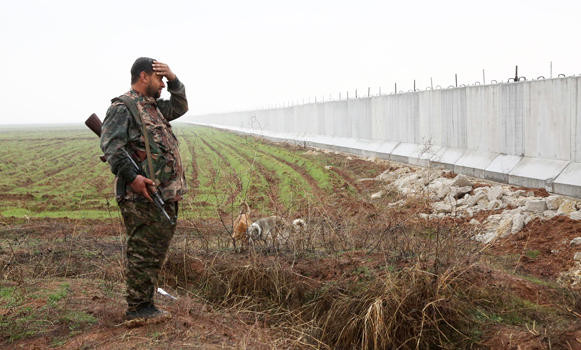
Opposition activists say Turkey shelling Kurds in Syria
Opposition activists say Turkey shelling Kurds in Syria
Latest updates


© 2026 SAUDI RESEARCH & PUBLISHING COMPANY, All Rights Reserved And subject to Terms of Use Agreement.