FRANKFURT: Greece's Finance Minister Yanis Varoufakis said German Chancellor Angela Merkel must make a clear decision at a euro zone summit Monday on whether to negotiate a rescue deal with Athens or heed populist calls to jettison the debt-wracked country.
Merkel can "enter into an honorable agreement with a government, which has rejected the 'rescue package' and is seeking a negotiated solution, or follow the calls from (those in) her government who want her to throw overboard the only Greek government which has been faithful to its principles and which is able to take the Greek people on the road to reform," said Varoufakis.
"The German chancellor has a clear decision to make on Monday," he wrote in an op-ed to be published Sunday in German newspaper Frankfurter Allgemeine Zeitung.
"On our side, we will come with determination to Brussels to agree to further compromises as long as we are not asked to do what the previous governments have done: Accept new debt under conditions that offer little hope for Greece to repay its debts," he wrote.
Varoufakis did not specify what compromises Greece was willing to make.
Meanwhile, US Treasury Secretary Jack Lew said in an interview released on Saturday, the Greek government must make tough fiscal decisions and quickly reach an agreement with international creditors and fellow members of the euro zone, or it risks devastating both the country's economy and people.
"I think we're at a moment now where the burden is on Greece to come back with a response that's the basis for reaching an agreement as quickly as possible," he said in an episode of CNN's "Fareed Zakaria GPS" program that will air on Sunday, according to a transcript.
"What we know is the best solution is for Greece to make some tough decisions and for this to be worked out," he said.
Greece needs to secure a cash-for-reforms deal in order to avoid defaulting on a 1.6 billion-euro International Monetary Fund loan at the end of June, but talks have stalled and the long-struggling country faces being drummed out of the euro zone if it fails.
The United States is turning up the heat on the Greek government to break the deadlock. Last Tuesday Lew called Greek Prime Minister Alexis Tsipras to emphasize "the urgency of Greece making a serious move to reach a pragmatic compromise with its creditors," and on Wednesday the State Department sent the same message.
Depositors shaken by the rapid deterioration of negotiations have been rapidly pulling money out of Greek banks, raising the specter the government may soon impose capital controls.
"The risk of contagion obviously is different than it was in the past because Greek sovereign debt is no longer sitting on the balance sheets of financial institutions. It's mostly sitting in sovereign places," Lew told Zakaria.
But he cautioned that markets' reaction to a default, or to the country's withdrawal from the euro zone, cannot be foreseen, adding "I don't think anyone should want to find out."
"It's clear that within Greece, the consequence of a failure here would mean a terrible, terrible decline in their economic performance," he said. "It will hurt the Greek people. They will bear the first brunt of a failure here."


![]()
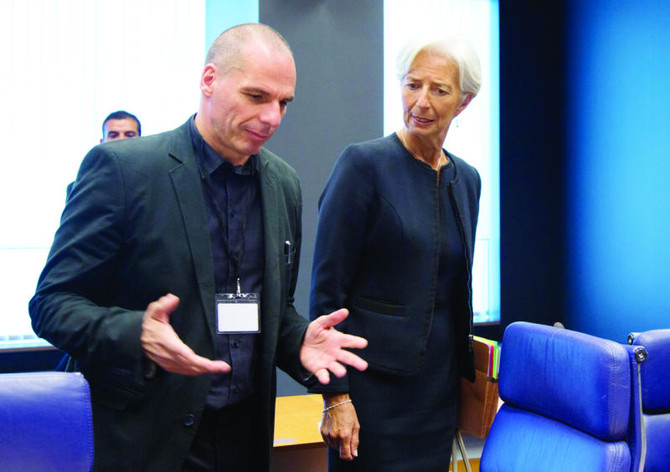
Varoufakis wants ‘clear decision’ from Merkel on rescue deal
Varoufakis wants ‘clear decision’ from Merkel on rescue deal
Latest updates


© 2026 SAUDI RESEARCH & PUBLISHING COMPANY, All Rights Reserved And subject to Terms of Use Agreement.