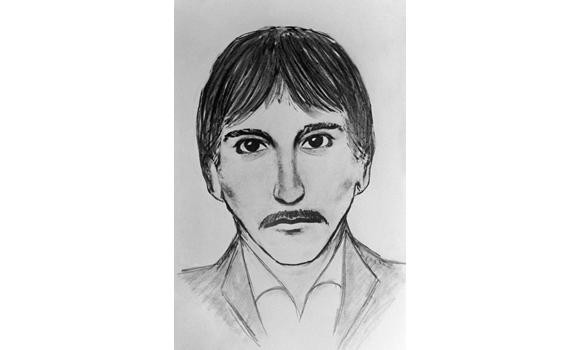
PARIS: A Canadian academic was charged on Saturday over the deadly 1980 bombing of a Paris synagogue after losing his six-year legal battle against extradition over the notorious attack.
Hassan Diab, a Canadian of Lebanese descent, appeared before a French anti-terror judge just hours after arriving in Paris from Montreal.
He was charged for suspected involvement in "murders", "attempted murders" and the "destruction of property with an explosive or incendiary substance, committed by an organised gang", Diab's French lawyer Stephane Bonifassi told AFP.
The October 3, 1980, bombing of a synagogue on rue Copernic in Paris killed four people and left around 40 others injured. It marked the first fatal attack against the French Jewish community since the Nazi occupation in World War II.
The 60-year-old professor of sociology at Ottawa University had been fighting his extradition to avoid what he said would be an unfair prosecution in France for a crime he insists he did not commit. If convicted, he could face up to life in prison.
"My client maintains his innocence," Bonifassi said. "We will continue the fight started in Canada so that his innocence is established."
Diab then appeared before another French judge who ordered that he be remanded in custody, a judicial source said.
His extradition came after Canada's supreme court refused on Thursday to hear his final plea to halt the procedure.
Diab was arrested at his home in an Ottawa suburb in November 2008 at the request of French authorities who alleged he was a member of the Popular Front for the Liberation of Palestine.
The extremist group pioneered armed jetliner hijackings in the 1960s and was believed to be behind a string of deadly attacks in Europe, including the Paris bombing.
Canada's justice minister signed an order in April 2012 to send Diab to France after a Canadian court approved his extradition, despite its concerns that the French case was "weak".
Diab has said he has "absolutely no connection whatsoever to the terrible 1980 attack," while his legal team argued he should not be extradited because a conviction in Canada would be unlikely.
The French Jewish community expressed "great relief" at Diab's arrest and extradition.
"It has a very strong symbolic value because it was the first terrorist act against Jews" since the end of World War II, said Roger Cukierman, head of the Council of Jewish Institutions in France (CRIF).
"The fact that this act had gone unpunished was very distressing," he added.
The attack on the synagogue happened on a Friday evening, the eve of the Jewish sabbath when it was packed with some 300 worshippers.
Ten kilogrammes of explosives hidden in the saddlebags of a parked motorcycle were detonated and the ensuing blast killed three Frenchmen and a young Israeli woman.
Police first focused on the far right as possible perpetrators of the bombing before turning their attention to extremist groups in the Middle East, but made no headway in the case for years.
The probe was relaunched in October 2007 to gain information from the United States on Diab, who had spent several years in the country.
Diab became a Canadian citizen in 2006 and is now the father of a nearly two-year-old girl with his common-law wife.
He has claimed that he was studying in Beirut at the time of the bombing and has said that he had been confused with someone with the same name.
Diab's lawyers in Canada have mainly sought to discredit what they called "fatally flawed" handwriting analysis of a Paris hotel slip that French authorities say was signed in the same false identity that was also presented to purchase the motorcycle used in the bombing.
Diab's lawyers have said that the fingerprint evidence does not match Diab's and that the person who signed the hotel slip was described by witnesses as being middle-aged, whereas Diab would have been 26 at the time.

Canadian charged over 1980 Paris synagogue bombing
Indian teacher who created hundreds of learning centers wins $1 million Global Teacher Prize
DUBAI: An Indian teacher and activist known for creating hundreds of learning centers and painting educational murals across the walls of slums won the $1 million Global Teacher Prize on Thursday.
Rouble Nagi accepted the award at the World Governments Summit in Dubai in the United Arab Emirates, an annual event that draws leaders from across the globe.
Her Rouble Nagi Art Foundation has established more than 800 learning centers across India. They aim to have children who never attended school begin to have structured learning. They also teach children already in school.
Nagi also paints murals that teach literacy, science, math and history, among other topics.
The prize is awarded by the Varkey Foundation, whose founder, Sunny Varkey, established the for-profit GEMS Education company that runs dozens of schools in Egypt, Qatar and the UAE.
“Rouble Nagi represents the very best of what teaching can be – courage, creativity, compassion, and an unwavering belief in every child’s potential,” Varkey said in a statement posted to the Global Teacher Prize website. “By bringing education to the most marginalized communities, she has not only changed individual lives, but strengthened families and communities.”
Nagi plans to use the $1 million to build an institute that offers free vocational training.
Stefania Giannini, UNESCO Assistant Director-General for Education, said Nagi’s prize “reminds us of a simple truth: teachers matter.”
In comments carried on the prize website, Giannini said UNESCO was “honored to join the Global Teacher Prize in celebrating teachers like you, who, through patience, determination, and belief in every learner, help children into school — an act that can change the course of a life.”
Nagi is the 10th teacher to win the award, which the foundation began handing out in 2015.
Past winners of the Global Teacher Prize have included a Kenyan teacher from a remote village who gave away most of his earnings to the poor, a Palestinian primary school teacher who teaches her students about non-violence and a Canadian educator who taught a remote Arctic village of Inuit students. Last year’s winner was Saudi educator Mansour Al-Mansour, who was known for his work with the poor in the kingdom.
GEMS Education, or Global Education Management Systems, is one of the world’s largest private school operators and is believed to be worth billions. Its success has followed that of Dubai, where only private schools offer classes for the children of the foreigners who power its economy.
Rouble Nagi accepted the award at the World Governments Summit in Dubai in the United Arab Emirates, an annual event that draws leaders from across the globe.
Her Rouble Nagi Art Foundation has established more than 800 learning centers across India. They aim to have children who never attended school begin to have structured learning. They also teach children already in school.
Nagi also paints murals that teach literacy, science, math and history, among other topics.
The prize is awarded by the Varkey Foundation, whose founder, Sunny Varkey, established the for-profit GEMS Education company that runs dozens of schools in Egypt, Qatar and the UAE.
“Rouble Nagi represents the very best of what teaching can be – courage, creativity, compassion, and an unwavering belief in every child’s potential,” Varkey said in a statement posted to the Global Teacher Prize website. “By bringing education to the most marginalized communities, she has not only changed individual lives, but strengthened families and communities.”
Nagi plans to use the $1 million to build an institute that offers free vocational training.
Stefania Giannini, UNESCO Assistant Director-General for Education, said Nagi’s prize “reminds us of a simple truth: teachers matter.”
In comments carried on the prize website, Giannini said UNESCO was “honored to join the Global Teacher Prize in celebrating teachers like you, who, through patience, determination, and belief in every learner, help children into school — an act that can change the course of a life.”
Nagi is the 10th teacher to win the award, which the foundation began handing out in 2015.
Past winners of the Global Teacher Prize have included a Kenyan teacher from a remote village who gave away most of his earnings to the poor, a Palestinian primary school teacher who teaches her students about non-violence and a Canadian educator who taught a remote Arctic village of Inuit students. Last year’s winner was Saudi educator Mansour Al-Mansour, who was known for his work with the poor in the kingdom.
GEMS Education, or Global Education Management Systems, is one of the world’s largest private school operators and is believed to be worth billions. Its success has followed that of Dubai, where only private schools offer classes for the children of the foreigners who power its economy.
© 2026 SAUDI RESEARCH & PUBLISHING COMPANY, All Rights Reserved And subject to Terms of Use Agreement.