- Three years after identifying generative AI as a priority, the two countries are expanding cooperation across research, robotics and computing
- Joint ambitions now span large language models, digital infrastructure, talent, investment and data governance
ALKHOBAR: Three years after Saudi Arabia identified generative artificial intelligence as a major opportunity for cooperation with France, the relationship is expanding into large language models, advanced research, robotics, and data governance.
At the French-Saudi Investment Forum in Paris in June 2023, Saudi Communications and Information Technology Minister Abdullah Al-Swaha said generative AI could expand the global enterprise software market from $1 trillion to $14 trillion by 2030.
He said at the time: “This represents an unprecedented opportunity for both nations to join hands and see how we can double down on talent and technology that have proven to us to be the largest social equalizer and economic multiplier.”
Since then, the two countries have broadened discussions around emerging technologies as Saudi Arabia expands its digital economy and France strengthens its position in the global AI sector.
During French President Emmanuel Macron’s state visit to Saudi Arabia in December 2024, the two countries agreed to establish a Strategic Partnership Council and identified AI, quantum technologies, communications and information technology, space, and smart cities among areas for greater cooperation.
The visit also opened another avenue for research collaboration. Saudi Arabia’s Research Development and Innovation Authority and the Joint European Disruptive Initiative announced plans to explore cooperation on advanced research and technology.
The proposed cooperation could include joint “moonshot” research programs in areas including AI, space, energy, biotechnology, and other emerging technologies, drawing on research and academic teams in Saudi Arabia and Europe.
By July 2025, Saudi-French technology discussions had moved into more specific areas. During a visit to Paris, Al-Swaha met Arthur Mensch, CEO of French AI company Mistral AI, to discuss cooperation in developing open-source large language models and generative AI.
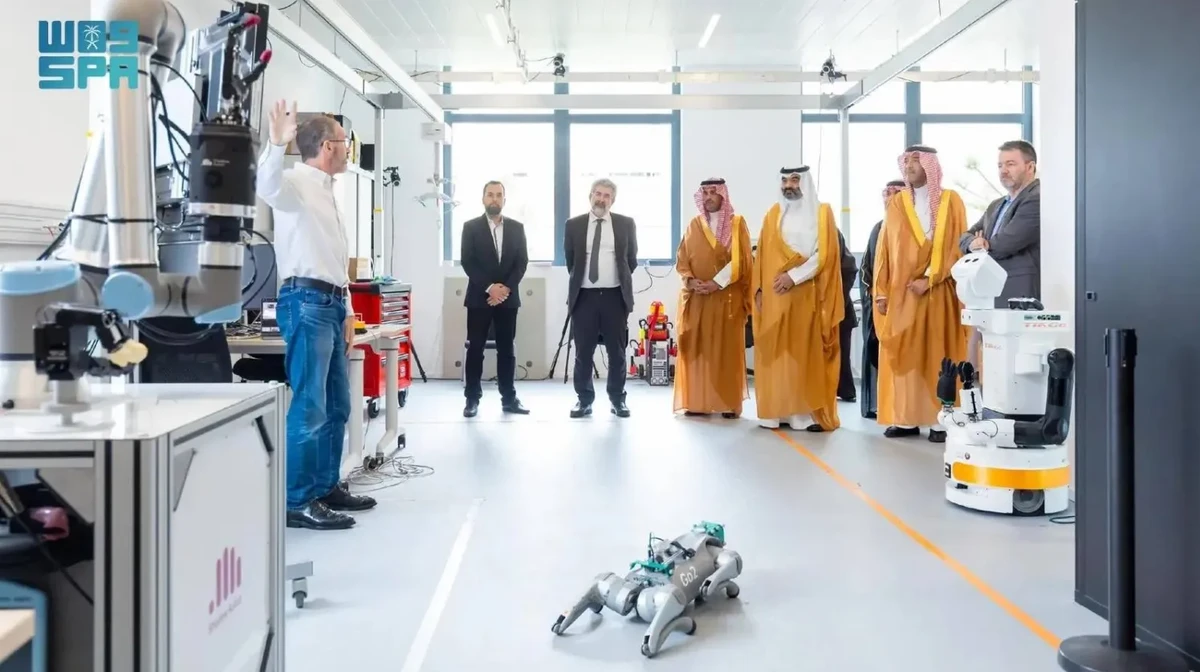
Al-Swaha also met Bruno Sportisse, CEO of France’s National Institute for Research in Digital Science and Technology (Inria). Their discussions covered AI, quantum computing, and robotics, as well as cooperation through joint research laboratories and researcher exchange programs.
Cooperation has also extended to the governance surrounding emerging technologies. Al-Swaha held talks with Marie-Laure Denis, president of the French data protection authority CNIL, on data governance and the regulation of emerging technologies.
Other meetings widened the relationship beyond generative AI. Talks with Thales’ CEO Patrice Caine covered smart systems and space technologies, while discussions with France’s National Center for Scientific Research focused on deep technologies and developing research capabilities.
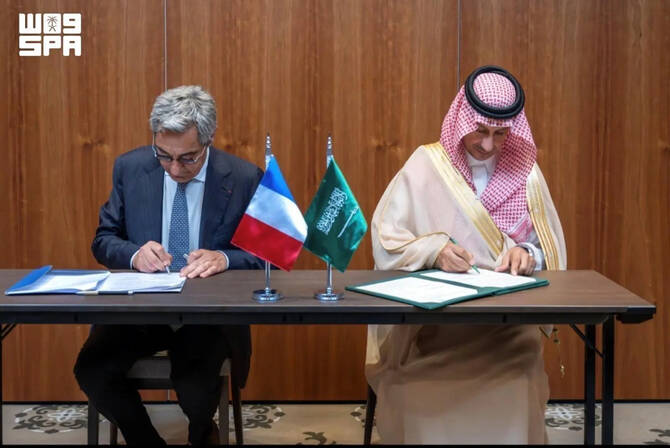
Al-Swaha also met representatives of the French robotics company Enchanted Tools to discuss advanced technologies and interactive robots powered by AI.
The expanding areas of cooperation come as Saudi Arabia builds the infrastructure and digital economy needed to support its ambitions in AI and other advanced technologies.
When Al-Swaha addressed the Paris forum in 2023, he said the Kingdom’s technology and digital markets had reached $40 billion since the launch of Vision 2030, while its technology workforce had grown to 340,000.
The scale of the sector has since continued to grow. By February 2026, Al-Swaha said Saudi Arabia’s digital economy had reached nearly $140 billion, accounting for more than half of digital economy growth in the Middle East and North Africa.
The Kingdom’s data center capacity had also expanded from less than 80 megawatts to more than 440 megawatts, strengthening the computing infrastructure increasingly required for AI development and deployment.
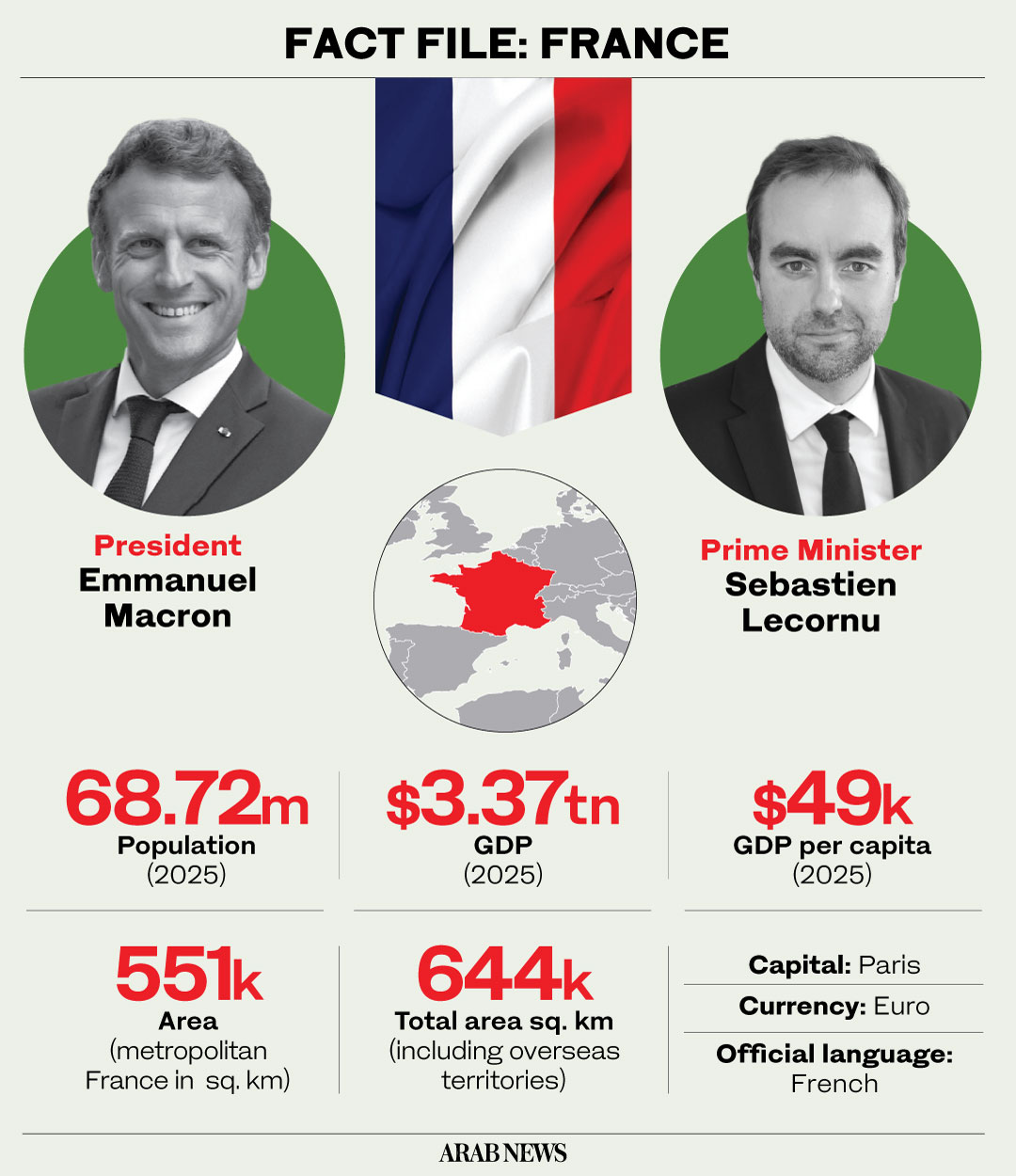
France, meanwhile, has been seeking to reinforce its own position in the global AI race. Paris hosted the AI Action Summit in February 2025, bringing together participants from more than 100 countries, including governments, international organizations, technology companies, researchers, and civil society.
The summit focused on areas ranging from AI infrastructure and investment to governance, innovation, and the development of more inclusive and sustainable AI. France also announced $127 billion in AI-related infrastructure investment during the summit as it sought to expand domestic computing capacity.
The convergence of the two countries’ ambitions has widened their technology relationship beyond investment alone. Researcher exchanges and proposed joint laboratories add an academic dimension, while discussions with companies such as Mistral AI and Enchanted Tools extend cooperation into the development of AI models and robotics.
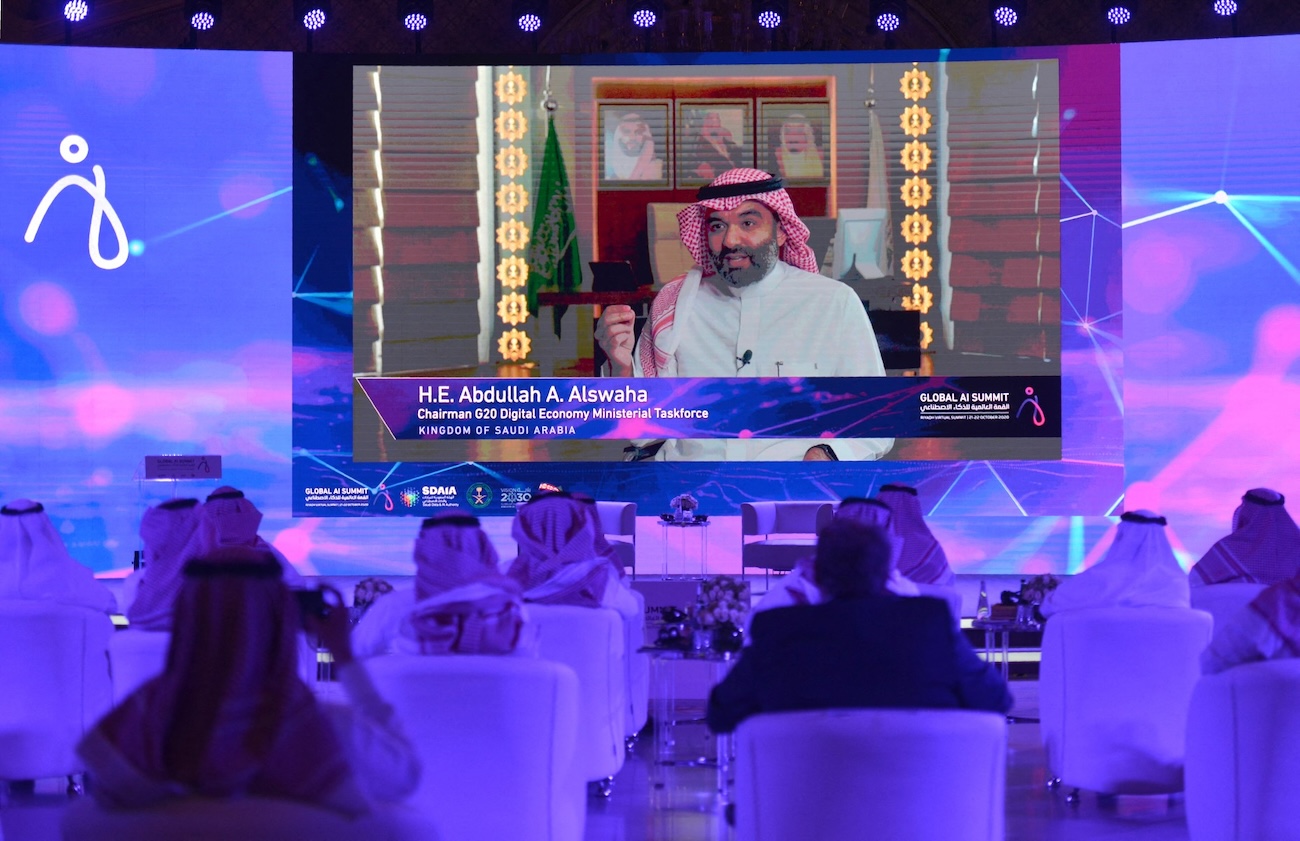
The commercial relationship is developing alongside those efforts. During Al-Swaha’s 2025 Paris visit, discussions with the French investment group Eurazeo explored joint technology investments and support for Saudi startups seeking to expand into international markets.
Together, the developments point to a Saudi-French technology relationship spanning research, talent, investment, computing infrastructure, regulation, and commercial deployment.
The $14 trillion enterprise software market Al-Swaha described in Paris in 2023 remains a projection of AI’s potential. But the opportunity for Saudi-French cooperation he identified at the time has become more concrete.
Three years later, the discussion is no longer only about how large the AI market could become, but how the two countries can participate in developing the technology, building the infrastructure and talent behind it, and shaping the rules governing its use.