- Trump says he will speak with Crown Prince Mohammed bin Salman after deadly strike
- Coalition spokesman says Houthi attack constitutes a “full-fledged war crime”
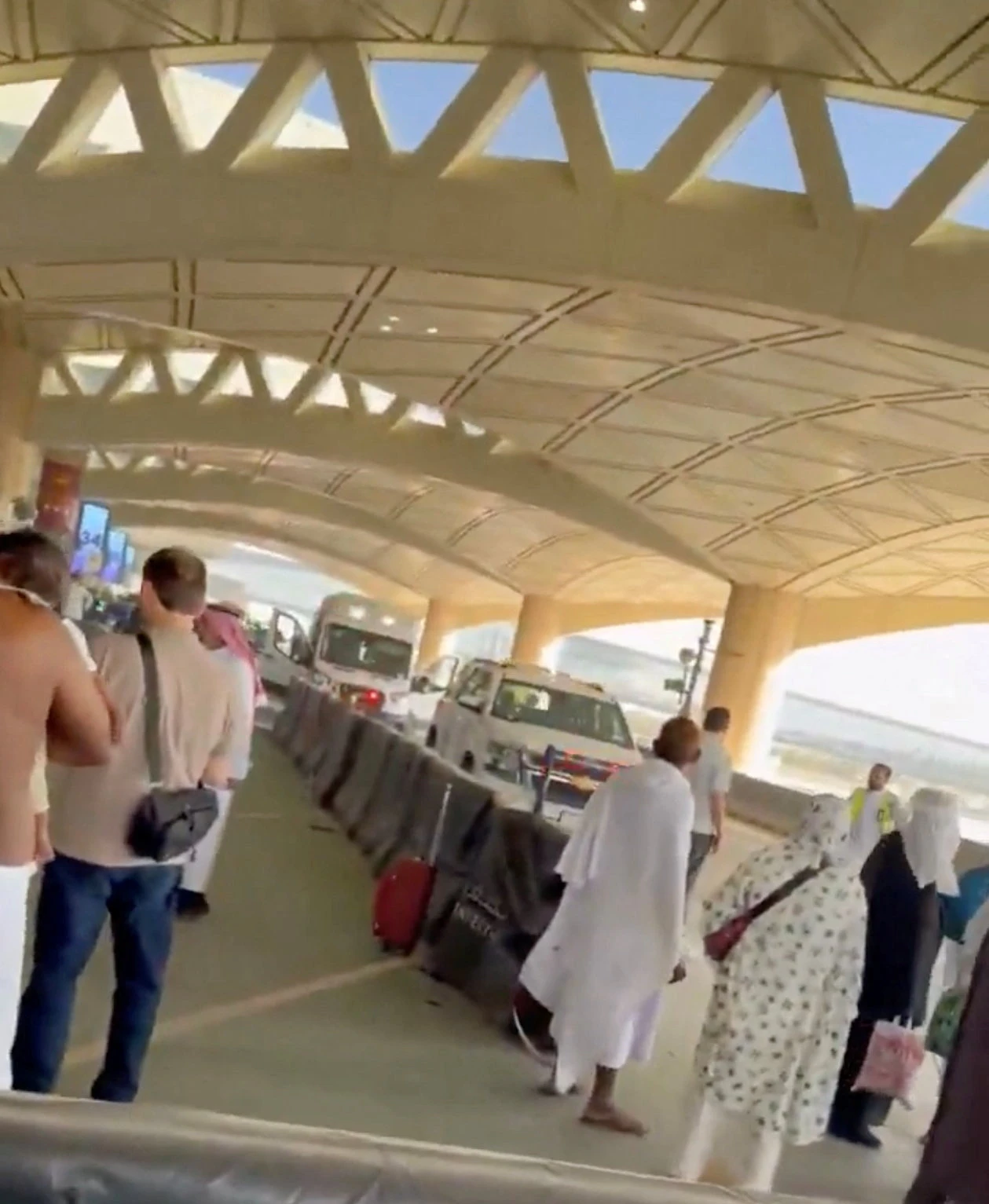
RIYADH: The Coalition to Support Legitimacy in Yemen has vowed a firm response to a Houthi attack on Riyadh’s King Khalid International Airport that killed 12 people and injured 309 others, as US President Donald Trump condemned the strike as “not acceptable.”
Maj. Gen. Turki Al-Maliki, spokesman for the coalition forces, said the attack on a passenger terminal at the airport on Saturday constituted a war crime under international humanitarian law.
“The attack on King Khalid International Airport is a terrorist act and will be met with a firm response,” Al-Maliki said in a statement released on X and carried by the Saudi Press Agency (SPA).
He described the attack by Yemen’s Iran-backedHouthi militia as a “full-fledged war crime” under international humanitarian law and its customary rules, condemning it as an act that violated fundamental principles and values.
“The Joint Forces Command of the Coalition will respond to this terrorist attack firmly and in accordance with international humanitarian law and its customary rules,” he said.
Trump, speaking to reporters at Joint Base Andrews in the United States on Saturday, condemned the attack and said he would speak with Saudi Crown Prince Mohammed bin Salman, who is also the Kingdom’s prime minister.
“What happened in Saudi Arabia’s not acceptable,” Trump said, according to AFP.
US Secretary of State Marco Rubio also strongly condemned the recent attacks on Saudi Arabia, saying an American citizen had been killed in the strikes.
“These reprehensible attacks demonstrate a blatant disregard for innocent civilian life. They must stop now,” Rubio wrote on X on Saturday.
Saudi Arabia’s General Authority of Civil Aviation (GACA) said early Sunday that 12 people had been killed and 309 injured in Saturday’s attack on King Khalid International Airport. The dead included four Saudi citizens and nationals of Bangladesh, Palestine, the United States, Egypt, Jordan, Syria and Sudan. Some of the injured were in critical condition.
GACA said airport operations had been temporarily suspended while authorities assessed the damage. The attack was the latest in a series of Houthi strikes targeting the Kingdom’s civilian aviation infrastructure.
Hours after the Riyadh attack, Al-Maliki announced on X that a projectile had fallen near King Fahd International Airport in Dammam, in the Kingdom’s Eastern Province. He did not provide further details about the incident.
The coalition also announced that a Houthi ballistic missile had been intercepted in Al-Kharj governorate, according to a separate statement carried by SPA.
The incidents have heightened concerns about the growing threat to Saudi Arabia’s airports and air travel as the regional conflict continues. King Fahd International Airport, one of the Kingdom’s busiest transport hubs, had not previously been reported as a target since the Iran war erupted on Feb. 28.
At least 291 flights at Riyadh’s airport were canceled over a 24-hour period, according to flight-tracking website FlightAware. Several international airlines, including Air India, FlyDubai, Lufthansa Group and Pakistan International Airlines, had also suspended flights to and from Riyadh and other Saudi airports for varying periods.
The European Union Aviation Safety Agency expanded its guidance on Saudi airspace, citing the Houthis’ ability to strike targets deeper inside the Kingdom and an increased focus on aviation infrastructure. It warned that missile and drone attacks, as well as interception efforts, increased the risk of civil aircraft being misidentified.
The attacks have also prompted diplomatic action over the wider threat posed by the Houthis.
Yemen’s internationally recognized government submitted a letter to the United Nations and the Security Council concerning a Houthi attack on Aden airport early Wednesday, according to SPA.
The letter, addressed by Yemen’s Permanent Representative to the UN, Ambassador Abdullah Al-Saadi, to Secretary-General António Guterres and the Security Council president for October, Greece’s Ambassador Aglaia Balta, called for condemnation of the attack, accountability for those responsible and full implementation of the arms embargo imposed on the militia.
The Yemeni government said confronting the threat required addressing its underlying causes, particularly the continued control of parts of the country by armed militias and their possession of capabilities used against civilians, civilian infrastructure and international navigation, SPA reported.
Saudi Arabia has repeatedly warned against the use of Yemeni territory as a launchpad for attacks on the Kingdom and threats to regional security and maritime navigation.