- White House to impose tariffs of 10-12.5 percent on trading partners
- The action has drawn immediate protests from some countries
KARACHI: The United States (US) administration has unveiled new tariffs of 10-12.5 percent on goods from 60 trading partners, including Pakistan, for their “failure to impose and effectively enforce a prohibition on the importation of goods produced with forced labor,” a US trade representative said on Thursday, just as a temporary 10 percent global tariff expires.
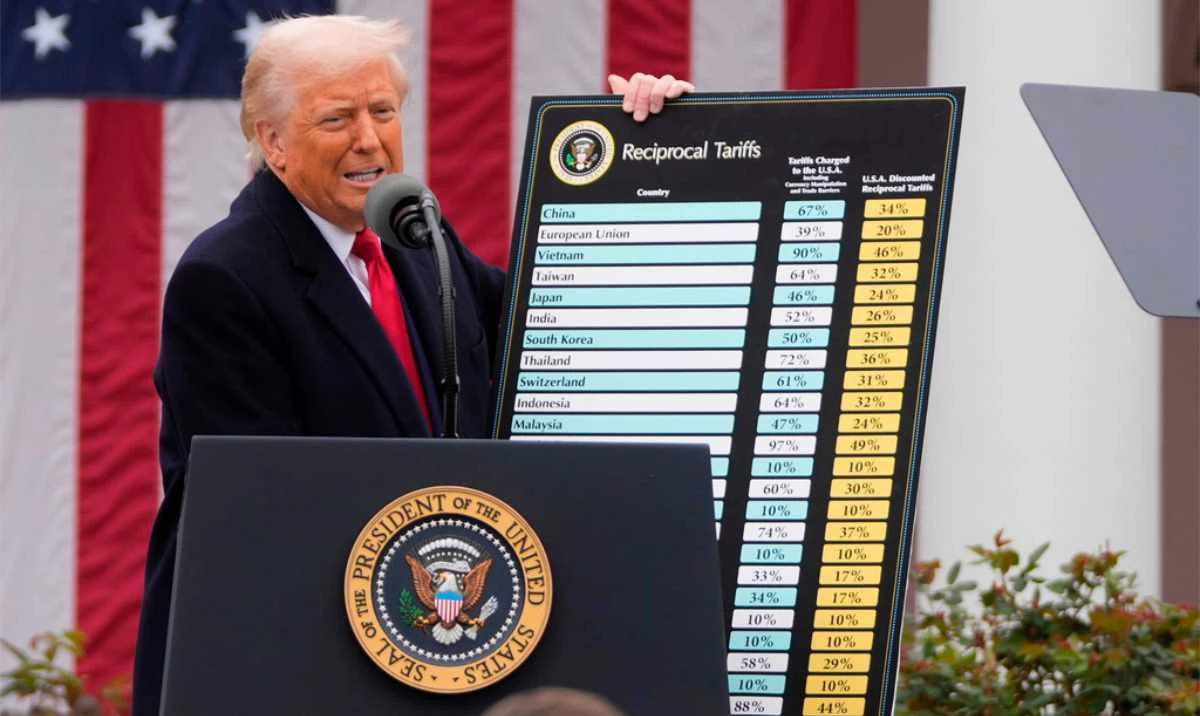
The move is the White House’s latest effort to restore President Donald Trump’s campaign vision of a near-global tariff after the US Supreme Court in February struck down his “reciprocal” duties of 10 percent to 50 percent imposed last year under a national emergencies law to try to shrink the US trade deficit. The new tariffs will cover 99.4 percent of US imports, but include numerous product exemptions, such as oil and gas, fertilizer and certain food items.
Pakistani foreign ministry spokesman Tahir Andrabi said on July 11 that both had made progress toward a reciprocal trade agreement during fresh talks held in Washington. The dispute began in April last year, when President Donald Trump invoked the International Emergency Economic Powers Act (IEEPA) to impose a 29 percent tariff on Pakistani exports as part of a broader package of global trade measures, which was later reduced to 19 percent.
“The United States has had a forced labor import ban for nearly a century, and rigorously enforces it; it’s well past time for our trading partners to do the same,” US Trade Representative Ambassador Jamieson Greer said in a statement.
“Today’s action will begin to correct what is both a human rights abuse and distortive trade practice to improve the welfare of workers everywhere. I am encouraged by the trading partners who have moved quickly to adopt forced labor import prohibitions, and look forward to ensuring their effective enforcement.”
Imposed under Section 301 of the Trade Act of 1974, the new duties allow the administration to maintain a tariff floor on virtually all US imports despite the Supreme Court setback. The tariffs are also likely to face less legal risk than those struck down in February, as Section 301 has survived prior court challenges.
Trump responded to the February Supreme Court ruling by imposing a temporary 10 percent tariff for 150 days that expires at 12:01 a.m. EDT on Friday (0401 GMT). The new duties will take effect at that exact same moment, with goods in transit exempted until 12:01 a.m. EDT on July 28.
Under the final determination, the US will impose a 10 percent duty on goods of Argentina, Bangladesh, Britain, Cambodia, Canada, Ecuador, El Salvador, Guatemala, Honduras, India, Indonesia, Jordan, Malaysia, Mexico, Pakistan, Sri Lanka, Trinidad and Tobago.
The European Union, Taiwan, Japan, South Korea and Switzerland were assigned rates that, combined with pre-existing most-favored-nation tariff rates, would total 10 percent or 12.5 percent. The other 38 countries were assigned a 12.5 percent rate. These include China, accused by the US of detaining Uyghur minorities in work camps, which Beijing denies.
The action drew immediate protests from some countries.
Norway’s Foreign Minister Espen Barth Eide said “there is no basis for this tariff against Norway because we already have clear rules that are intended to prevent trade in goods produced using forced labor.”
Australia and Brazil described the new tariffs as unjustified and said they would seek to have them removed, while Canada — hit on Monday with new Trump tariffs on $20 billion worth of goods — issued a muted response to the “unilateral” tariffs.
“We will continue engaging constructively with the United States on this matter, as well as other outstanding issues, over the coming weeks to the mutual benefit of our citizens,” said Dominic LeBlanc, Canada’s minister in charge of US trade.