

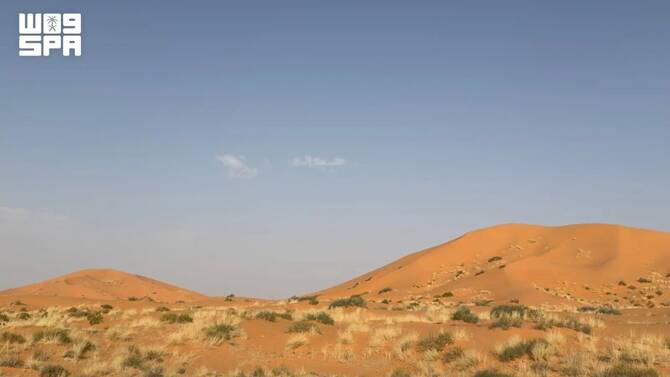
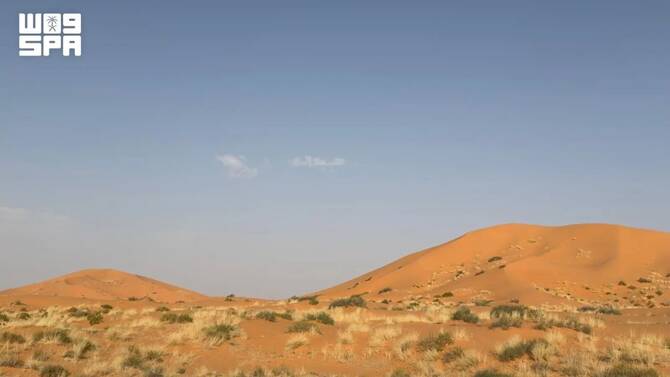
JEDDAH: Al-Hanateen dunes in northern Saudi Arabia once overlooked a historic trade route used by small caravans of merchants who preferred a safer, if more physically demanding, passage across the desert.
Located along the new Rafha-Hail road, about 160 km southwest of Rafha governorate, the towering dunes are among the region’s most prominent natural landmarks, combining striking desert scenery with links to the commercial history of northern Arabia.
Abdulrahman Al-Tuwaijri, a member of the Saudi Archaeological Society, said the dunes lie alongside the historical Western Trade Route, which followed the edge of the Nafud Desert from Turbah to Al-Hayaniyah, before crossing Al-Huzul, Al-Majamir and Al-Ruhaimi on its way to Kufa.
Although this route offered fewer sources of water along the way and was more difficult to cross, its distance from major roads made it relatively safer, he said, which meant it was a preferred option for smaller caravans and lone travelers.
In contrast, the eastern route, known as the Kufa Pilgrimage Road or the Zubaydah Trail, was more widely used because it offered abundant water sources and a clearly marked path. Pools, buildings and other facilities constructed along the way during the Abbasid era helped establish it as the principal passageway for large caravans.
The two Al-Hanateen dunes can be spotted from long distances and are surrounded by sand formations of varying heights, giving the site a distinctive visual character. The section of the Nafud Desert where they are found is considered an extension of the area historically known as the “Sands of Alij,” which was renowned for its vast and densely packed dunes. The desert was known for the immense distances it covered and its difficult terrain, inspiring the old saying: “Between you and me lie the Sands of Alij.”
The 13th-century geographer Yaqut Al-Hamawi referred to Al-Hanateen dunes in his book “Mu’jam Al-Buldan” (“Dictionary of Countries”), describing them as two reddish sand hills in the Sands of Alij. Their name is believed to have also become linked to henna because of their reddish color.
Thanks to the combination of natural landscapes and historical significance, the site is emerging as one of the region’s notable desert destinations, attracting visitors interested in exploration, outdoor activities and the heritage of ancient trade routes.


