


ISLAMABAD: Pakistan on Thursday urged the United Nations to strengthen mechanisms for the peaceful settlement of disputes after renewed hostilities between the United States and Iran interrupted a diplomatic process that Islamabad said had demonstrated the value of sustained engagement.
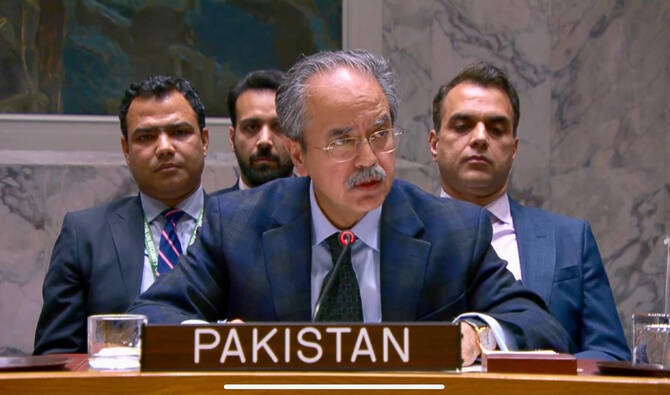
Addressing a UN Security Council debate on strengthening mechanisms for the peaceful settlement of disputes, Pakistan’s UN Ambassador Asim Iftikhar Ahmad said Islamabad’s mediation efforts had helped bring Washington and Tehran to the negotiating table, demonstrating that diplomacy could halt intense fighting.
“The Islamabad MoU was a clear demonstration of what determined diplomacy can achieve: channels were opened, parties were brought together, precious lives were saved and all efforts redirected toward dialogue,” he told the 15-member Council.
“We regret the renewed outbreak of hostilities and the interruption of the diplomatic process, which has once again exposed the region and the wider world to grave risks,” he said. “We believe that whenever negotiations falter, the answer is not in less but more determined diplomacy. Pakistan will continue its earnest efforts in that spirit.”
The remarks came during a Security Council open debate on implementing Resolution 2788, unanimously adopted under Pakistan’s presidency of the Council last year. The resolution seeks to strengthen the use of peaceful dispute-settlement mechanisms under Chapter VI of the UN Charter by encouraging earlier diplomatic engagement, mediation and sustained follow-up before disputes escalate into armed conflict.
Ahmad said the Charter already provided sufficient tools for the peaceful settlement of disputes through negotiation, mediation, arbitration, judicial settlement and other mechanisms, but argued that the problem lay in their “delayed, selective and inconsistent” use.
He said the Council too often became engaged only after positions had hardened, trust had collapsed and opportunities for compromise had narrowed, resulting in prolonged conflicts and greater human suffering.
He said the resolution should serve as a practical framework for prevention rather than remain a statement of principle, arguing that the Council’s greatest success would be preventing crises before they erupted.
“At a time when armed conflicts are growing across regions, the costs of delayed diplomacy are becoming more evident,” he added. “Every new crisis underscores a simple truth: there is no military substitute for a just and lasting peace.”


