- Ishaq Dar will hold meetings with Chinese FM and other counterparts to expand cooperation in the field
- With rising AI talent, Pakistan is trying to accelerate its digital transformation to ensure future growth
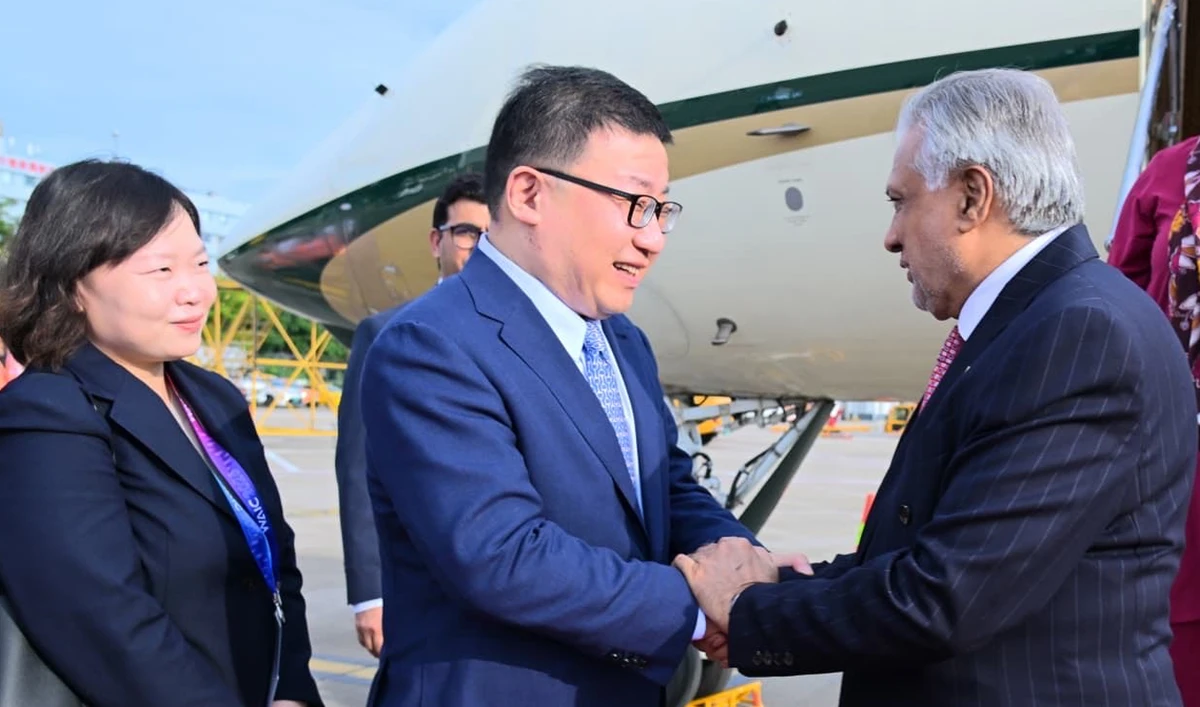
ISLAMABAD: Pakistan’s Deputy Prime Minister and Foreign Minister Ishaq Dar arrived in Shanghai on Thursday for a two-day official visit during which he will sign the agreement establishing the World Artificial Intelligence Cooperation Organization (WAICO) on behalf of Pakistan and attend a global AI summit, the foreign office said.
The visit comes as Pakistan seeks to deepen international cooperation in artificial intelligence and position itself among countries shaping global AI governance while accelerating its own digital transformation.
“Deputy Prime Minister/Foreign Minister Senator Mohammad Ishaq Dar @MIshaqDar50, along with the delegation, has arrived in Shanghai, China, for an official visit from 16-17 July 2026,” the foreign office said in a statement.
“During his visit, he will attend the signing ceremony for the Agreement on the Establishment of the World Artificial Intelligence Cooperation Organization (WAICO), and sign the Agreement on behalf of Pakistan as a founding member,” it added. “He will also attend the opening ceremony of the 2026 World AI Conference on 17 July and hold bilateral meetings with his counterparts.”
Dar was received on arrival by Wu Wei, a member of the Standing Committee of the Municipal Party Committee and vice mayor of Shanghai, along with Pakistan’s Charge d’Affaires to China Aizaz Khan and Consul General in Shanghai Shahzad Ahmad Khan.
Pakistan’s AI landscape is a growing field that is driving innovation in health care, education, agriculture and other sectors. With a growing pool of AI talent and startups, Islamabad is seeking to accelerate the country’s digital transformation and future economic growth.
The foreign office said earlier this week that Dar’s meetings would include talks with Chinese Foreign Minister Wang Yi and other counterparts to expand cooperation on AI development, governance, standards and the sharing of AI-related resources.
The discussions are expected to focus on bridging the global AI divide, promoting equitable access to AI technologies and ensuring that the benefits of AI contribute to sustainable development.
Pakistan approved its National Artificial Intelligence Policy last year, outlining a framework focused on AI innovation, public awareness, secure systems and international collaboration.
The plan includes a Rs278 billion ($1 billion) investment by 2030, a nationwide “AI Seekho 2026” program to train one million people, expanded AI infrastructure and a national framework to regulate data use and promote ethical AI in line with global standards.
Pakistan also launched its sovereign AI cloud and a startup fund last October.