- High-level committee says shrinking glaciers, drought could stress farm sector
- Government orders long-range projections as monsoon preparedness intensifies
ISLAMABAD: Pakistan on Friday warned that climate-related risks during this year’s monsoon season could threaten agricultural production and food security, as a newly formed high-level emergency committee directed authorities to prepare long-range projections while coordinating the country’s disaster response.
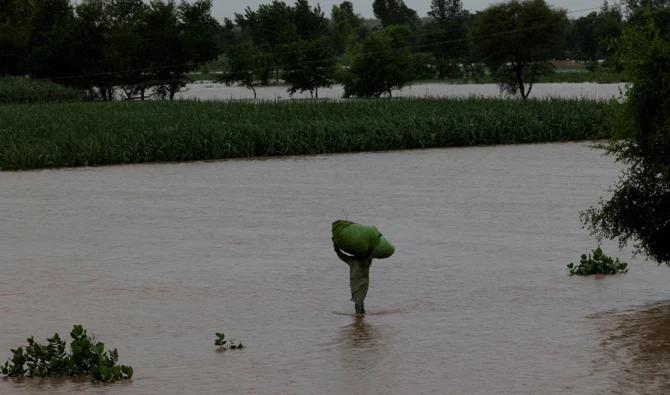
Pakistan’s annual monsoon season, which typically runs from June to September, regularly triggers flash floods, landslides and house collapses, particularly in the country’s mountainous north and low-lying river plains.
Disaster management authorities said on Friday that monsoon rains since June 26 had killed 17 people and injured 41, while forecasters warned another spell of heavy rainfall next week could increase river flows across much of the country.
Meeting for the first time since its formation earlier this week, the government’s Emergency Response Committee reviewed national preparedness for the monsoon season and discussed what it described as broader climate-related risks extending beyond flooding.
“The committee noted that the poly crises emanating from Monsoon 2026 and beyond need to be crystalized to enable [a] national response for making arrangements,” the National Disaster Management Authority (NDMA) said in a statement after the meeting.
“Shrinking glaciers and increasing droughts [and a] dry monsoon in most parts of Pakistan are likely to trigger [a] stress situation for [the] agriculture sector, leading to gross food security hazard,” it added.
Planning Minister Ahsan Iqbal directed the Ministry of National Food Security and Research to work with the National Emergencies Operation Center (NEOC) on long-range projections through 2027, according to the statement.
The committee also reviewed the national coordination framework for the monsoon season and approved the inclusion of the chief secretaries of all four provinces as co-opted members to strengthen coordination between the federal and provincial governments.
Pakistan is among the countries most vulnerable to climate change despite contributing less than one percent of global greenhouse gas emissions. Record floods in 2022 killed more than 1,700 people, affected 33 million people and caused more than $30 billion in damage and economic losses, according to the government and the World Bank.
Last year, the country experienced riverine floods after India released excess water into three rivers, devastating farmlands in Pakistan’s breadbasket, Punjab province, and affecting large swathes of the wheat crop.