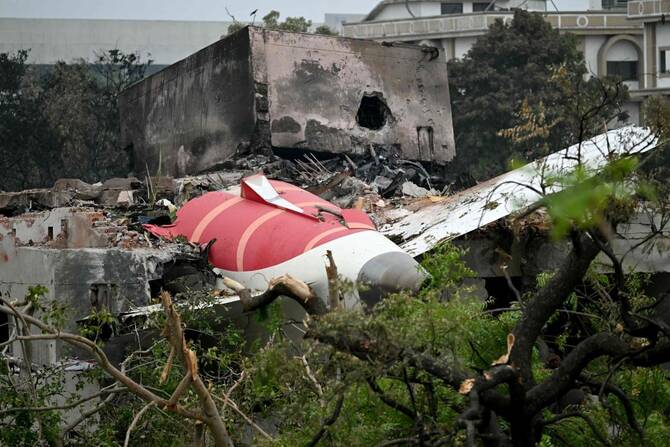
Indian investigators are expected to delay issuing a final report into a deadly Air India Boeing 787 crash by the one-year anniversary on Friday, citing the need to complete an analysis of the plane’s engines, according to a source with knowledge of the matter.
The GE Aerospace-made engines have been at the center of the probe into the crash of the Air India plane shortly after takeoff from Ahmedabad on June 12, 2025, which killed 260 people in the world’s deadliest air disaster in a decade.
A preliminary report released last year showed the 787’s engine fuel control switches moved almost simultaneously from “RUN” to “CUTOFF,” starving both engines of fuel shortly after the flight took off.
Investigators conducted engine testing in April and visited France last month as part of an analysis of the engine management unit, the source told Reuters on the condition of anonymity because the information is not public.
Earlier on Thursday, Bloomberg News reported the final report into the crash was expected within three months once studies of the engines, which had been sent to the US for examination, were concluded.
Under international rules, a final report is due within a year of an accident, but sometimes investigations take longer, so if that is not completed, an interim statement should be issued on each anniversary.
Reuters first reported last month that Indian officials were preparing an interim report rather than a final one ahead of the first anniversary because the investigation was deemed complex and time-consuming.
The AAIB, India’s aviation ministry, Air India, the US National Transportation Safety Board, Boeing and GE Aerospace did not immediately respond to Reuters’ requests for comment.
The crash hit Air India at a sensitive stage of its post-privatization turnaround, which has been slowed by supply-chain snags, the Iran war and an airspace ban imposed by Pakistan on Indian carriers.
Pilot actions examined
A cockpit recording of dialogue between the two pilots of the Air India 787 before it crashed supported the view that the captain cut the flow of fuel to its engines, according to US officials’ early assessment reported by Reuters last year. The AAIB said at the time it was “too early to reach any definite conclusions.”
The father of the captain asked India’s top court to order an independent investigation that took into account causes other than deliberate pilot action, which has been suspected in some other fatal crashes and confirmed in the case of Germanwings in 2015.
The Federation of Indian Pilots wrote to India’s civil aviation minister, aviation regulator and the prime minister’s office on June 5 requesting that an interim report not be released, according to a letter seen by Reuters.
The pilots’ group also pushed for investigators to seek more technical data on the plane from Boeing and Air India to allow for a “rebuttal of the pilot suicide theory being explored by the AAIB.”
The preliminary report did not make any safety recommendations to Boeing or GE, indicating no technical issues had been discovered at that time.
It was the world’s first crash involving a 787 Dreamliner, a Boeing model that has been in service since 2011.


![]()

Air India crash report delay expected due to unfinished engine analysis, source says
Short Url
https://arab.news/vm8j6
Air India crash report delay expected due to unfinished engine analysis, source says
- GE Aerospace-made engines at the center of the probe into the crash of the Air India 787 plane
- Investigators conducted engine testing in April and visited France last month as part of an analysis of the engine management unit


Latest updates



© 2026 SAUDI RESEARCH & PUBLISHING COMPANY, All Rights Reserved And subject to Terms of Use Agreement.