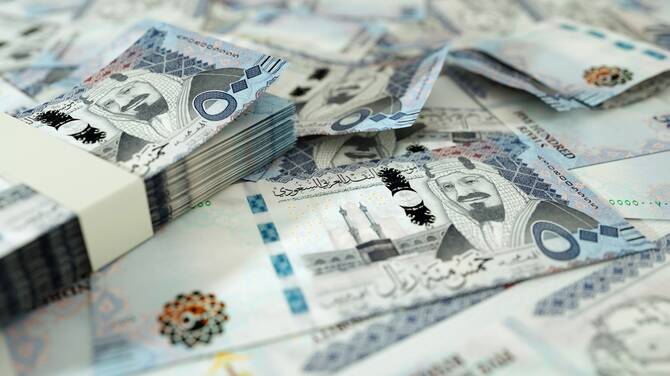

RIYADH: Saudi Arabia attracted SR358.2 billion ($95.4 billion) in fixed capital investment during the first quarter of 2026, marking a 5.1 percent increase from a year earlier, as government and private-sector funding continued to support economic activity, official data showed.
According to the Ministry of Investment’s May 2026 economic indicators report, the non-government sector remained the dominant source of investment, accounting for nearly 89 percent of total gross fixed capital formation during the quarter.
Non-government GFCF reached SR319.9 billion in the first quarter, up 1.3 percent from a year earlier, while government GFCF surged 54 percent to SR38.3 billion.
Saudi Arabia’s GFCF growth also comes against a broader investment cycle tied to Vision 2030 projects, infrastructure spending and private-sector expansion.
Earlier this month, the International Monetary Fund said the Saudi economy entered 2026 with “strong momentum,” supported by robust non-oil activity and domestic demand, although it expects growth to moderate this year. IMF data also point to investment-linked imports and long-term capital deployment as key features of Saudi Arabia’s medium-term outlook.
In its latest report, the ministry stated: “Gross Fixed Capital Formation grew by approximately 5.1 percent in Q1 2026. This increase is attributed to a 1.3 percent (increase) in GFCF from the non-government sector, which accounted for 89 percent of GFCF during the same period.”
It added that gross fixed capital formation returned to growth after a 6 percent decline in 2025, while nominal GDP growth was driven primarily by a 12.3 percent increase in oil activities.
The report said: “According to data released by GASTAT, real GDP rose by 3 percent in the first quarter of 2026 compared with the first quarter of 2025, driven by growth across all major activities, with both oil and non-oil activities expanding by 2.9 percent, and government activities increasing 1.5 percent.”
In the first quarter, GFCF in the non-oil, non-government sector, the primary component of non- government fixed capital formation, declined slightly by 0.2 percent.
Other indicators showed mixed momentum. The consumer price index rose 1.7 percent year on year in April, while point-of-sale transactions increased 11.8 percent.
The purchasing managers’ index for the non-oil private sector declined 5.4 percent year on year in May to 52.8 points, remaining above the 50-point threshold that signals month-on-month improvement.
The report also showed Brent crude prices rising 54.2 percent year on year in April to an average of $102.5 per barrel, while Saudi oil production declined 24.8 percent over the same period.