



RIYADH: On a warm night in Riyadh, the sound of distorted guitars cuts through the air, pulling in a crowd that knows every riff by heart. For longtime fans of Saudi Arabia’s underground metal scene, the return of Dune feels less like a comeback and more like a continuation of a story that never really ended.
Formed in 2004, Dune was part of the early wave of Saudi metal bands that quietly built a loyal following before the scene faded from view.
“Dune was formed around 2004 and played through the peak of the Saudi metal movement,” bassist and backing vocalist Mamdoh Tawili told Arab News. “We were one of the first bands in Riyadh at the time.”
In 2007, the band went on hiatus, as many groups in the Kingdom’s underground scene did. Then, in 2021, Dune returned — and this time, with a renewed sense of purpose.
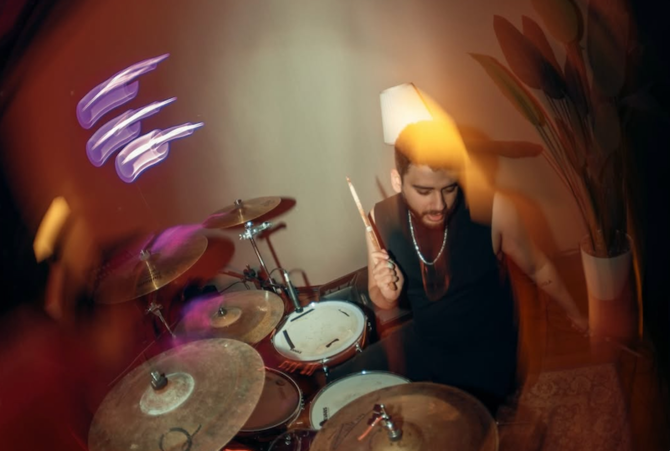
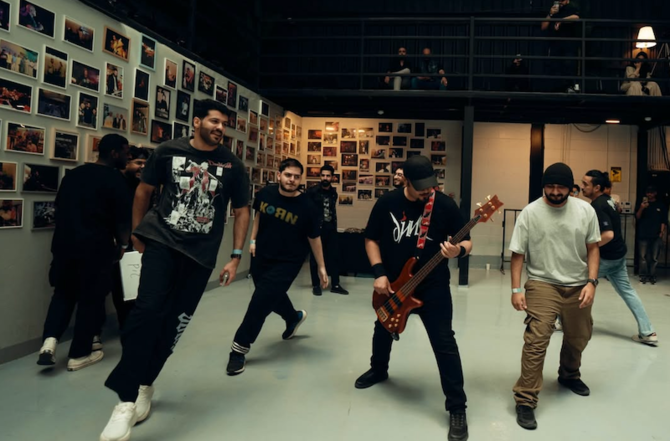
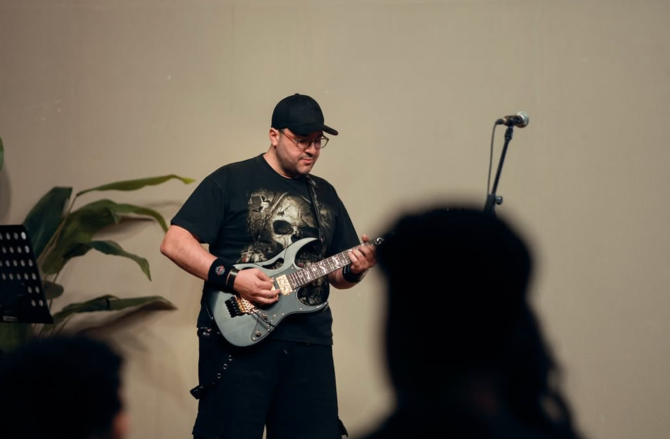
Today, the band brings together four seasoned musicians from across the local scene: vocalist Samer Nakhala, guitarist Amjad Mufti, Tawili on bass, and drummer Bassel Al-Zeind.
Their sound is rooted in thrash metal, but is shaped by a wide range of influences — from Pantera and Slayer to Korn, Testament, and Metallica.
Listening to Dune, that blend is unmistakable. The aggression of thrash meets groove; heavy riffs and flashes of nu-metal, reflecting the different musical backgrounds of its members. For the band, though, the motivation has always been simple.
“The band was inspired by our love for the music we grew up with,” Tawili said. “We wanted to create something that gives listeners the same feeling we had as kids — and nothing compares to the rush of playing live.”
That connection with audiences is becoming easier to find as Saudi Arabia’s rock and metal scene grows. After years in the shadows, bands are reemerging, and new acts are stepping in with energy.
“The Saudi metal and rock scene is growing fast,” Tawili said. “The audience is very loyal and insanely supportive. Old bands are coming back, new ones are forming — everyone is on fire.”
Still, challenges remain. Finding venues and rehearsal spaces continues to be a major hurdle for bands trying to build momentum. In many cities, options are limited, and financial arrangements can vary widely — sometimes favoring exposure over sustainability.
Despite that, opportunities are expanding. Dune has performed at major events, including MDLBEAST Sandstorm, and appeared at festivals such as Riyadh Inferno Fest and Desert Rock Fest. The band also points to the role of Heavy Arabia, a platform that has supported local artists through live shows, features and educational sessions.
“The support we’ve received has been incredible,” Tawili said. “It’s helped push the whole scene forward.”
That momentum is reaching beyond the Kingdom. Dune’s EP, “Years of Chains,” earned the band a silver-tier award for Thrash Metal Album of the Year from the global platform Metal Has No Borders — a recognition driven by international fan votes.
Behind the music, Dune’s identity is also shaped visually by Tawili, who designs the band’s artwork, merchandise and video content. His background in digital art, with experience at events such as Comic Con, Gamers Day, and Insomnia, feeds into the band’s distinctive aesthetic.
Being a Saudi band, the group says, inevitably influences its sound. “We sometimes use oriental Arabian scales in our music, and we explore themes that reflect our experiences,” Tawili said. Alongside those influences, their songs often touch on personal struggles and individual stories.
For now, sustainability remains a work in progress. Like many independent bands, Dune largely self-funds its journey — from equipment and recording sessions to merchandise production. Revenue from live performances helps offset costs, with part of the income set aside to support future releases.
It is a model built on persistence rather than profit.
Yet, standing in front of a growing crowd, with the energy of a revived scene behind them, Dune seems to be proving that Saudi metal is no longer confined to the underground — and that its next chapter is already underway.


