

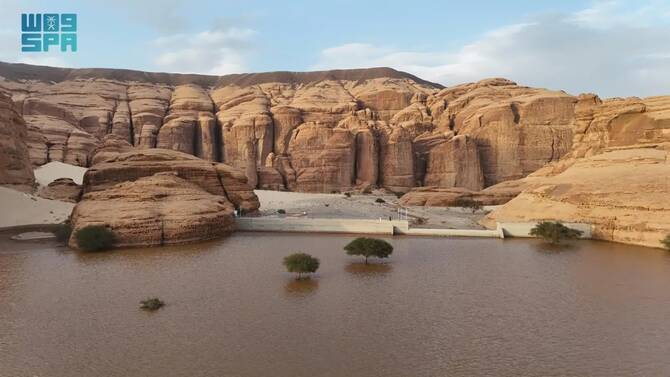

ALULA: AlUla’s Shallal Dam stands as a vital water resource that seamlessly integrates with the region’s distinctive geological features, reflecting the natural diversity that defines the province.
The dam blends seamlessly with the surrounding topography, rocky outcrops, and desert vegetation, creating a landscape that balances natural beauty with the essential function of modern water infrastructure.
AlUla has experienced scattered rainfall in recent days across multiple centers, significantly boosting water reserves and raising water levels across the province’s dams. Shallal Dam has recorded a notable rise in water levels, with positive impacts rippling through the surrounding ecosystem.
The dam boasts impressive engineering credentials. Its storage capacity reaches about 318,000 cubic meters and it has a length of 130 meters and a height of 8 meters. The spillway extends 32 meters in length at a height of 5.5 meters. These specifications underscore the dam’s efficiency in capturing rainfall and floodwaters while regulating their flow with precision.
The dam plays a crucial role in supporting AlUla’s diverse agricultural sector. By replenishing groundwater reserves and preserving water for dry periods it provides essential irrigation and drinking water sources that sustain the region’s farming community and ensure agricultural sustainability. The dam’s water supply directly supports farmers and strengthens the resilience of agricultural activity throughout the province.
Beyond agriculture, Shallal Dam serves multiple critical purposes. It protects lives and property from seasonal flooding risks, while simultaneously harnessing hydroelectric potential for energy generation. These functions demonstrate why such infrastructure represents an essential pillar of water resource management and achieving environmental sustainability.
Dams function across the Kingdom as cornerstones of water resource management. They capture seasonal rainfall and floodwaters, enabling their utilization across agricultural and environmental initiatives that strengthen regional development.


