

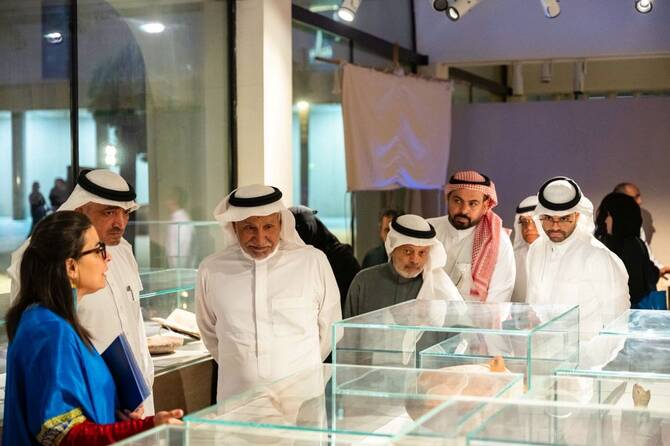
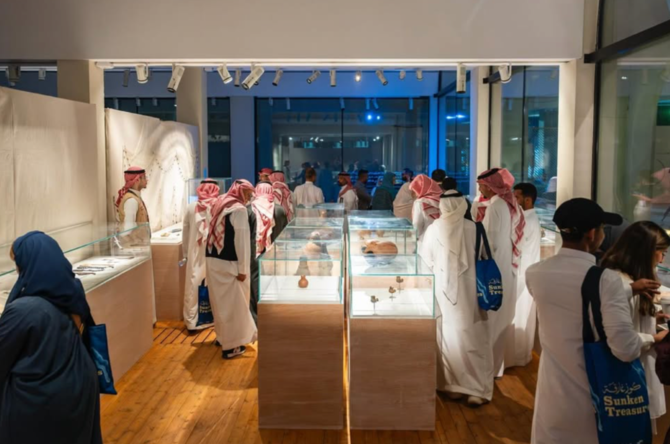
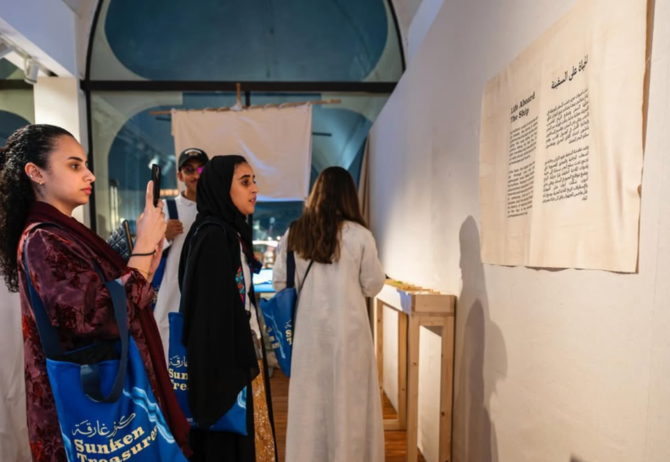
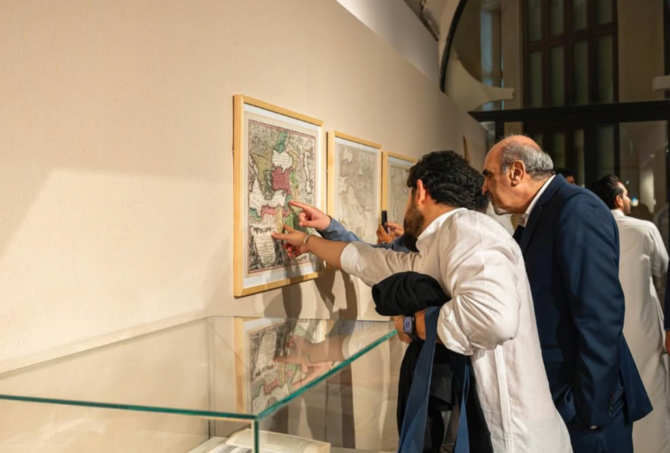

JEDDAH: Sunken Treasures, the new exhibition at the Red Sea Museum, is a unique voyage into the depths to explore centuries of maritime history, cultural exchange and ecological transformation.
Open until May 29, it reveals how shipwrecks have become both archives of human activity and thriving coral reefs sustaining marine life.
Abdullah bin Abdulaziz Al-Hammad, CEO of the Saudi Museums Commission, said the inspiration for the exhibition came from a simple yet powerful realization: “Beneath the waters of the Red Sea lies an extraordinary archive of human history that has been largely invisible to the public. Shipwrecks, artifacts, and traces of maritime activity tell stories of trade, pilgrimage, and cultural exchange that have shaped our region for millennia. We wanted to bring these stories to the surface, literally and figuratively, and make them accessible to everyone.”
The exhibition highlights the Red Sea as a historical cultural corridor that has connected Africa, Arabia and Asia for millennia. Through archaeological discoveries along the Saudi coastline — including pottery, coins, navigation tools, glass and ceramics — visitors can see how ships were not merely vessels for transport but integrated worlds where people, goods and knowledge traveled together.
“What makes this exhibition particularly significant is that it documents the complete journey — from the moment these objects were used aboard ships to the dramatic circumstances that sent them to the seafloor, and their subsequent transformation over centuries as coral reefs grew around them, creating new ecosystems,” Al-Hammad added.
Curated by Eman Zidan, director of the Red Sea Museum, and Solene Marion de Proce, chief of the French-Saudi Archaeological Mission in Farasan Islands, the exhibition combines decades of underwater archaeological research with interactive and immersive storytelling.
Visitors can explore shipwreck sites through visual projections and audio soundscapes, hearing from divers, archaeologists and fishermen who work to protect underwater heritage. This is the first exhibition in Saudi Arabia focused specifically on the maritime archaeological heritage of the Red Sea, marking a major milestone in advancing public engagement and preservation.
The exhibition also highlights the Red Sea’s historical role as a bridge rather than a barrier.
“For thousands of years, the Red Sea connected civilizations, facilitated trade, enabled pilgrimage and allowed the exchange of ideas, technologies and cultures between distant shores. Sunken Treasures makes this role tangible and visible,” said Al-Hammad said.
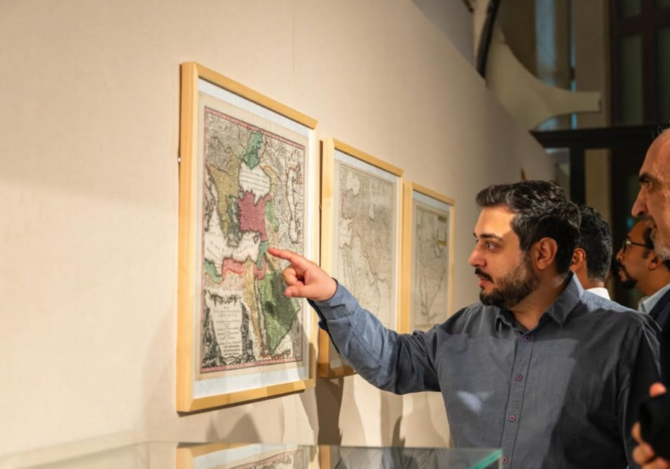
Seasonal winds and navigation patterns dictated the movement of merchants, pilgrims and travelers along the coast, where stopping points became hubs of cultural exchange. Artifacts such as Chinese porcelain found alongside local pottery, coins from different regions, and navigation tools reflect the networks that made the Red Sea a crossroads of commerce, faith and communication.
“When a ship sinks, it doesn’t simply become a static artifact on the seafloor. Over time, coral grows on the wreckage, marine life takes shelter in it, and the vessel transforms into part of a living ecosystem. Protecting underwater cultural heritage is also about protecting coral reefs, marine biodiversity, and the natural systems surrounding these sites,” said Al-Hammad.
The Red Sea Museum works closely with institutions such as the King Abdullah University of Science and Technology and the Coral Research and Development Accelerator Platform on marine conservation programs, linking historical awareness with contemporary environmental responsibility. The exhibition concludes with Exploring for Tomorrow, highlighting heritage preservation as a collective duty and inviting visitors to examine their role in protecting the Red Sea.
Laila Al-Qahtani, who visited with her family, said, “Walking through this exhibition felt like I was sailing alongside ancient traders. Every detail and the storytelling was very informative. Seeing shipwrecks transform into coral reefs reminded me that history and nature are deeply connected.”
Saudi Arabia is reinvesting in the Red Sea’s role as a corridor for cultural exchange as part of Vision 2030.


