

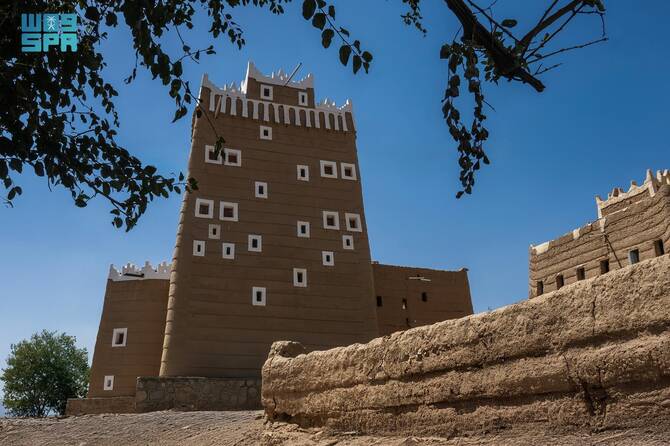

NAJRAN: A collection of mud palaces and an ancient well are helping to drive rural tourism in Najran, where visitors from around the world are charmed by the area’s natural beauty and engaging local community.
Al-Mishkat Heritage Village is a living historical record, featuring 12 mud palaces and a 300-year-old well built from mud, wood and palm trunks, the Saudi Press Agency reported.
As well as being places to live, the palaces served as family fortresses, reflecting a social and economic lifestyle centered on agriculture and communal solidarity.
The village’s lifeblood is its well, which serves as a vital source of drinking water and irrigation, operated with traditional waterwheels and ropes.
The local people have taken the initiative to restore the palaces, using traditional methods and materials to rehabilitate walls, ceilings and wooden doors.
To further protect the site’s archeological identity, the Heritage Commission has documented and cataloged the palaces.
Rural tourism draws both domestic and international visitors to the village, Al-Mansour, head of the Tourism Cooperative Society in Najran, Ibrahim, said in an interview.
Rural life was most vividly represented in the villages along the banks of Wadi Najran, where visitors could enjoy stunning views of traditional mud palaces, verdant orchards with age-old palm trees, vast wheat and grape fields and striking mountain formations, he said.


