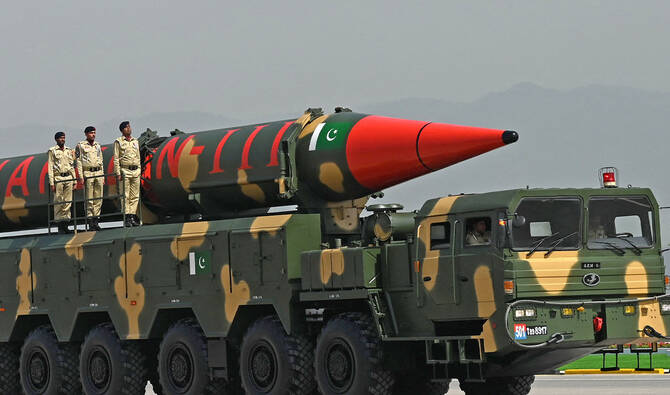

ISLAMABAD: US Director of National Intelligence Tulsi Gabbard said this week that Pakistan could develop intercontinental ballistic missiles (ICBMs) capable of reaching the US, listing Pakistan among countries such as Iran, North Korea, China and Russia that pose threats to Washington.
Gabbard’s statement came while she presented the findings of the 2026 Annual Threat Assessment report before the US Senate Intelligence Committee on Wednesday. The report focuses on the most direct, serious threats to the US primarily during the next year.
A copy of the report seen by Arab News says that the US Intelligence Community (IC) has projected that the global missile threat to the US could rise from over 3,000 to more than 16,000 by 2035. The report further said China, Russia, North Korea, Iran and Pakistan have been researching and developing an array of novel, advanced, or traditional missile delivery systems with nuclear and conventional payloads that can strike the US.
“Pakistan’s long-range ballistic missile development potentially could include ICBMs with a range capable of striking the homeland,” Gabbard told members of the US Senate Intelligence Committee.
She said the IC assesses that China and Russia are developing advanced delivery systems capable of penetrating or bypassing US missile defenses.
The US official noted that North Korea’s ICBMs can already reach US soil, adding that the IC assesses that the country is committed to expanding its nuclear arsenal.
Pakistan’s foreign office or government has so far not reacted to Gabbard’s comments or the findings of the threat assessment report.
The US has expressed concern in the past over Pakistan’s ballistic missile program. The Bureau of Industry and Security of the US Department of Commerce last year added more than a dozen Pakistani firms to its entity list for their contributions to “unsafeguarded” nuclear activities and seven others for contributing to the South Asian nation’s ballistic missile program.
Pakistan says its nuclear program is only for deterrence purposes, especially as its arch-rival and neighbor India possesses them as well.