





ALKHOBAR: Majid Al-Ghamdi is a Saudi jack of all trades, and a master of some. For the last two decades he has dabbled in carpentry, graphic design, technology, marketing, heritage preservation and everything in between.
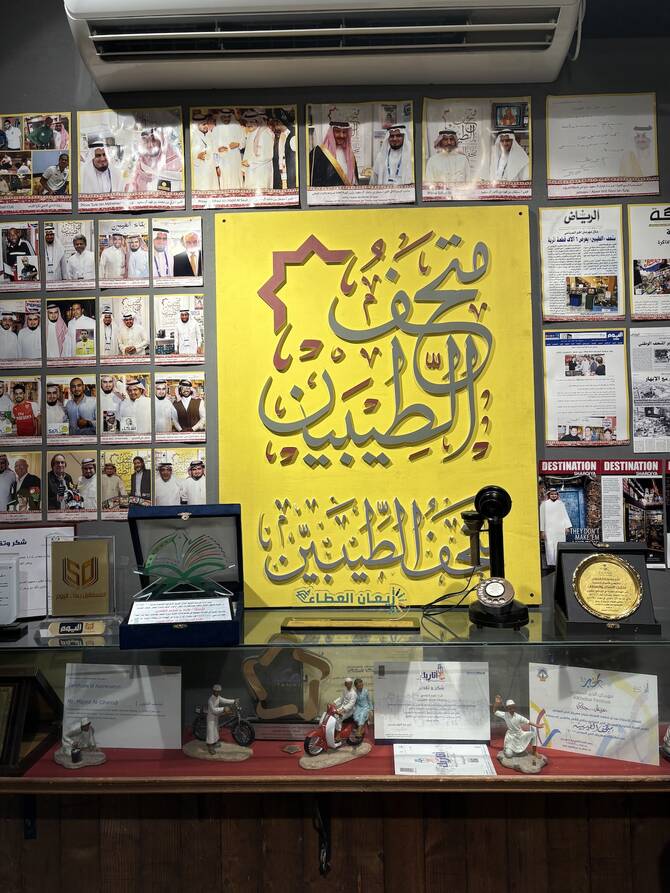
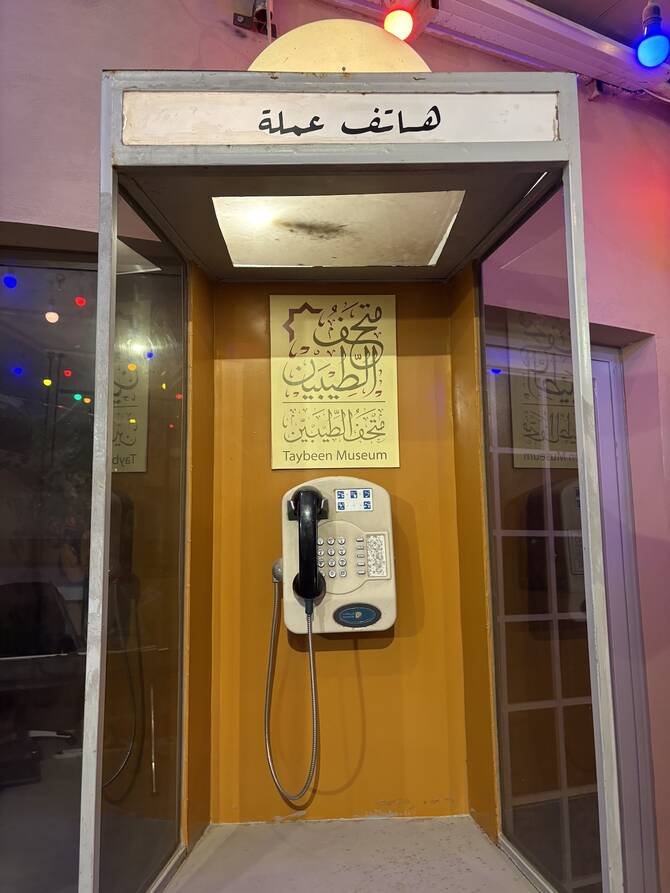
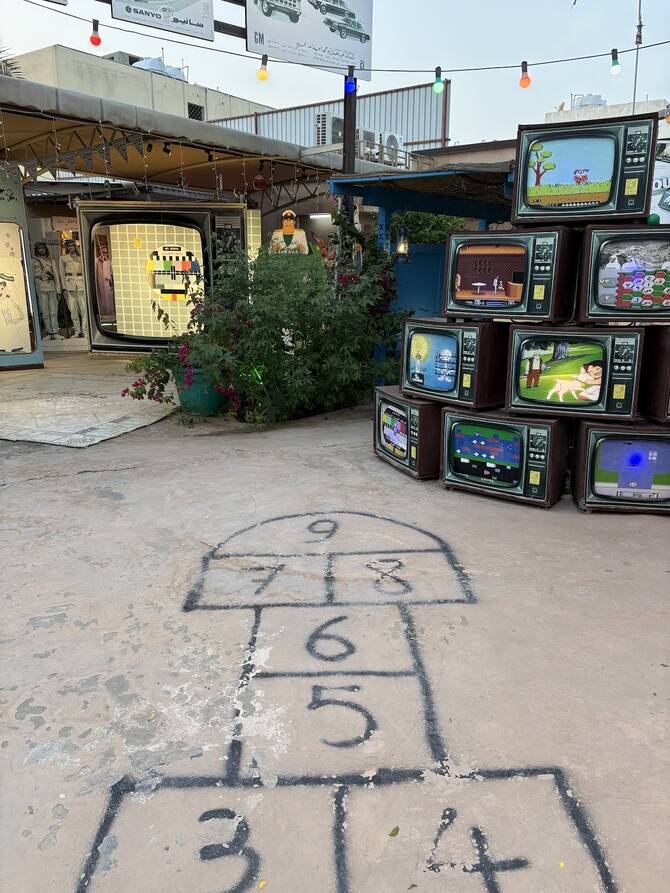
He officially founded Taybeen Museum in 2004 in Al-Aziziyah, Alkhobar — an immersive indoor and outdoor multipurpose space where birds, cameras, old-school fun and plenty of photogenic spaces live large.
As a millennial, Al-Ghamdi knows the value of preserving and bottling up childhood nostalgia.
“The museum was founded in 2004 and contains a collection of traditional belongings such as old devices, educational tools, specialized small shops and old games,” reads a sign at the entrance.
But the story began to unfold much earlier than that.
Al-Ghamdi walked Arab News through the labyrinth of indoor and outdoor interactive spaces as his young son circled around in a bicycle.
“This place, where the museum is housed now, lives in what was once our real family home — so it is truly an extension of me.
“When we still lived here I asked permission from my father to use the guest room to display my vast collection and convert that into a space we would later call a museum,” he told Arab News.
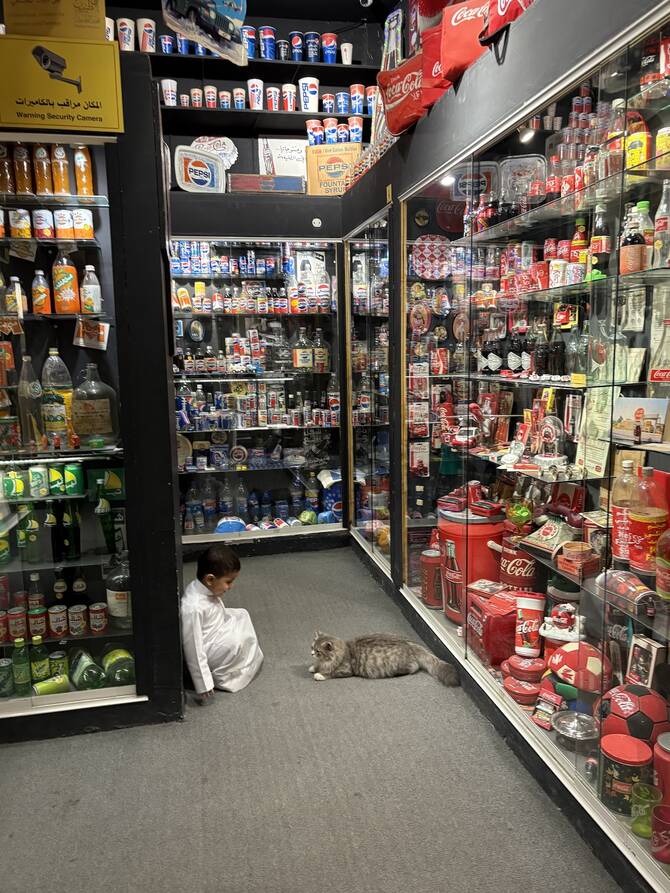
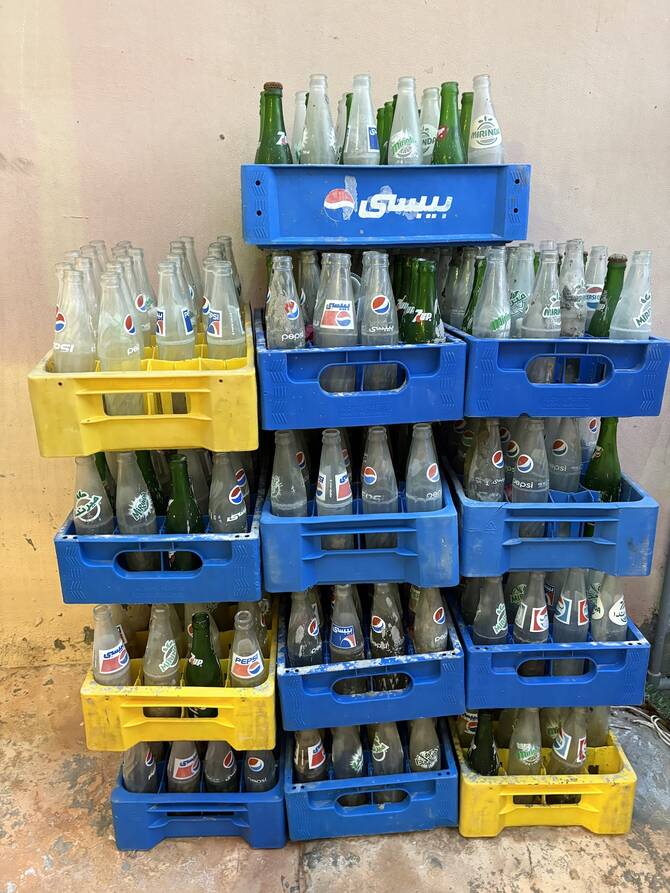
He was only a child when he became an avid collector — much to his mother’s dismay. An attentive child, he noticed when a soda, for example, changed its packaging or logo. He would immediately keep both the old and new versions.
Then it evolved from beverages and snacks to cameras and other items. His mother joked that she wanted him to get his never-ending collection out of her house.
As his collection grew, it literally reached the ceiling and no longer fit within the walls. A museum was the solution that made the most sense to him.
“Since 1992 I’ve been collecting. Of course, at that time, I had no intention of opening a museum. I was collecting things just for my memories, like drinks and snacks,” he said.
When his friends came to visit they would walk around the rows and rows in the collection and say the same thing: “Oh, this is from the ‘good generation,’ or the ‘era of the taybeen,’ a line made popular from a famous Kuwaiti show from the ’70s ‘Darb Al-Zalak’,” he added.
Taybeen Museum was born.
He said: “I get asked a lot about the name of the museum. The word ‘taybeen’ comes from goodness, so the ‘generation of good people’ but that does not insinuate that other generations — before or after — aren’t good, or that any other generation is inherently bad.
“It’s just a line made popular in my era and refers to enjoying simple pleasures in a simpler time; it made sense among my friends so it stuck.”
In homage to the era that inspired it, Taybeen Museum prioritizes memorabilia from the ’70s, ’80s and ’90s.
The items it displays were found locally in homes and corner shops during that time period.
Opening its doors as an official museum 22 years ago, the space is situated within a residential area, amplifying the homey feel.
Al-Ghamdi said: “I was born in the early ’80s; the museum is like an extension of me. When we were young, there were no local cultural museums like this, except maybe the old National Museum in Dammam, which is being renovated still.”
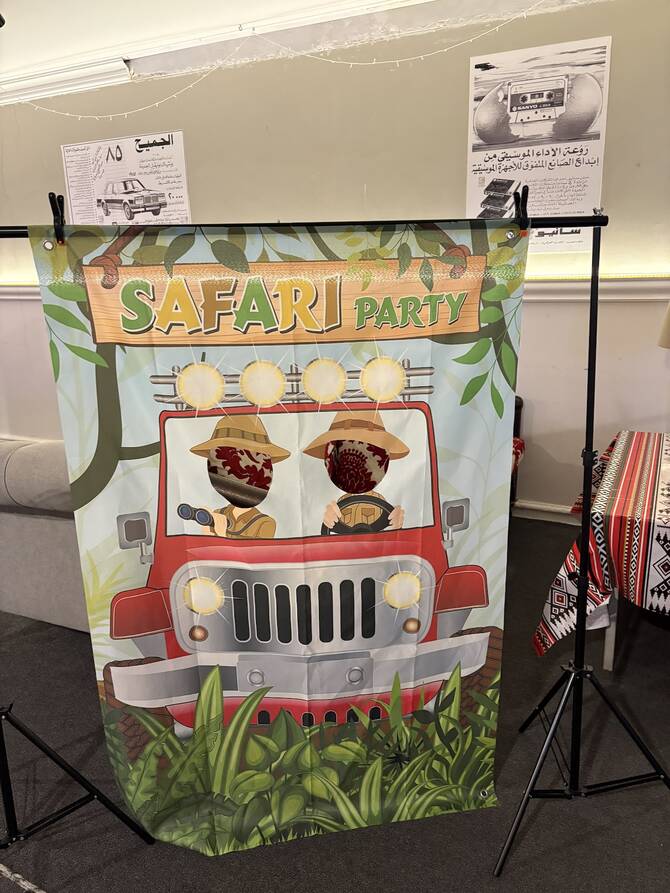
The outdoor area at Taybeen is spacious and has a playful feel, with life-size photo cutouts, all of which were crafted by Al-Ghamdi, along with his friends and team.
“Of course, since my name is Majid, I have a whole section dedicated to Captain Majid (developed from the iconic Japanese manga series ‘Captain Tsubasa’). In fact, I’ll tell you a little secret. This photo cutout says ‘special magazine issue’ and it has my birthdate on it,” he told Arab News with a chuckle.
The ever-popular Saudi series “Tash Ma Tash” is given center stage in the Taybeen outdoor space.
In one of the show’s popular episodes, the characters go on a road trip. The sounds of their chattering reverberate throughout the exhibit, with the cutouts of the characters giving the space a nostalgic kick.
But the true impact of the collection is demonstrated within the ticketed indoor museum, where there are dedicated zones for everything: from vintage candy to classic games, toys and devices to food and beverages, even medicine. Even the ceiling is fixed with extra trinkets.
It was Abdul Waseh Farooqi’s idea to visit the museum with his childhood buddies. Growing up locally in the ’90s, he gathered his group and they ventured into the museum together.
The space created an unexpected portal in which the friends each pulled out their unique perspectives on similar items that they each had in their individual family homes.
“I was bored on my phone and just checking Google Maps for something that we could do together and I randomly stumbled upon this place, so I pitched it to the guys,” Farooqi told Arab News.
“We were sitting in a coffee shop, and then I was like, ‘You know what? Let’s check this place out.’ So we just came here, and we were actually shocked, we were not expecting any of this.”
His childhood friend from school Abdul Basith Ali, who also grew up in Alkhobar, came along.
“The first thing we noticed was the smell when I walked in. It was kind of reminiscent of something that you would smell in your earlier days, in your childhood. What did it smell like? It’s indescribable,” Ali told Arab News.
“Each and every single counter had something or other that was an essence of our childhood, you know? The start was things that you would normally find in your kitchen.
“You know, you would sneak into your kitchen, you would just open your refrigerator, and then find something, just get a juice, and all of those things. It reminds you of your good old days. It’s kind of like time traveling, you could say.”
Anas Musa, their friend who was born in 2001 and came from a different generation, said: “I’m the youngest out of the three, raised in Dhahran. I’m kind of familiar with (the items on display) but not entirely. We had Wi-Fi and we had email and everything when I was born, so it’s like fragmented.
“But at the same time, the essence is the smell; like the dusty smell, the old wood. When we walked in, the AC, the switches — it just gives you the whole image. It feels like you’re in that moment again.”
A gift shop by the exit provides visitors with the chance to take a souvenir for the ride home, including new candy and toys inspired by those simpler times.
The friends visibly and audibly enjoyed pointing out their favorite artifacts from their childhoods. It helped them fully be in the present, too.
“You know, my friend here, he made a joke. He was like, ‘This is the best money we ever spent on a night out’,” Farooqi concluded with a laugh.
Al-Ghamdi, hovering nearby, overheard the conversation and beamed with delight.


