
RIYADH: The world of AI-generated videos created in seconds via smartphone apps may seem far removed from the ongoing conflicts in the Arabian Gulf’s shipping lanes, yet the two are closely interconnected.
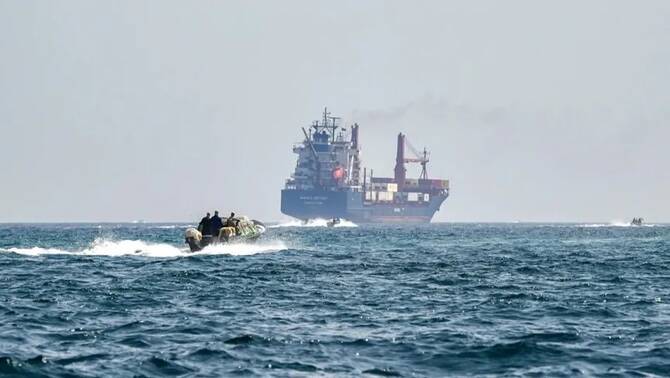
The foundations of the global technology industry depend heavily on the flow of oil through the Strait of Hormuz, as the US government pledged on March 3 to protect maritime navigation threatened by Iran’s response to strikes carried out by the US and Israel over the weekend.
Global chips rely on Gulf gas
More than half of the world’s DRAM and NAND memory chips, which provide electronic devices with short-term and long-term storage memory, are manufactured in South Korea.
Around 70 percent of advanced processing chips used in smartphones, computers and data centers are produced in Taiwan. Both countries are among the largest importers of liquefied natural gas from Qatar.
This represents a dangerous vulnerability, worsened by the slow and hesitant progress of both countries toward renewable energy sources.
Qatar’s Ras Laffan Industrial City, which provides roughly one-fifth of global LNG supply, halted production on March 2 before later declaring force majeure, a legal measure allowing the suspension of supply during emergencies. QatarEnergy said the decision followed military attacks targeting the facility.
Around 90 percent of LNG produced in Qatar and the UAE is shipped eastward to Asian markets.
Energy disruption pressures Korea and Taiwan stocks
This sparked a rapid sell-off in Asian equity markets tied to the energy sector on March 4. South Korea’s KOSPI plunged 12 percent, marking its largest daily drop, with Samsung Electronics and SK Hynix accounting for around 40 percent of the index.
Taiwan’s TAIEX also fell 4.4 percent, with Taiwan Semiconductor Manufacturing Co. alone representing about 45 percent of the benchmark.
This decline reflects the markets’ recognition of the unique exposure of these two economies. While China and India may be the largest importers of Qatari liquefied natural gas, it accounts for only about 3 percent of their electricity generation mix.
In Japan, LNG is used to produce roughly one-third of electricity. However, Qatar and the UAE together represent only about 5 percent of its imports.
By contrast, South Korea and Taiwan appear to be the most vulnerable, as their electricity grids rely heavily on gas and their import strategies depend strongly on Gulf supplies.
Race to secure gas before stocks run out
At present, both countries are scrambling to secure supplies. Unlike the EU, whose gas storage can cover roughly one-third of annual consumption, storage capacity in the two economies is extremely limited.
It covers less than two months of imports in South Korea and less than one month in Taiwan.
As vessels scheduled to arrive at ports in early April begin unloading, any prolonged disruption to shipping through the Strait of Hormuz could swiftly strain electricity supplies.
This will pose a major challenge for energy-intensive semiconductor plants that produce billions of chips powering modern electronic devices.
Opportunity for Australia and the US in LNG markets
There are still ways to soften the shock. LNG is available on the spot market, although at significantly higher prices, and prices could rise further if the crisis in the Strait of Hormuz continues.
However, the Asian benchmark contract still trades at roughly one-sixth of the levels reached after the Russian invasion of Ukraine in 2022.
Both Australia and the US, which compete with Qatar for the title of the world’s largest LNG exporter, tend to offer more flexible contract terms. Both may find an opportunity to secure spot market sales and capture market share.
Japan, which still has comfortable supplies from other sources and positions itself as a supporter of global LNG trade, may also help ease pressure, according to analysis by Bloomberg’s Javier Blas.
Energy supply choices leave South Korea and Taiwan exposed
These developments raise serious alarm. In the years since Russia’s invasion of Ukraine, many nations have sought to reduce their reliance on fuel from volatile regions, as reflected in Europe’s shift to wind and solar power, China’s expansion of its renewable-and-coal energy mix, and the US’s growing oil self-sufficiency.
However, the democracies of Northeast Asia, vital pillars of the global technology ecosystem, have taken the opposite approach. For these nations, the uninterrupted supply of imported energy has never been more crucial, while policies continue to move in the wrong direction.
Taiwan shut down its last nuclear power plant last May and passed legislation in November that makes building large-scale solar farms nearly impossible.
As for South Korea, it is still gradually working to remove similar regulatory restrictions. One law governing the siting of solar energy projects, repealed last month, had limited such installations to less than 1 percent of land area in many provinces.
Regulatory barriers slow clean energy transition
The ‘Not in my Backyard’, or NIMBY, phenomenon, fueled by misinformation campaigns, has restricted the expansion of onshore wind energy in both countries, despite their favorable natural conditions for the technology.
Long delays in permitting procedures and restrictions on imported equipment have also slowed the development of offshore wind projects.
While clean energy has become cheaper than fossil fuels in much of the world, a complex web of poorly designed regulations has made its cost exceptionally high in Northeast Asia.
Countries often overlook vulnerabilities in their energy policies until geopolitical emergencies force action.
The 1973 oil crisis pushed advanced economies to expand nuclear power, coal, and domestic oil production, while Russia’s 2022 invasion of Ukraine accelerated Europe’s transition toward renewable energy.
The current crisis highlights how dependent advanced Asian democracies — and indeed the entire world — are on a single highly sensitive maritime corridor in the Middle East. It is time for South Korea and Taiwan to intensify efforts to address this vulnerability.