

Saudi Arabia’s approach to AI transformation delivering business value: Publicis Sapient CEO

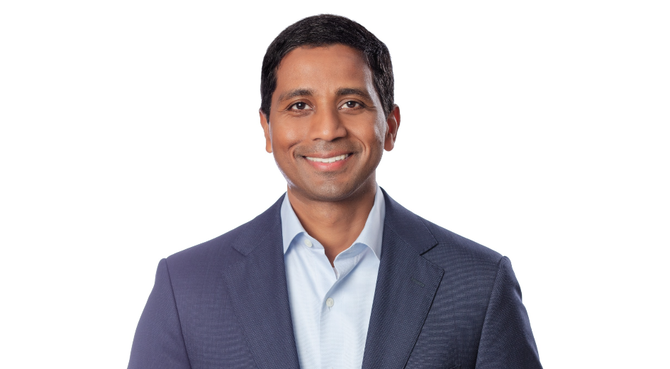
CEO of Publicis Sapient Nigel Vaz. (X/@PublicisGroupe)
Short Url
Updated 35 min 58 sec ago
Follow

Saudi Arabia’s approach to AI transformation delivering business value: Publicis Sapient CEO

  • Nigel Vaz: We’re reimagining how, in the case of tourism, we transform Saudi Arabia into a destination that is actually relevant and attractive for people to explore
  • Vaz: Our Slingshot platform handles everything from design to deployment, allowing legacy modernization and new digital apps to be built

DAVOS: As 2026 emerges as a tipping point for artificial intelligence, executives across the Middle East are moving from experimentation to scaling AI in ways that can deliver real business value, according to Nigel Vaz, CEO of Publicis Sapient.

Speaking to Arab News at the World Economic Forum in Davos, Vaz highlighted Saudi Arabia’s proactive approach to integrating technology into national and sectoral strategies.

“I was in meetings with the minister for tourism in Saudi Arabia (Ahmed Al-Khateeb), where we do a lot of work for them, and meetings with (Communications) Minister Abdullah Alswaha,” he said.

“What you realize is technology is incredibly critical, but it’s critical to the extent that we’re reimagining how, in the case of tourism, we transform Saudi Arabia into a destination that is actually relevant and attractive for people to explore.”

Vaz also highlighted applications of AI beyond tourism, including energy and healthcare.

“You’re thinking about how it can enable a greener approach to energy, which is a big goal for their government,” he said.

“And in healthcare, predictive and preventative approaches allow trends to be addressed before they occur, which is a significant cost saving for the government,” he added.

The shift in mindset around AI reflects a broader trend globally.

“Last year there was a lot of excitement about AI, but most work was at a proof-of-concept stage,” Vaz said. “What’s tipped this year is the recognition that AI is only valuable if it drives real business outcomes.”

This involves moving beyond automating individual tasks to enabling entire workflows or decision sets that produce superior results.

“Individual tasks being automated by AI don’t create business benefit,” he said. “Entire workflows or decision sets need to be enabled by AI, and they must deliver better outcomes than are currently possible today.”

Vaz underscored the importance of integrating people and AI rather than treating technology as a replacement, adding: “Unless you’re a technology nerd, you’re not really caring about the technology for its own sake.”

Geopolitical tensions further heighten the importance of AI for real-time, intelligent decision-making. Vaz explained that Publicis Sapient has developed platforms such as Slingshot, Bodhi and SustainAI to deliver enterprise-grade AI solutions with measurable business impact.

“Our Slingshot platform handles everything from design to deployment, allowing legacy modernization and new digital apps to be built two to three times faster and 30 to 40 percent cheaper,” he said.

Bodhi leverages industry expertise to create agentic capabilities for autonomous decision-making, while Sustain transforms IT service management, using AI to monitor systems, self-heal, and reduce manual workload, he explained

“All of this is not to sell software; it’s to deliver outcomes to clients. That’s what we care about,” Vaz added.

He offered guidance for leaders navigating the AI era.

“An AI North Star is focusing on an area of the business where untapped value can be unlocked,” he said. “Focus on how that value will drive growth, reduce costs, or improve experiences for customers or employees, and use AI to achieve those outcomes, rather than experimenting in small pockets.”

For Vaz, 2026 represents a year when enterprises, particularly in forward-looking Middle Eastern economies like Saudi Arabia, are moving from theory to practice, scaling AI to deliver tangible impact and measurable outcomes for businesses, governments, and citizens alike.


Saudi Arabia, Middle East infrastructure and AI to drive next rotation of global capital, says BNY executive

Updated 22 January 2026
Follow

Saudi Arabia, Middle East infrastructure and AI to drive next rotation of global capital, says BNY executive

  • Hani Kablawi: I’m excited about (Saudi Arabia) coming out in force, reaching out to the investor community, saying: ‘Tell us what you need to see’
  • Kablawi: We (BNY) are one of, within our peer group, the biggest investors in both AI and in digital assets

DAVOS: As global markets contend with heightened volatility and shifting capital flows, the Middle East — and Saudi Arabia in particular — is positioning itself as a destination for long-term investment, according to Hani Kablawi, senior executive vice president and head of international at BNY.

Speaking to Arab News at the World Economic Forum in Davos, Kablawi pointed to the region’s increasing engagement with international investors, combined with large-scale infrastructure ambitions, as key factors shaping where global capital could move next.

“The really exciting thing for me in the Middle East is it isn’t one thing,” Kablawi said. “It’s very different. Demand profiles are very different, investing structures are very different, and what they’re looking to achieve is very different in different places.”

Saudi Arabia, he said, was standing out for its approach to the global investment community.

“I’m excited about (Saudi Arabia) coming out in force, reaching out to the investor community, saying: ‘Tell us what you need to see’,” he said.

“We, Saudi, are united in our approach to the international global investment community, and we are able and willing to make the changes necessary to be a destination of capital and foreign direct investments over the next few years.”

While foreign direct investment into Saudi Arabia has increased significantly in recent years, Kablawi pointed out it remains from a relatively low base.

“FDIs in Saudi have gone up fourfold over the past few years,” he said, adding there was still substantial headroom for growth.

He said the Kingdom understands what international investors require, particularly around transparency, data and risk-return profiles.

Saudi Arabia also benefits from the presence of government and semi-state entities that can help de-risk projects.

“They have the structures also to provide a good risk-return trade-off,” he said, pointing to partnerships involving national funds and government-linked investors.

Major infrastructure investment is central to that strategy, spanning transportation, aviation, ports, logistics, rail and economic cities.

“They have announced the big projects. We know what they look like,” Kablawi said. “Now it’s about the structuring of those projects in a way that attracts investment.”

Globally, capital flows remain heavily concentrated in the US, even during periods of market stress. Drawing on BNY’s data, which covers $58 trillion in assets under custody and administration, Kablawi said US assets continue to sit above long-term trend lines.

“US equities currently represent 64 percent of our total equity holdings, and government securities in the US are 72 percent of our total holdings,” he said.

During the market volatility seen last April, he added, holdings in US Treasuries fell only marginally.

“That represented two things,” Kablawi said. “One is, from a reserve currency status perspective, no alternatives yet. And from an equity perspective, continued interest in the Magnificent Seven (seven dominant US technology giants), tech stocks, AI, and the accessibility of those investments to global investors.”

Looking ahead to 2026, BNY’s analysts expect interest rate easing in the US, alongside a broadening of equity investment beyond the largest technology names. Kablawi also highlighted Europe as an area where both equities and fixed income remain underheld, despite growing infrastructure ambitions across the region.

“There’s a lot of demand for infrastructure investment all around the world,” he said, pointing to announced spending in the UK, Germany and the Middle East.

“In 2026, we’re going to be watching and hopefully helping with some of those rotations going towards long-term productive finance,” he added.

Technology is another defining theme.

Kablawi said BNY is focusing on areas it can control, particularly investment in artificial intelligence and digital assets.

“We are one of, within our peer group, the biggest investors in both AI and in digital assets,” he said.

Since last year, BNY has rolled out more than 130 AI use cases into production and made its enterprise AI platform available to all employees.

He added the firm now has around 140 “digital employees” supporting day-to-day operations.

“The connectivity between traditional finance and digital finance will grow,” Kablawi said. “The rails that exist that BNY is offering between traditional finance and digital finance will continue to grow.”

Looking ahead, he stressed progress will depend on continued innovation: “Anybody who’s got a little bit of an early mover advantage, it’s only an early mover advantage,” he said. “A lot of people will be pushing into it. You can never be complacent, but we like where we are.”