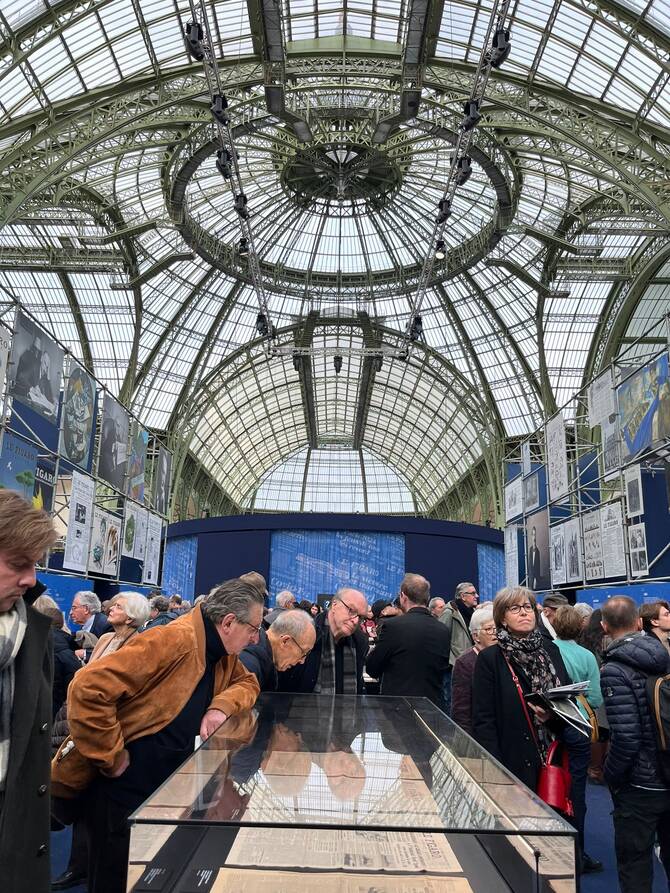
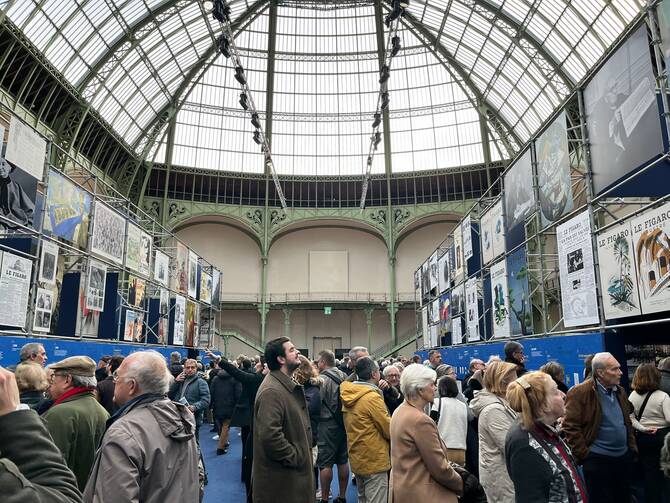
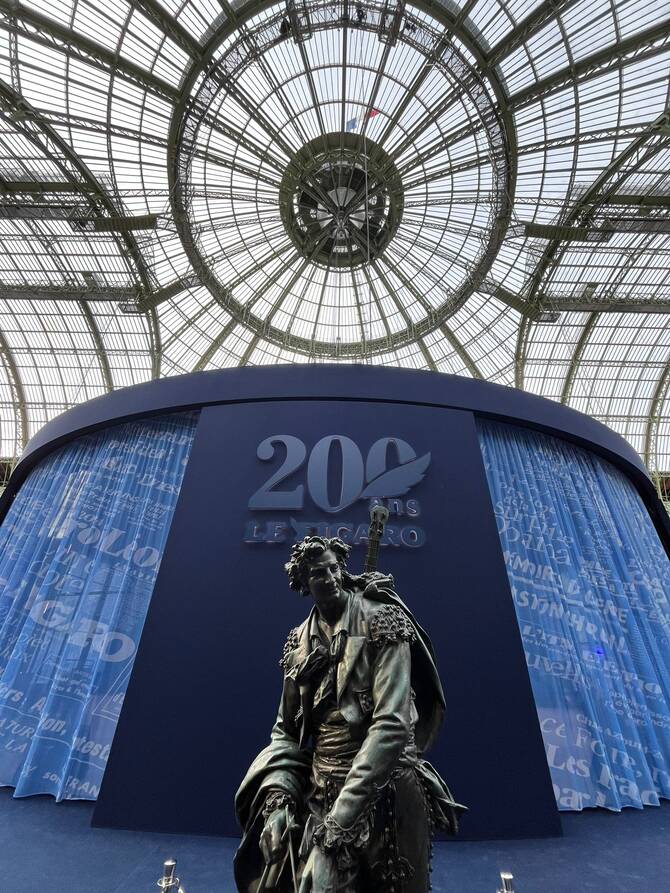
PARIS: One of France’s most influential newspapers marked a major milestone this month with a landmark exhibition beneath the soaring glass nave of the Grand Palais, tracing two centuries of journalism, literature and political debate.
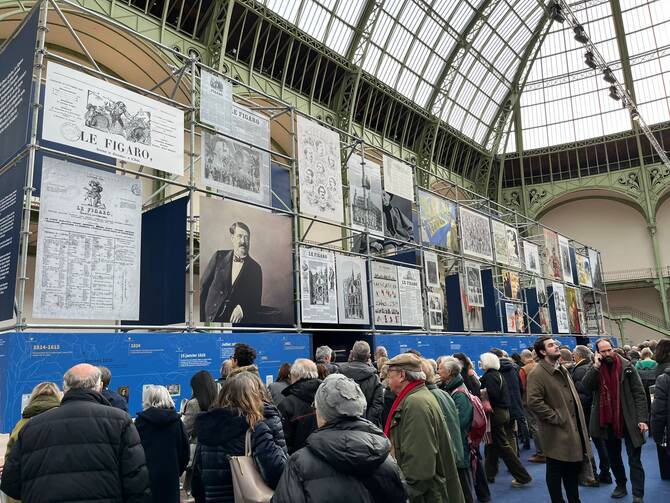
Titled 1826–2026: 200 years of freedom, the exhibition celebrated the bicentennial of Le Figaro, offering visitors a rare opportunity to step inside the newspaper’s vast historical archive. Held over three days in mid-January, the free exhibition drew large crowds eager to explore how the title has both chronicled and shaped modern French history.
More than 300 original items were displayed, including historic front pages, photographs, illustrations and handwritten manuscripts. Together, they charted Le Figaro’s evolution from a 19th-century satirical publication into a leading national daily, reflecting eras of revolution, war, cultural change and technological disruption.
The exhibition unfolded across a series of thematic spaces, guiding visitors through defining moments in the paper’s past — from its literary golden age to its role in political debate and its transition into the digital era. Particular attention was paid to the newspaper’s long association with prominent writers and intellectuals, underscoring the close relationship between journalism and cultural life in France.
Beyond the displays, the program extended into live journalism. Public editorial meetings, panel discussions and film screenings invited audiences to engage directly with editors, writers and media figures, turning the exhibition into a forum for debate about the future of the press and freedom of expression.
Hosted at the Grand Palais, the setting itself reinforced the exhibition’s ambition: to place journalism firmly within the country’s cultural heritage. While the exhibition has now concluded, the bicentennial celebrations continue through special publications and broadcasts, reaffirming Le Figaro’s place in France’s public life — and the enduring relevance of a free and questioning press in an age of rapid change.

Paris exhibition marks 200 years of Le Figaro and the enduring power of the press
https://arab.news/v4avm
Paris exhibition marks 200 years of Le Figaro and the enduring power of the press
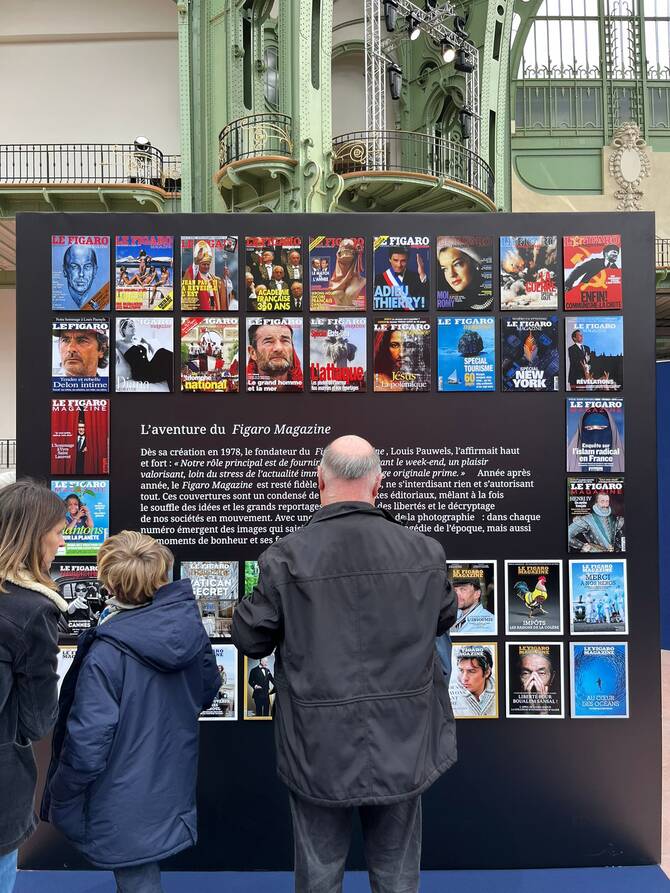
- The exhibition celebrated the bicentennial of Le Figaro, offering visitors a rare opportunity to step inside the newspaper’s vast historical archive
Media watchdogs condemn Israeli airstrike that killed 3 journalists in Gaza, call for investigation
- International Press Institute, Committee to Protect Journalists and Reporters Without Borders among organizations demanding urgent action
DUBAI: Media watchdogs including the International Press Institute, the Committee to Protect Journalists and Reporters Without Borders have spoken out against Israel’s treatment of media workers following an airstrike that killed 3 journalists in Gaza on Wednesday.
Those killed were Mohammed Salah Qashta, Abdul Raouf Shaat and Anas Ghneim.
The Israeli military said the attack targeted what it had identified as “several suspects” operating a drone and “affiliated with Hamas.”
According to eyewitnesses, the journalists were using a drone to record aid distribution by the Egyptian Relief Committee when the strike hit one of the committee’s vehicles.
The IPI called for an “immediate and credible investigation” and renewed pressure on the international community to take “concrete actions” to hold Israel accountable.
IPI executive director Scott Griffen said the Israeli government has “failed to credibly investigate attacks on journalists” and that the “international community has failed to hold Israel to account for its pattern of targeting and killing journalists.”
He urged strong action, saying that “it is long past time for the international community to take concrete steps to end the cycle of complete impunity for killings of journalists in Gaza.”
The International Federation of Journalists and the Palestinian Journalists Syndicate also condemned the killings and attacks on journalists, calling for an immediate investigation.
The IFJ appealed to all “combatants in this conflict to do their utmost to safeguard journalists and media professionals,” said IFJ general secretary Anthony Bellanger.
“Media workers in areas of armed conflict must be treated and protected as civilians and allowed to perform their work without interference,” he added.
The PJS said that the direct shelling of the journalists’ vehicle constitutes a war crime and a crime against humanity under international humanitarian law, in violation of the Geneva Conventions and UN resolutions that guarantee the protection of journalists during armed conflicts.
The syndicate called on the International Criminal Court to open “urgent and serious investigations” and to “issue arrest warrants against those responsible for the killing of journalists.”
It also urged the UN and other international organizations to take action “rather than limiting their response to statements of condemnation.”
The CPJ condemned the strike, which took place amid a ceasefire, said regional director Sara Qudah.
“Israel, which possesses advanced technology capable of identifying its targets, has an obligation under international law to protect journalists,” she said.
On Thursday, CPJ and RSF called on the 29 member states of the Media Freedom Coalition, in a joint letter, to take concrete steps toward guaranteeing media access to the Gaza Strip.
The move comes ahead of the Israeli Supreme Court hearing on Jan. 26 that will determine whether the press will have independent access to Gaza.
The signatories asked governments to send official representatives to the Jan. 26 hearing and to prioritize press freedom in their engagement with the new technocratic government, formed under a US-backed plan to govern Gaza.
They also urged states to ensure that the International Stabilization Force applies UN Security Council Resolution 2222, which recognizes journalists as civilians during armed conflict and affirms their right to protection and access.
“The inaction of states around the world encourages censorship and sets a dangerous precedent for other conflicts, to the detriment of civilian populations, humanitarian aid and political decisions based on verified facts,” said RSF director general Thibaut Bruttin.
More than 200 Palestinian journalists and media workers have been killed since the start of the war in October 2023, according to multiple reports.