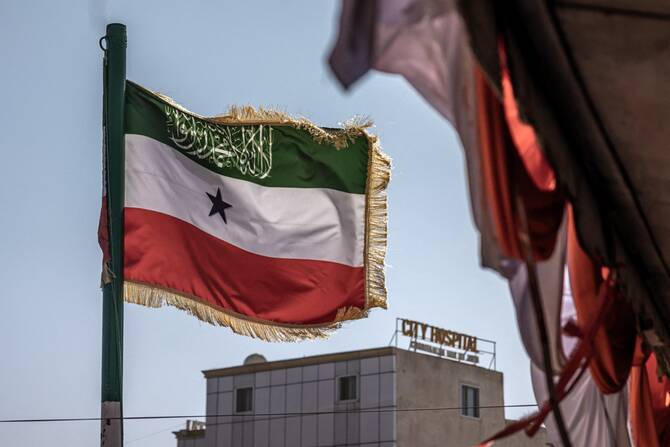
JERUSALEM: Israel became the first country to formally recognize the self-declared Republic of Somaliland as an independent and sovereign state on Friday — a decision that could reshape regional dynamics and test Somalia’s longstanding opposition to its secession.
Prime Minister Benjamin Netanyahu said Israel would seek immediate cooperation with Somaliland in agriculture, health, technology and the economy. In a statement he congratulated Somaliland’s president, Abdirahman Mohamed Abdullahi, praised his leadership and invited him to visit Israel.
Netanyahu said the declaration “is in the spirit of the Abraham Accords, signed at the initiative of President Trump.”
The 2020 accords were brokered by Trump’s first administration and included Israel formalising diplomatic relations with the United Arab Emirates and Bahrain, with other countries joining later.
Netanyahu, Foreign Minister Gideon Saar and Somaliland’s president signed a joint declaration of mutual recognition, the Israeli statement said.
Abdullahi said in a statement that Somaliland would join the Abraham Accords, calling it a step toward regional and global peace. He said Somaliland was committed to building partnerships, boosting mutual prosperity and promoting stability across the Middle East and Africa.
Egypt meanwhile said Foreign Minister Badr Abdelatty held phone calls on Friday with his counterparts from Somalia, Turkiye and Djibouti to discuss what they described as dangerous developments in the Horn of Africa following Israel’s announcement.
The ministers condemned Israel’s recognition of Somaliland, reaffirmed their full support for Somalia’s unity and territorial integrity, and warned that recognizing breakaway regions poses a threat to international peace and security, Egypt’s foreign ministry said.
Somaliland has enjoyed effective autonomy — and relative peace and stability — since 1991 when Somalia descended into civil war, but the breakaway region has failed to receive recognition from any other country.
Over the years, Somalia has rallied international actors against any country recognizing Somaliland.
The former British protectorate hopes that recognition by Israel will encourage other nations to follow suit, increasing its diplomatic heft and access to international markets.
In March, Somalia and its breakaway region of Somaliland also denied receiving any proposal from the United States or Israel to resettle Palestinians from Gaza, with Mogadishu saying it categorically rejected any such move.


![]()

Israel becomes first country to formally recognize Somaliland as independent state
Short Url
https://arab.news/98nuj
Israel becomes first country to formally recognize Somaliland as independent state
- Netanyahu said the declaration “is in the spirit of the Abraham Accords, signed at the initiative of President Trump”
- Somalia, Egypt, Turkey and Djibouti condemn Israel’s recognition of Somaliland, Egypt says


Latest updates


© 2026 SAUDI RESEARCH & PUBLISHING COMPANY, All Rights Reserved And subject to Terms of Use Agreement.