

14 sculptures go on display at public spaces in Riyadh

1 / 4
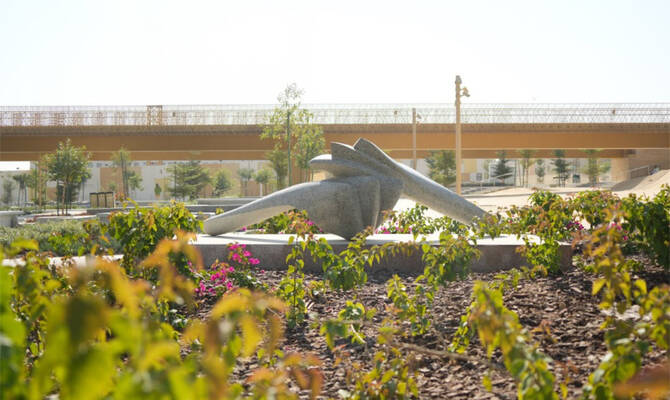
The Riyadh Art Program installed on Wednesday 14 sculptures selected from the Tuwaiq International Sculpture Symposium at prominent locations in Riyadh, including the ROSHN Front, SEDRA Residential Community, and Sports Boulevard. (Supplied)
2 / 4
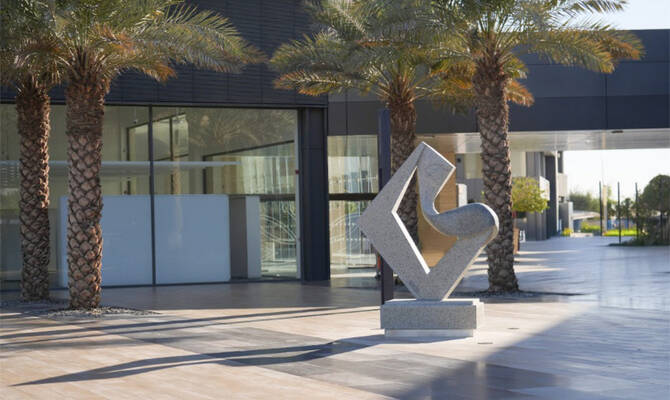
The Riyadh Art Program installed on Wednesday 14 sculptures selected from the Tuwaiq International Sculpture Symposium at prominent locations in Riyadh, including the ROSHN Front, SEDRA Residential Community, and Sports Boulevard. (Supplied)
3 / 4
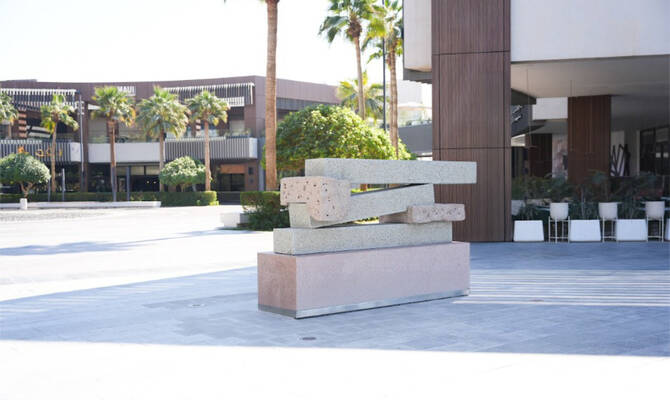
The Riyadh Art Program installed on Wednesday 14 sculptures selected from the Tuwaiq International Sculpture Symposium at prominent locations in Riyadh, including the ROSHN Front, SEDRA Residential Community, and Sports Boulevard. (Supplied)
4 / 4
The Riyadh Art Program installed on Wednesday 14 sculptures selected from the Tuwaiq International Sculpture Symposium at prominent locations in Riyadh, including the ROSHN Front, SEDRA Residential Community, and Sports Boulevard. (Supplied)
Short Url
Updated 11 December 2025
Follow

14 sculptures go on display at public spaces in Riyadh

  • The works were chosen by Riyadh Art from its international Tuwaiq Sculpture symposium to reflect its ‘vision of weaving beauty and intellect into the city’s fabric’
  • Initiative aligns with efforts to make art a key part of city’s identity that improves quality of life and promotes the cultural economy, says Royal Commission for Riyadh City’s Khalid Al-Hazani

RIYADH: Fourteen sculptures selected from the annual international Tuwaiq Sculpture symposium, a Riyadh Art program, went on display on Wednesday at three prominent public spaces across the Saudi capital: ROSHN Front, the SEDRA residential community, and Sports Boulevard.

The project is part of Riyad Art’s efforts to showcase artworks in public spaces, and the addition of more works in other places is expected later.

Khalid Al-Hazani, the executive vice president of the lifestyle sector at the Royal Commission for Riyadh City, said: “This step reflects (Riyadh Art’s) vision of weaving beauty and intellect into the city’s fabric, and creating vibrant and culturally rich public spaces, allowing art to become an integral part of people’s daily lives.”

It is also in line with Riyadh Art’s broader strategy for transforming the city into an open-air art gallery, he added, thereby “turning art into a central element of the city’s identity and a key contributor to improving quality of life and promoting the cultural economy.” 
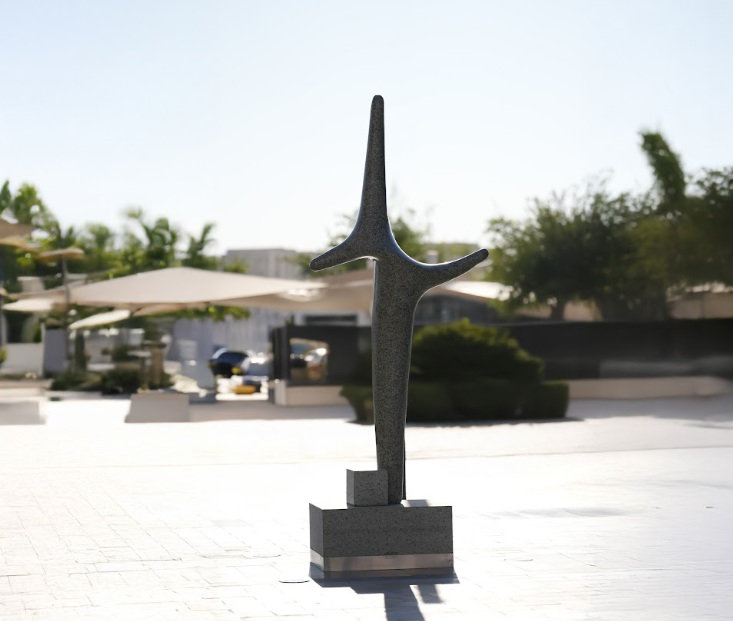


The Riyadh Art Program installed on Wednesday 14 sculptures selected from the Tuwaiq International Sculpture Symposium at prominent locations in Riyadh, including the ROSHN Front, SEDRA Residential Community, and Sports Boulevard. (Supplied)

The three chosen locations were considered perfect places to host the artworks because of their vibrancy, strong community connections and accessibility, Al-Hazani noted.

“This provides residents and visitors with the opportunity to engage with the sculptures in their everyday lives,” he said.

Seven of the sculptures have been installed at ROSHN Front, considered a key urban hub. The artworks on display there form a thought-provoking artistic landscape that encourages interaction, organizers said, and explores a number of themes including the values of urban transformation, community spirit, and creative curiosity.

Three sculptures are on display at the SEDRA residential community. Chosen to complement its serene character and nature-integrated urban planning, they blend in with their surroundings to reflect the values of environmental harmony, contemplation and renewal, organizers explained.

The remaining four sculptures are at Sports Boulevard, known for its open, green spaces. These works reflect several concepts, in particular ideas of nature, balance and public health.

All of the sculptures are part of Riyadh Art’s permanent collection, which includes works created by local and international artists during the Tuwaiq Sculpture symposium.


Rare sighting of critically endangered leatherback turtle in Red Sea

Updated 58 min 29 sec ago
Follow

Rare sighting of critically endangered leatherback turtle in Red Sea

  • Turtles travel thousands of kilometers to Red Sea
  • Nesting 6,500km away in India’s Andaman Islands

RIYADH: Saudi Arabia’s National Center for Wildlife has documented a rare sighting of a leatherback sea turtle in the Red Sea, marking a significant biological record for one of the planet’s most critically endangered marine species.

The sighting occurred approximately 30 km off the coast of Al-Qunfudhah within the Blue Holes Protected Area, a newly established marine reserve, according to a recent report from the Saudi Press Agency.

The NCW said the presence of a leatherback in these waters was an exceptional event.

Recognized as the largest turtle species on Earth, the leatherback can weigh up to 900 kilograms. It has a unique leathery, black carapace — distinguished by five longitudinal ridges rather than a hard bony shell — and able to dive to depths exceeding 1,000 meters.

Shutterstock image

Noting the species’ migratory nature, the center explained that leatherbacks travel thousands of kilometers foraging for jellyfish. The specimen likely navigated through the Bab Al-Mandeb Strait in search of food.

This is considered a remarkable journey, the NCW said, noting that the nearest known populations reside in the Indian Ocean, spanning waters from South Africa to Sri Lanka (roughly 7,000 to 8,000 km away).

The closest known nesting grounds are located in India’s Andaman Islands, approximately 6,500 kilometers away. No nesting activity has been recorded in the Red Sea.

According to the Red List of the International Union for Conservation of Nature, the leatherback is Critically Endangered in the Indian Ocean.

While data for the Red Sea and Arabian Gulf is scarce, recent isolated sightings include a juvenile recorded in Jordan in December 2025 and another off Djibouti in 2019.

The NCW emphasized that these rare appearances highlight the ecological importance of the Kingdom's marine conservation efforts in the Red Sea.

The center pointed to the Farasan Islands Marine Protected Area, along with the new Blue Holes and Ras Hatiba reserves, as critical sanctuaries that could support the expansion in range of such endangered species.