

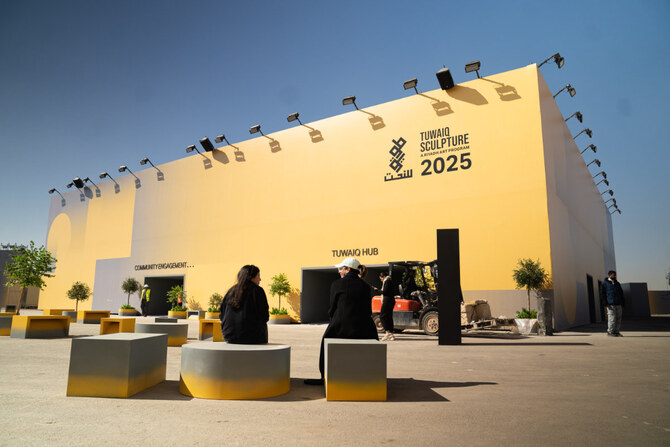


RIYADH: Roshn Front is set to be the focus for all things artistic over the coming weeks as the sixth annual Tuwaiq Sculpture Symposium opened on Wednesday under the theme “From Then to Now: Joy in the Struggle of Making.”
According its curators, Sebastian Betancur-Montoya and Dr. Manal Al-Harbi, the event, which runs until Feb. 8, is a celebration of the artist’s journey — the joy, struggle and fulfillment that comes with the act of creation.
“I approach the curation from a place of exploration and understanding the idea of the symposium as a place to share knowledge and to produce knowledge,” Betancur-Montoya told Arab News.
“We are working with artists. They work with their hands, with their forms, with their shapes and (these are) the type of experiences and knowledge and things we’re producing here from that perspective.
“I’m interested in the processes of how things and ideas come about. Stone requires a technique and each artist approaches the boulder or the block of stone in a different way, so one of the first things that came to mind was ‘how do we make this visible?’”
Tuwaiq Sculpture focuses not only on the final creations but the creative, physical and intellectual process behind them.
Betancur-Montoya draws inspiration from Albert Camus’ “The Myth of Sisyphus,” an essay which ends with the line: “one must imagine Sisyphus happy.”
Instead of the traditional understanding of the myth as Sisyphus being punished by rolling the boulder up a hill just to see it roll back down over and over, Camus proposed that there was a meditative purpose in the aim for perfection.
“I connect that idea of this endless Sisyphean task of pushing the boulder to the labor of an artist, creating their works and then letting them go before they are ever completed, because it’s an impossibility. Projects are not completed. Projects are abandoned or let go or freed,” Betancur-Montoya said.
Over the coming weeks, Roshn Front will be transformed into a vibrant artistic playground where 30 sculptors from 23 countries will sculpt public artworks in real time. For visitors this is a rare opportunity to witness the magic of sculpture from the ground up, as raw materials slowly take form under the hands of craftspeople.
This year’s event also includes an apprenticeship program for young artists who aspire to be the next Tuwaiq participants.
Sarah Alruwayti, director of the symposium, said: “We were actually surprised to receive more than 400 applicants for the apprenticeship program.
“I think this was a huge milestone for us and we’re very proud of everyone who participated and who applied.”
Visitors will also have the chance to meet the artists and ask questions. The event features 11 panel discussions that will explore the role of public art in urban spaces, and 10 interactive workshops where people can try their hand at crafts like natural dyeing and sustainable art practices.
For those with a deeper curiosity, six masterclasses will dive into advanced sculptural techniques, including kinetic sculptures.
Guided tours and educational trips will also be available, offering insights into both the artists’ creative processes and Riyadh’s blossoming cultural landscape.
The finished sculptures will be unveiled at an exhibition from Feb. 12-24, giving visitors the chance to experience the completed works up close.
“Once the artists are done with the sculptures they are then relocated to different areas and we’ve already started this process (with creations from earlier events). Very soon, you will be able to actually witness these sculptures in their public areas,” Alruwayti said.


