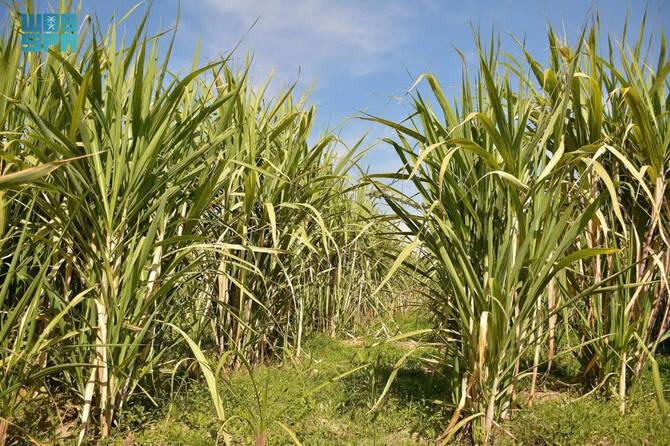
Najran farmers find sugarcane cultivation viable, promising lucrative economic returns

1 / 4
Effective cultivation methods include selecting disease-resistant varieties, proper soil preparation, and balanced irrigation and fertilization. (SPA)
2 / 4
Effective cultivation methods include selecting disease-resistant varieties, proper soil preparation, and balanced irrigation and fertilization. (SPA)
3 / 4
Effective cultivation methods include selecting disease-resistant varieties, proper soil preparation, and balanced irrigation and fertilization. (SPA)
4 / 4
Several countries in the Middle East have long been growing sugarcane, with Egypt and Iran as key producers. (SPA)
Short Url
Updated 07 December 2025
Follow

Najran farmers find sugarcane cultivation viable, promising lucrative economic returns

  • Mountain regions in Najran have a temperate climate and abundant water resources, suitable for sugarcane production

NAJRAN: Farmers in Saudi Arabia’s southwestern region of Najran are finding that sugarcane production is a viable enterprise, the Saudi Press Agency reported.

One farmer, Ibrahim Shakwan, confirmed to SPA the success of his 7.3-hectare sugarcane farm and noted “growing regional interest due to its high productivity and lucrative economic returns.”

Najran was chosen as a trial area for sugarcane production owing to the temperate climate, diverse soils, and abundant water resources in its mountainous parts. The experiment is in line with Saudi Vision 2030, which calls for enhancing food security and self-sufficiency.

Other regions in the Kingdom’s southwest, such as Jazan, Asir and Baha, have features similar to Najran.


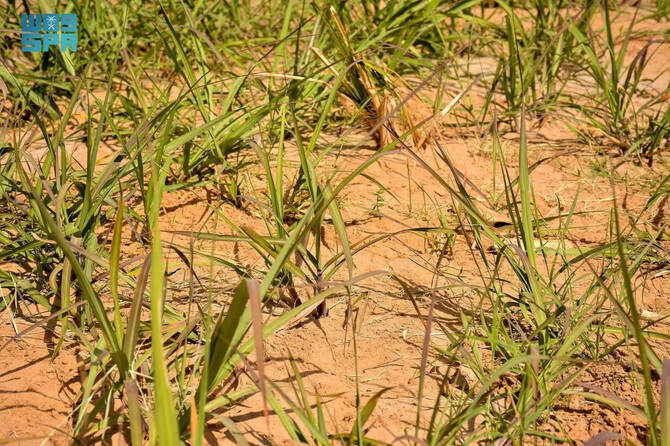
Sugarcane is easily propagated via cuttings that yield a high number of plantable pieces. (SPA)

Sugarcane is easily propagated via cuttings that yield a high number of plantable segments. Planting occurs primarily in the summer, although seedlings can be planted year round. 

Effective cultivation methods include selecting disease-resistant varieties, proper soil preparation, and balanced irrigation and fertilization, according to the report.

The crop is harvested about eight months after planting, with fertilization ending three months before and irrigation ceasing 20 days prior to harvest to boost sugar concentration and improve juice quality, which is rich in natural sugars, vitamins, and minerals.

Several countries in the Middle East have long been growing sugarcane, with Egypt and Iran the key producers. 

Botanists believe sugarcane was first cultivated 10,000 years ago in what is now New Guinea in the southwest Pacific Ocean, where the environment is humid, according to an article titled Sugar Please published in the Aramcoworld magazine in 2012.



Saudi Cabinet condemns ‘blatant’ Iranian aggression; affirms Kingdom’s right to respond to attacks

Updated 46 min 27 sec ago
Follow

Saudi Cabinet condemns ‘blatant’ Iranian aggression; affirms Kingdom’s right to respond to attacks

RIYADH: Saudi Arabia has warned it reserves the "full right" to respond to Iranian aggression following a series of "blatant and cowardly" strikes targeting the capital and the Eastern Province. 

The warning came during a late-night Cabinet session on Tuesday, chaired by Crown Prince and Prime Minister Mohammed bin Salman via videoconference, according to the Saudi Press Agency (SPA).

The Cabinet also "reaffirmed Saudi Arabia’s full solidarity with the brotherly countries whose territories were subjected to blatant Iranian aggression," SPA said.

The session followed a dramatic escalation of hostilities, including a direct drone attack on the US Embassy in Riyadh. 

Major General Turki al-Malki, spokesperson for the Ministry of Defense, confirmed that while air defenses intercepted multiple threats, the embassy compound sustained a "limited fire and minor material damage." 

He further announced that Saudi forces successfully intercepted and destroyed eight additional drones targeting the cities of Riyadh and Al-Kharj early Tuesday morning.