


RIYADH: The agricultural landscape of the Najran region, historically a cultural and economic anchor, now stands at the forefront of Saudi Arabia’s push for food security, environmental stewardship, and economic vitality, according to a report from the Saudi Press Agency published on Saturday.
“Blessed with fertile land, a temperate climate, and diverse topography like mountainous terrain and extensive plains, Najran is a year-round agricultural hub,” the SPA stated.
Farmers in Najran cultivate crops including citrus fruits, wheat varieties such as Al-Samraa, samma, and zarai, and a range of dates including bayadh, mawakil, barhi, khalas, and rutab.
The region also yields tomatoes, cucumbers, eggplants, zucchini, beans, onions, and various leafy greens.
FASTFACT
The Ministry of Environment, Water, and Agriculture’s provides farmers with marketing help, technical advice, and promotes organic farming practices to ensure the production of safe, high-quality food.
Through the use of innovative modern agricultural practices, local farmers have “effectively contributed to producing healthy, safe food free from pesticides and chemical fertilizers,” according to the SPA.
Hamad Al-Abbas has been an organic famer for the past six years. His farm specializes in crops strawberries and stevia, the latter harvested thrice yearly.
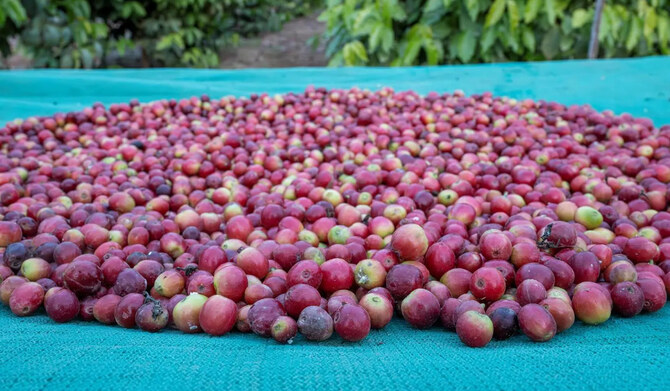
A standout initiative in the region is the coffee cultivation project. Ali Dhafer Al-Harith, who heads the Regional Cooperative Coffee Association, told the SPA that his passion for farming led to experimenting with coffee.
He embarked on the venture in 2022 with 4,000 seedlings. Today, the project has grown to encompass 80 farms with roughly 100,000 coffee trees, aged between three to six years, nurturing varieties including khoulani, adeni, dawairi, tuffahi, and the region-specific taisani.
Coffee planting continues year-round, except during July and August, with flowering in March and harvesting in October, he explained.
The association plays a vital role in supporting coffee farms, offering workshops in collaboration with the Ministry of Environment, Water, and Agriculture, and handling post-harvest logistics including processing, packaging, and marketing operations.
The ministry’s involvement and support is pivotal for agricultural initiatives in Najran, providing farmers with marketing help, technical advice, and promoting organic farming practices to ensure the production of safe, high-quality food, the SPA reported.
Mureih bin Sharea Al-Shahrani, the ministry’s regional director, explained that the ministry’s support system includes helping famers cultivate local trees and rare plants, as well as “various educational programs and workshops,” through which the ministry aims to “spread awareness and expertise in sustainable agriculture.”


