


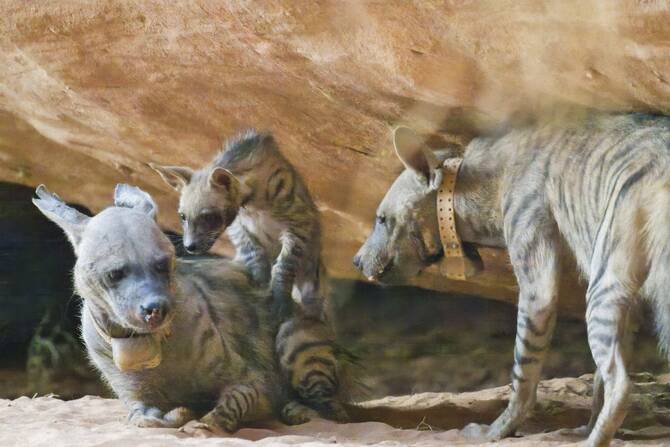

RIYADH: Saudi Arabia’s National Center for Wildlife, in collaboration with Neom, has documented the birth of the first striped hyena cub since two breeding pairs were reintroduced to the Neom Nature Reserve.
The birth is a positive sign that the hyenas have adapted successfully to the reserve and of their ability to reproduce in the wild, the Saudi Press Agency reported on Monday.
It marks another milestone in NCW’s wildlife breeding and reintroduction programs, which include efforts to restore the natural roles of predator species within ecosystems.
Two pairs of striped hyenas were selected and underwent a rehabilitation program at one of NCW’s wildlife care facilities before the release. This included veterinary examinations, health monitoring and preparation for the transition into the wild.
A specialized NCW team also conducted a field assessment of the reintroduction site to verify its readiness and ecological suitability for the hyenas.
NCW CEO Dr. Mohammed Qurban said: “This is the first striped hyena birth following their reintroduction, and it marks an important milestone in the center’s wildlife breeding and reintroduction programs.”
He said reintroducing species into their natural habitats represented an advanced stage in establishing populations capable of surviving and reproducing in the wild and restoring their ecological roles.
Striped hyenas play an important role by feeding on carcasses and carrion. Their numbers have declined in some areas due to threats including hunting and poisoning.




