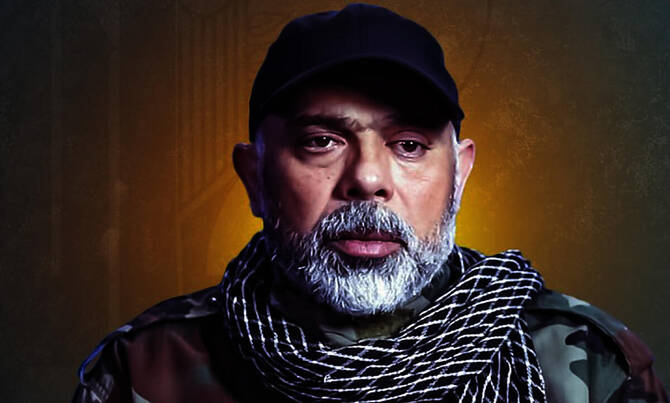
BEIRUT: Hezbollah will hold a funeral on Monday for its top military chief and other members of the militant group, a day after Israel killed them with a strike on Beirut’s southern suburbs.
Haytham Ali Tabatabai is the most senior Hezbollah commander to be killed by Israel since a November 2024 ceasefire sought to end over a year of hostilities between the two sides.
Tabatabai’s assassination comes as Israel has escalated its attacks on Lebanon, with the United States increasing its pressure on the Lebanese government to disarm Hezbollah.
The group called on its supporters to attend the mass funeral for its “great leader” Tabatabai which will take place in the southern suburbs, a densely populated area where it holds sway.
The Israeli military said on Sunday that it had “eliminated the terrorist Haytham Ali Tabatabai, Hezbollah’s chief of general staff.”
The group announced the death of Tabatabai and four other members in the attack.
Hezbollah said Tabatabai assumed the role of military leader after the most recent war with Israel, which saw the group suffer heavy losses including the killings of its senior leaders.
Israel has repeatedly bombed Lebanon despite the truce, usually saying it is targeting Hezbollah members and infrastructure to stop the group from rearming.
According to the agreement, Hezbollah was to pull its forces north of the Litani River, some 30 kilometers (20 miles) north of the border with Israel and have its military infrastructure there dismantled.
Under a government-approved plan, the Lebanese army is to dismantle Hezbollah military infrastructure south of the river by the end of the year, before tackling the rest of the country.
Hezbollah has strongly rejected the move.
Limited options
After the assassination, Israeli Prime Minister Benjamin Netanyahu said he would “not allow Hezbollah to rebuild its power” and called on the Lebanese government to “fulfil its commitment to disarm Hezbollah.”
A source close to Hezbollah told AFP on condition of anonymity that there are currently “two opinions within the group — those who wish to respond to the assassination and those who want to refrain from doing so — but the leadership tends to adopt the utmost forms of diplomacy at the present stage.”
The group’s choices now seem limited. Not only was it weakened by the last war with Israel, it also lost its supply route through Syria with the fall of former ruler and ally Bashar Assad in December.
In addition to disarmament, Washington is also demanding that Beirut dry up the group’s funding from Iran, which slammed Sunday’s “cowardly” assassination.
“Hezbollah’s options are very limited,” Atlantic Council researcher Nicholas Blanford told AFP, as “its support base is clamouring for revenge but if Hezbollah responds directly... Israel will strike back very hard and no one in Lebanon will thank Hezbollah for that.”
Blanford said the strike was the biggest blow to Hezbollah since the ceasefire “because of (Tabatabai’s) seniority and the fact that it demonstrates the Israelis can still locate and target senior officials despite whatever protective measures Hezbollah is undertaking” after the war.
The Lebanese military has said it is carrying out its plan to disarm the group, but the US and Israel have accused Lebanese authorities of stalling the process.
A military official told AFP last week that the American and Israeli demands to have Hezbollah fully disarmed by the end of the year were “impossible” given a shortage of personnel and equipment and fears of confrontations with local communities that support Hezbollah.
In his condemnation of the Israeli strike on Sunday, Lebanese Prime Minister Nawaf Salam stressed that “the only way to consolidate stability” is through “extending the authority of the state over all its territory with its own forces, and enabling the Lebanese army to carry out its duties.”


![]()

Hezbollah mourns top commander killed in Israeli strike
Short Url
https://arab.news/zjfb9
Hezbollah mourns top commander killed in Israeli strike
- Tabatabai’s assassination comes as Israel has escalated its attacks on Lebanon
- Hezbollah said Tabatabai assumed the role of military leader after the most recent war with Israel


Latest updates


© 2026 SAUDI RESEARCH & PUBLISHING COMPANY, All Rights Reserved And subject to Terms of Use Agreement.