

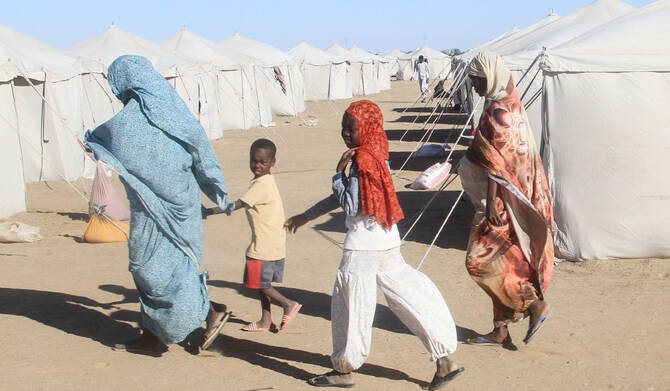

CAIRO: A few weeks before the fall of her hometown to Sudan’s paramilitary group, Nadra Mohamed Ahmed, seven months pregnant at the time, trekked for nearly 40 km across unsafe roads, along with her two children, until she found safe transportation to a shelter across the country.
“By the time I arrived here, I had lost a lot of blood,” said Ahmed from her tent at the overcrowded displacement camp in the town of Al-Dabbah in northern Sudan. “I was admitted to the ICU where I spent a few days and had a blood transfusion.”
Ahmed arrived in the camp fleeing from El-Fasher in West Darfur, two months before the city was seized by the paramilitary Rapid Support Forces, or RSF, which have been battling Sudan’s army for more than two years.
More than 140 pregnant women arrived at Al-Dabbah camps since El-Fasher’s fall last month, said Tasneem Al-Amin from the Sudan Doctors Network, a group of medical professionals tracking the war. Many of these women arrive suffering severe complications, especially hemorrhaging, which sometimes culminate in a miscarriage, she said in a text message.
Carrying her four-year-old daughter on her back and holding her six-year-old son’s hand, Ahmed made part of her 14-day-long journey on foot without her husband, who had gone missing shortly before her escape.


