- Resolution tabled by the US, which also delists Interior Minister Anas Hasan Khattab, is adopted with 14 votes in favor, none opposed; China abstains
- US envoy to UN Mike Waltz says council is sending ‘a strong political signal that recognizes Syria is in a new era’ after fall of Assad regime last December
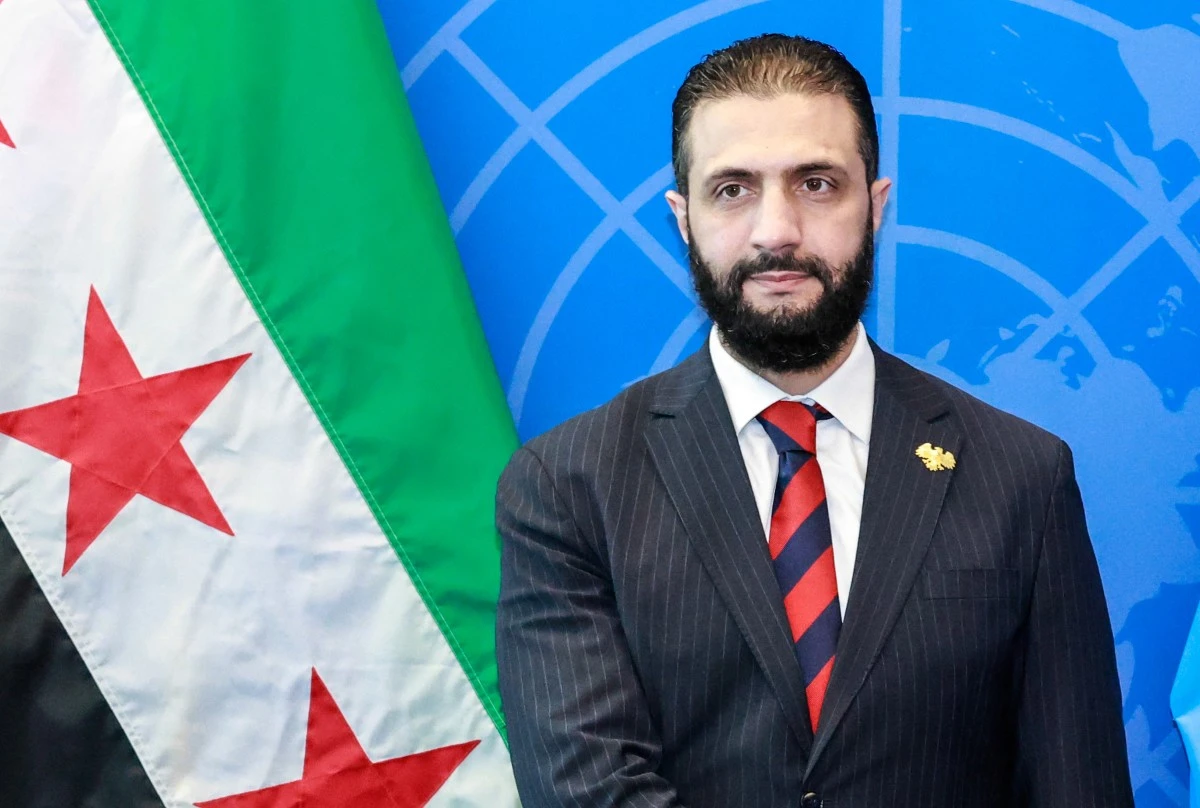
NEW YORK CITY: The UN Security Council voted on Thursday to lift sanctions on Ahmad Al-Sharaa, effectively removing the Syrian president from the Daesh and Al-Qaeda Sanctions List in a move widely seen as signaling international recognition of the post-Assad political order in Syria.
Resolution 2729 was tabled by the US and adopted with 14 votes in favor, zero against and one abstention, by China. It also delists the Syrian interior minister, Anas Hasan Khattab, who was previously designated under the same sanctions regime.
Acting under Chapter VII of the UN Charter, the council declared on Thursday that both officials were no longer subject to asset freezes or travel bans imposed under previous counterterrorism measures.
Al-Sharaa arrived in Belem, Brazil, on Thursday for the 2025 UN Climate Change Conference, COP 30, and is due to meet US President Donald Trump at the White House in Washington on Monday.
Al-Sharaa led the Hayat Tahrir Al-Sham coalition during the December 2024 offensive that toppled the Assad regime, after which he became the de facto leader of Syria.
Washington had been urging the 15-member Security Council for months to ease sanctions on Syria and officials within its new government.
The US permanent representative to the UN, Mike Waltz, said that by adopting the resolution the council was sending “a strong political signal that recognizes Syria is in a new era since Assad and his associates were toppled in December 2024.”
He added: “There is a new Syrian government in place, led by President Ahmad Al-Sharaa, that is working hard to fulfill its commitments on countering terrorism and narcotics, on eliminating any remnants of chemical weapons, and promoting regional security and stability, as well as an inclusive Syrian-led and Syrian-owned political process.
“As President Trump previously indicated, now is Syria’s chance at greatness.”
In making its decision, the Security Council recalled a series of previous resolutions targeting Daesh, Al-Qaeda and affiliated groups, and reaffirmed its “strong commitment to the sovereignty, independence, territorial integrity and national unity of the Syrian Arab Republic.”
The text of the resolution, seen by Arab News, emphasized that the delisting of the Syrian officials was consistent with efforts to promote “the long-term reconstruction, stability and economic development” of the country, while maintaining the integrity of the global framework for counterterrorism sanctions.
The resolution specifically welcomed the commitment of the Syrian Arab Republic to: ensuring “full, safe, rapid and unhindered humanitarian access” in line with international humanitarian law; to countering terrorism, including foreign terrorist fighters, and individuals, groups, undertakings and entities affiliated with Daesh or Al-Qaeda; to the protection of human rights and ensuring the safety and security of all Syrians, regardless of ethnicity or religion; to counter-narcotics efforts; to the advancement of transitional justice; to the nonproliferation and elimination of remnants of chemical weapons; to regional security and stability; and to an inclusive, Syrian-led and Syrian-owned political process.
It expressed an expectation that Syrian authorities would adhere to these pledges and help to uphold regional stability.
Al-Sharaa was sanctioned by the UN in May 2014 when Hayat Tahrir Al-Sham, at the time affiliated with Al-Qaeda, was added to the Daesh and Al-Qaeda Sanctions List. The designation imposed a travel ban and asset freeze that would remain in place for more than a decade.
The Security Council’s vote on Thursday followed a decision by Washington in May to lift most of the US sanctions on Syria. Those measures, introduced in 1979 and expanded significantly after the Syrian civil war began in 2011, restricted trade, investment and energy exports. While the bulk of the restrictions have been lifted, some congressional measures remain in place pending further review.
By formally delisting Al-Sharaa, the Security Council resolution is viewed as marking a turning point in international engagement with the new authorities in Syria.
Diplomats described the move as both pragmatic recognition of the changed realities on the ground in the country, and an incentive for continued cooperation on the issues of humanitarian access, counterterrorism efforts and political reform.