- Summit brings together global leaders, investors and innovators to explore investment opportunities, advance technologies
- Shehbaz Sharif to engage with Saudi leadership to explore cooperation in trade, investment, energy and human resources
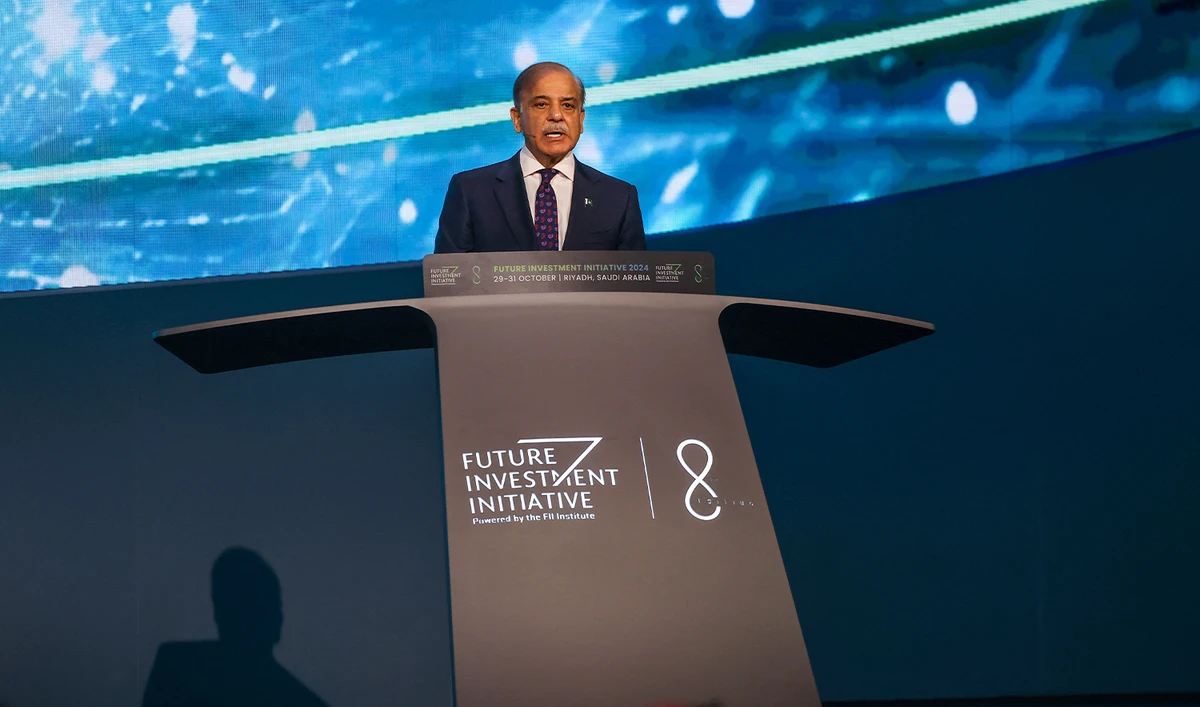
ISLAMABAD: Prime Minister Shehbaz Sharif will visit Saudi Arabia from Oct. 27-29 to attend the Future Investment Initiative (FII) summit, the foreign office said on Sunday, where he will also interact with the Saudi leadership to explore enhanced cooperation in trade, investment and other sectors.
The FII was launched in 2017 by Saudi Arabia’s Public Investment Fund under its Vision 2030 program. The forum brings together global leaders, investors and innovators to explore investment opportunities and advance technologies such as artificial intelligence, robotics and green finance.
This year’s summit is set to focus on the theme: ‘The Key to Prosperity: Unlocking New Frontiers of Growth’ to address global challenges and opportunities, focusing on key topics such as innovation, sustainability, economic inclusion and geopolitical shifts.
“At the invitation of His Royal Highness Crown Prince and Prime Minister Mohammed bin Salman, Prime Minister Muhammad Shehbaz Sharif will lead a high-level delegation, including Deputy Prime Minister/Foreign Minister Senator Mohammad Ishaq Dar, as well as senior Cabinet Ministers — to Riyadh from 27 to 29 October 2025 to participate in the Ninth Edition of the Future Investment Initiative (FII9),” the foreign office said.
The statement said Sharif will engage with the Saudi leadership during his visit to explore avenues for enhanced cooperation in trade, investment, energy, and human resource sectors.
It added that the Pakistan-Saudi Arabia discussions will also cover regional and global issues of mutual interest.
“On the sidelines of FII9, the Prime Minister will also interact with leaders from other participating countries and heads of international organizations,” the foreign office said.
“These exchanges will highlight Pakistan’s investment potential and its readiness to pursue collaborations in sustainable development, in line with the Think, Exchange, and Act model.”
The statement said Sharif’s visit underscores Pakistan’s commitment to advancing economic diplomacy and fostering strategic partnerships in investment, technology and sustainable development.
Pakistan and Saudi Arabia have long enjoyed close ties but have sought to broaden cooperation in recent years, including a defense pact signed in Riyadh during the prime minister’s visit on Sept. 18 and 34 memorandums of understanding worth $2.8 billion across multiple sectors last year.
The landmark defense pact that formalized their decades-old security ties. As per the agreement, an attack on one country will be considered an attack against both.
The two nations share longstanding ties rooted in faith, mutual respect and strategic cooperation, with Riyadh remaining a key political and economic partner of Islamabad.
It also hosts over 2.5 million Pakistani expatriates, the largest source of remittances for Pakistan’s $407 billion economy.