


RIYADH: Startups operating in the Middle East and North Africa witnessed multiple funding rounds in the past week, as companies across a range of industries continue to scale up operations beyond their national borders.
The sustained momentum in funding underscores investor confidence in the emerging startup landscape in the region amid global economic headwinds.
Affirming the growth of the startup ecosystem in the region, a report released by Wamda revealed that startup investments in the MENA hit a record high in September, soaring to $3.5 billion across 74 deals. This growth translates into a 914 percent month-on-month growth and a 1,105 percent year-on-year leap.
According to Wamda, Saudi Arabia led funding activity in the region, with 25 startups raising a combined $2.7 billion, a majority of this coming from the Money20/20 fintech event, which witnessed 15 deals.
KLIQ secures $2.25m in seed funding round
KLIQ, a Saudi-based artificial intelligence-powered influencer marketing platform, has closed a $2.25 million seed investment round led by Sanabil Venture Studio in partnership with Stryber.
Founded in 2025 by Asma’a Al-Maraghi and Badr Al-Malluh, the company helps connect brands with content creators through an AI-driven dashboard that manages campaigns, contracts, payments, and real-time performance tracking.
Cercli raises $12m in series A funding round
Cercli, a UAE-based workforce management platform, has raised $12 million in a Series A funding round, led by Germany headquartered Picus Capital.
This investment marks the first in the MENA region for Picus Capital, which manages assets over $1 billion across its portfolio.

Founded in 2023 by Akeed Azmi and David Reche, Cercli has achieved 10 times revenue growth in the past 12 months. (Supplied)
The funding round also witnessed the participation of Knollwood Investment Advisory, existing investors Y Combinator, Afore Capital, and COTU Ventures.
The company said that the funding will be used to expand its product suite, accelerate AI development, and scale its global presence across MENA, Europe, and North America.
The investment will also be used to grow its team by hiring talent from leading technology firms. The company added that it has recruited professionals from some of the world’s most recognized companies, including Google, Meta, and Booking.com.
Founded in 2023 by Akeed Azmi and David Reche, the company has achieved 10 times revenue growth in the past 12 months, with its customer base including Vision Bank, Backlite Media, and Global Climate Finance Center, as well as Huspy, Lean Technologies and Ziina.
CADO raises $4.5m
UAE-based gifting platform CADO has raised $4.5 million in a pre-seed funding round, which witnessed participation from venture capital and startup acceleration initiative Sanabil 500, as well as a German family office and a group of high-net-worth and angel investors.
The company revealed that the new funding will help accelerate its expansion in Saudi Arabia where it is developing a community ecosystem linking artisans, artists, suppliers, and investors.
Founded in 2019 by Leila Al-Marashi, the platform combines creativity, logistics, and technology to make corporate gifting smart, effortless, and emotionally resonant.
“Our expansion into Saudi Arabia has been an inspiring part of our journey, where we’re building an ecosystem that connects artisans, suppliers, and businesses with a shared commitment to excellence and creativity. This milestone allows us to continue expanding across the region and beyond,” said Al-Marashi.
TabSense secures $5m round
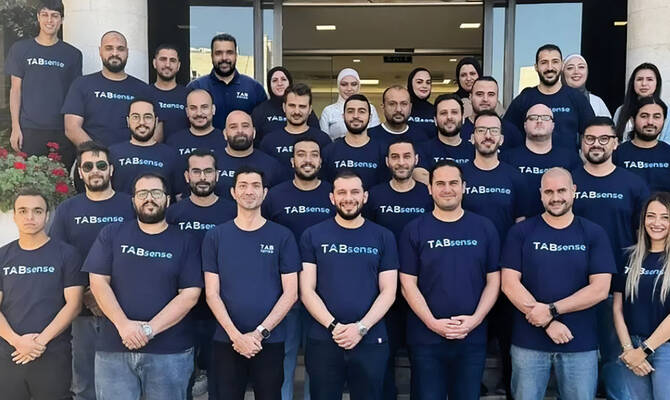
Saudi-based AI startup TabSense has raised $5 million in a funding round led by Jasoor Ventures.
According to a press statement, the investment will be used to launch the first AI Agentic Point of Sale system for multi-branch and franchise restaurants and cafes.

We’re building an ecosystem that connects artisans, suppliers, and businesses with a shared commitment to excellence and creativity.
Leila Al-Marashi, CADO CEO and founder
The funding will also be used to accelerate product innovation, expand regional sales, and grow its full-stack engineering and AI teams to further advance its agentic intelligence capabilities.
Founded in 2024 by Mohammad Jaber, Mohammad Khleifat, Mohamad Ababatain and Shadi Daboor, the company replaces traditional PoS systems with autonomous AI agents that streamline operations, optimize menus, and automate management tasks.
“We built TabSense to give restaurant operators more than just a PoS — we built an intelligent teammate,” said Jaber, co-founder of TabSense.
He added: “PoS systems have remained static for decades, and it’s time they evolved into something that drives business performance, not just records it.”
SehaTech secures $1.1m
SehaTech, an Egypt-based insurance tech firm, has secured $1.1 million in a seed round, bringing its total funding to $2 million.
The funding round was led by Ingressive Capital, with participation from Plus VC, a group of strategic angel investors, and existing investors A15, Beltone Venture Capital, and an industry veteran.
The company said that the newly secured funding will be used to scale up its team, expand its operations in Egypt and beyond, and enhance its AI-powered platform with advanced automation tools, according to a press statement.
“Our goal is not only to fix the operational inefficiencies in medical insurance processing but also to expand access to quality health coverage,” said Mohamed Elshabrawy, founder and CEO of SehaTech.
He added: “This funding will help us continue building the tools needed to reduce friction between insurers and providers — and ultimately make health insurance more available to the millions who are underserved today.”


