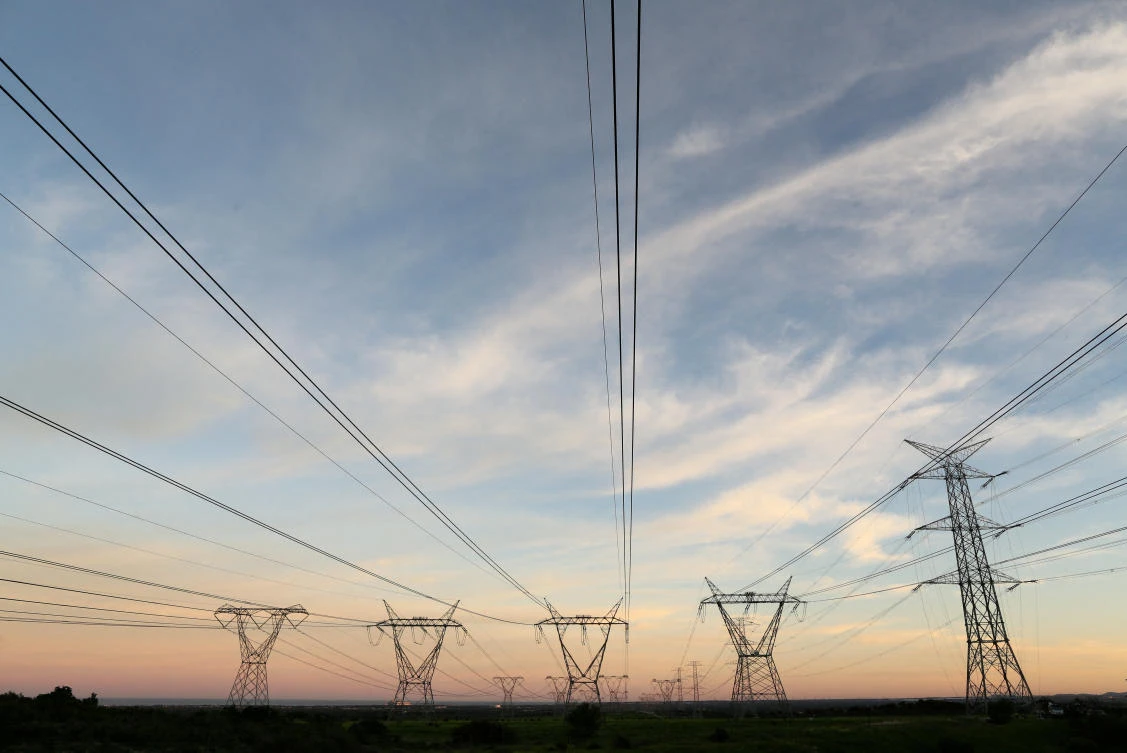
- Eskom currently operates the continent’s only commercial nuclear power station near Cape Town
- Egypt is building its own plant, while countries including Namibia, Niger and Ghana are exploring nuclear options
CAPE TOWN: South Africa expects to lift the care and maintenance status of its Pebble Bed Modular Reactor (PBMR) by the first quarter of next year or even earlier, the electricity and energy minister said on Wednesday.
Once considered a global leader in the development of small modular nuclear reactors, South Africa halted its PBMR research in 2010 after spending more than 10 billion rand ($577 million) and before building a planned demonstration model.
“We are far advanced in (our) internal processes to make the case to lift the care and maintenance on the PBMR,” Kgosientsho Ramokgopa, the electricity and energy minister told a media briefing.
State-owned power utility Eskom currently operates the continent’s only commercial nuclear power station near Cape Town. Egypt is building its own plant, while countries including Namibia, Niger and Ghana are exploring nuclear options.
“We are seeing huge opportunities around the world, with major players on data centers the biggest investors on SMRs (small modular reactors),” he added.
South Africa’s 2025 Integrated Resource Plan (IRP), expected to be published this week, outlines more than 105 gigawatts of new generation capacity by 2039. Renewable energy is projected to account for more than half of this, as the country seeks to reduce its dependence on coal.
New nuclear generation capacity of 5.2 gigawatts is foreseen, with gas at 16 gigawatts, wind at 34 gigawatts and solar PV at 25 gigawatts by 2039.
South Africa has ambitions to re-invigorate its nuclear industry, with the IRP suggesting that this industrialization plan will determine the merits of 10 gigawatts of new nuclear generation capacity.
Ramokgopa said China, South Korea, the US and Russia are among countries that could partner with the South African Nuclear Energy Corporation on developing small modular reactors.
“We don’t think we will run out of suitors who can partner with us on the PBMR.”