

Saudi Arabia tops GCC projects market in Q3: report  

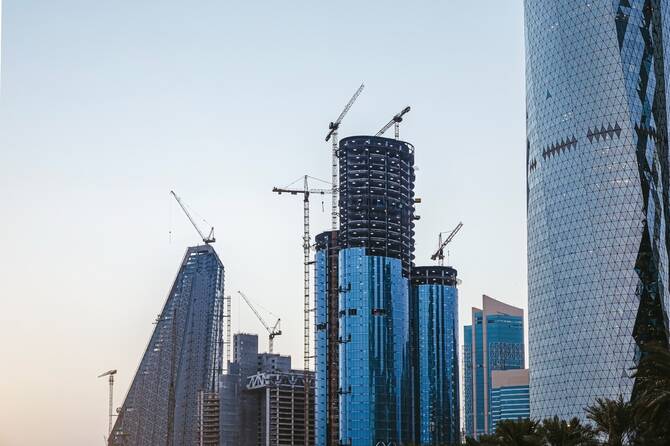
Across the region, total GCC contract awards fell 27 percent year on year to $54.8 billion in the third quarter, with nine-month awards down 30.5 percent to $154.4 billion. Shutterstock
Short Url
Updated 12 October 2025
Follow

Saudi Arabia tops GCC projects market in Q3: report  

RIYADH: Saudi Arabia led the Gulf Cooperation Council’s projects market in the third quarter of 2025 with $28.1 billion in contract awards, a new report showed.    

According to Kamco Invest, this represented 51.3 percent of total GCC awards — just over half of regional activity.  

Across the region, total GCC contract awards fell 27 percent year on year to $54.8 billion in the third quarter, with nine-month awards down 30.5 percent to $154.4 billion.  

In its report, Kamco stated: “Contract awards are expected to gain momentum in the fourth quarter of the year, driven primarily by recoveries in Saudi Arabia and the UAE.”   

It added: “However, despite a strong project pipeline, overall project awards in 2025 in the GCC are expected to decline and fall short of the 2024 record contract awards.”   

Sectorally, six of the GCC’s eight industries recorded year-on-year declines in the third quarter. Construction dropped 62.4 percent to $11.1 billion and power decreased 13.3 percent to $17.1 billion, while gas and oil were the only sectors to post growth.    

Within Saudi Arabia, power led with $9.8 billion in awards, compared with $17.1 billion a year earlier, while construction totaled $5.2 billion; there were no chemical sector awards and oil stood at $3.9 billion.     

Notable awards included an $853 million road package for Almabani General Contractors and a $167 million contract for a Pirelli tyre plant in King Abdullah Economic City. Over the first nine months, awards nearly halved to $61.5 billion from $116.6 billion.    

Saudi Arabia’s lead comes as contracts awarded under its giga-projects surged 20 percent in 2025 to $196 billion, according to Knight Frank.     

The report said the increase reflects a clear shift from planning to execution across major developments, particularly in real estate, tourism, and infrastructure, signaling steady progress in the Kingdom’s Vision 2030 diversification drive.    

Kamco’s report stated: “Overall project activity in Saudi Arabia has been sluggish throughout 2025. However, the Kingdom’s broader economic performance has been better than previously expected.” 

In the UAE, third-quarter awards fell 65.8 percent year on year to $6.7 billion, moving the country from the GCC’s largest projects market in the second quarter to third place in the third quarter.   

Over the first nine months, awards declined 18.0 percent to $59.7 billion. Construction led with $5.4 billion despite a 56.2 percent slide, and there were no oil and gas awards in the quarter.    

Major announcements included a $593 million contract for Sharjah’s Madar Mall and a $300 million award for the Erisha Smart Manufacturing Hub in Ras Al-Khaimah.   

Qatar was a bright spot, with contract awards jumping 115.9 percent year on year to $13.6 billion in the third quarter and rising 27.6 percent to $20.5 billion over the first nine months, supported by preparations for the 2030 Asian Games.   

Oil and gas led sector allocations, and China Offshore Oil Engineering won roughly $4 billion of contracts for the Bul Hanine offshore field.   

Kuwait’s market improved, with third-quarter awards up 33.8 percent year on year to $4.3 billion and first-nine-months awards up 25.3 percent to $7 billion.   

The quarter was dominated by the $4 billion Al Zour North IWPP phases two and three, alongside an $84 million upstream oil contract and a $65 million public-buildings package in Al Mutlaa Residential City.   

Looking ahead, Kamco expects awards to gain momentum in the fourth quarter on recoveries in Saudi Arabia and the UAE, although full-year 2025 awards are still seen finishing below 2024’s record.   

The GCC’s pre-execution pipeline totals about $1.78 trillion, led by construction with $624.2 billion, transport with $300 billion and power with $294.2 billion.   

Saudi Arabia accounts for roughly $887 billion of upcoming projects and the UAE $434.0 billion; Saudi Aramco plans 99 projects over the next three years and currently has about $50 billion of engineering, procurement, and construction contracts under execution. 


Saudi IsDB approves $1.37bn in financing to support development projects in 12 countries 

Updated 5 sec ago
Follow

Saudi IsDB approves $1.37bn in financing to support development projects in 12 countries 

RIYADH: Saudi Arabia’s Islamic Development Bank has approved a new package of projects with a total value of approximately $1.37 billion, allocated to support 12 member countries. 

The approval was made by the board of executive directors of the bank, during its 363rd meeting chaired by its President Muhammad Al-Jasser. 

The session approved 14 financing operations to support development projects covering renewable energy, cross-border energy networks, major transport corridors, water and food security, alongside education and health services.  

This contributes to enhancing economic resilience, improving access to basic services, and supporting progress toward achieving the Sustainable Development Goals. 

The approvals included financing of €306.89 million ($360 million) for the expansion and development project of the Godomey–Ouedo–Hillacondji road in Benin, to enhance a strategic segment of the Abidjan–Lagos Corridor.  

Cote d’Ivoire received €200 million in financing to develop the Taferi–Ferkessedougou section of the A3 highway, boosting trade and mobility between central and northern regions and neighboring landlocked countries. 

Funding of $180.72 million was also approved for the King Faisal Road development project in Manama, Bahrain, aiming to alleviate traffic congestion and improve urban transport mobility.  

Lebanon benefited from $13.50 million in financing to establish the Bqarqacha bypass and develop the Bqarqacha–Bcharre road, to improve traffic safety and accessibility for local communities. 

In the energy sector, Uzbekistan will receive total financing of $110 million for utility-scale photovoltaic solar and battery storage projects in Samarkand-1 and Samarkand-2, enhancing national grid capacities.  

The bank also approved €55.19 million in financing for Mauritania to connect electricity grids with Mali and support related solar power stations, to provide cleaner and more reliable electricity to local communities. 

In the field of water and food security, the bank approved €188.82 million in financing for Morocco’s Water Stress Mitigation project, including the construction of dams and related works to ensure water supplies and transfer surplus from northern basins to the more stressed southern regions.  

Additionally, €18.23 million was approved for an inland aquaculture value chain development project. 

Sierra Leone was allocated €25.93 million for the Freetown Water Supply, Sanitation, and Aquatic Environment Revamping project, to improve water and sanitation services and restore key watersheds.  

Cameroon received €36.66 million for the Sustainable Irrigation and Agricultural Value Chain Development project, to support climate-resilient irrigation and improve rural infrastructure. 

In Jordan, the Hima Oasis for Prosperity and Employment program for rural employment and agricultural growth benefited from $11.25 million in financing to support rural jobs and agricultural productivity, focusing on women and youth by improving access to finance, skills, and market linkages. 

The Board also approved investments in the health and human capital development sector, including an allocation of €61.41 million for Mauritania to establish a 440-bed Maternal, Neonatal, and Child Health Referral Hospital in Nouakchott, enhancing access to specialized healthcare. 

In Tajikistan, $13.95 million in financing was approved for the Tourism Business Education Development project, aiming to elevate tourism and hospitality education and establish a national training center focusing on Halal tourism.  

Pakistan received $10 million in financing from the Islamic Solidarity Fund for Development to support the Out-of-School Children project in Azad Jammu and Kashmir. 

These approvals reflect the IsDB’s ongoing commitment to supporting member countries in bridging infrastructure gaps, expanding essential social services, accelerating the energy transition, and promoting comprehensive and sustainable development.