RIYADH: The value of contracts awarded by Saudi Arabia’s giga-projects jumped 20 percent this year to $196 billion as the Kingdom accelerates development across real estate, infrastructure, and tourism, a new analysis showed.
Global property consultancy Knight Frank said in its “Saudi Arabia Giga Projects Report 2025” the surge highlights how the Vision 2030 transformation program is shifting from planning to execution.
Riyadh remains at the core of this push, with landmark developments such as Diriyah Gate, King Salman Park, and the 220-km Sports Boulevard reshaping the capital’s landscape.
The report’s findings highlight the progress of Vision 2030, which aims to position Saudi Arabia as a regional hub for lifestyle, leisure, tourism, and economic activity.
In a separate analysis released in July, Knight Frank projected that Saudi Arabia’s overall construction output value will reach $191 billion by 2029 — a 29 percent increase from 2024 — driven by growth in residential projects, ongoing giga-projects, and rising demand for office space.
Commenting on the latest report, Faisal Durrani, partner, head of research at Knight Frank for the Middle East and North Africa, said: “Riyadh has firmly established itself as Saudi Arabia’s new economic powerhouse, accounting for 63 percent of all new jobs created in the Kingdom since 2019.”
He added: “Projects worth more than $237 billion have been announced across real estate, infrastructure, and transport since 2016, with $44 billion already awarded in construction contracts.”
Durrani said these investments will support the city’s population growth from 7 million in 2022 to 10.1 million by 2030, with more than 340,000 new homes, 4.8 million sq. meters of office space, 3 million sq. meters of retail, and nearly 30,000 hotel rooms.
He further described Riyadh as witnessing “one of the most ambitious urban growth stories in the world,” adding that the scale of ongoing developments will help position the capital as a world-class hub for business, tourism, and global talent.
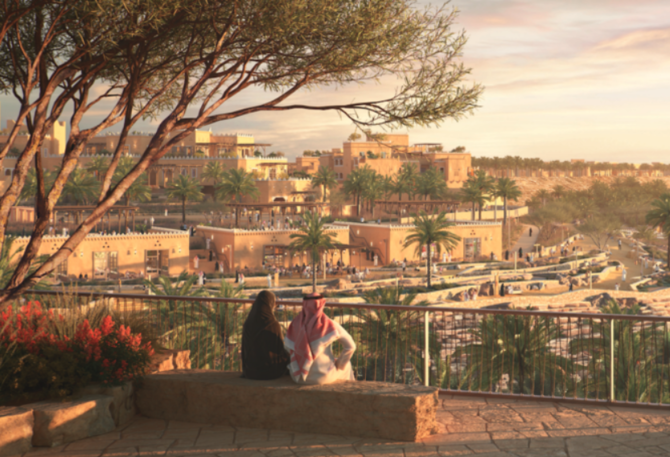
Diriyah Gate, one of Riyadh’s flagship giga-projects and the birthplace of the first Saudi state, has emerged as one of the Kingdom’s most advanced developments.
Contracts worth $5.9 billion were awarded in 2024, followed by another $3.7 billion in the first eight months of 2025. The total value of commissioned projects at Diriyah stands at $14.5 billion, with $45.6 billion more in the pipeline, Knight Frank said.
Western Saudi Arabia
In western Saudi Arabia, 17 giga-projects are underway with total announced investments of $431.3 billion since 2016, the report said. Of that, $57 billion has already been awarded and $187.2 billion remains in the pipeline.
The region — home to Neom, the Red Sea Global project, and Qiddiya Coast — is a centerpiece of the Vision 2030 agenda, aimed at transforming the area into a hub for futuristic living, luxury tourism, and sustainability.
By 2030, these initiatives are expected to deliver more than 382,500 new homes, over 3 million sq. meters of office space, 4.3 million sq. meters of retail space, and 330,000 hotel rooms.
Knight Frank revealed that construction contracts worth $24 billion have been awarded for Neom and its sub-projects to date, including $470 million for Magna, $3.31 billion for Trojena, $8.9 billion for The Line, and $9.3 billion for Oxagon.
Nationwide expansion
Outside Riyadh and the western corridor, giga-projects across other regions and national initiatives represent $132.3 billion in investment, including $31.4 billion in commissioned projects and $85.3 billion in the pipeline.
“Outside the major centers, projects are also enhancing liveability and integration, from developing Aseer and its Soudah Mountains to boost domestic tourism, to revitalizing downtown districts through the Downtown Co.,” said Harmen De Jong, regional partner – head of consulting, MENA at Knight Frank.
He added that the National Housing Co. is advancing large-scale public housing schemes, while the Public Investment Fund–backed ROSHN is developing master-planned communities to expand homeownership and introduce new urban lifestyles.
Sports and leisure investments
Knight Frank also highlighted the Kingdom’s growing focus on sports and entertainment infrastructure, a key pillar of Vision 2030. Around a dozen stadiums are under construction or expansion, representing $17.5 billion in investments ahead of global events such as the 2027 AFC Asian Cup and the 2034 FIFA World Cup.
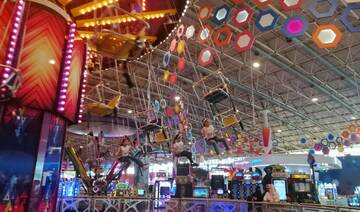
Another boost will come from Saudi Entertainment Ventures, or SEVEN, a subsidiary of the Public Investment Fund, which is rolling out entertainment destinations valued at SR50 billion ($13.3 billion) across the Kingdom, according to a spokesperson for the company. The projects will include theme parks, cinemas, and family leisure centers with more than 570,000 sq. meters of retail space.
“Saudi’s strong pipeline of stadium and entertainment destination projects reflects not only the government’s ambition to host world-class sporting events but also its strategy to diversify the economy and improve quality of life,” said Amar Hussain, associate partner for research at Knight Frank.
The consultancy said the pace of project execution and contract awards indicates that Saudi Arabia’s multi-trillion-dollar Vision 2030 program — once seen as an aspirational plan — is now firmly entering the delivery phase.