Cinema legend Robert Redford dead at 89

Actor and director Robert Redford at the 18th edition of the Marrakech International Film Festival, Morocco, Dec. 7, 2019. (Reuters)
Short Url
Updated 17 September 2025
Follow

Cinema legend Robert Redford dead at 89

  • Robert Redford made his breakthrough alongside Paul Newman as an affable outlaw in the Western ‘Butch Cassidy and the Sundance Kid’ in 1969
  • One of Redford’s most beloved roles was in the classic American political thriller ‘All the President’s Men’ (1976)

SUNDANCE, United States: Cinema legend Robert Redford, a screen great in front of and behind the camera whose career spanned six decades, died early Tuesday morning at his home in Utah, his publicist said. He was 89.
Redford died in his sleep, and a specific cause was not given, according to a statement by Cindi Berger, the chief executive of publicity firm Rogers & Cowan PMK.
“Robert Redford passed away on September 16, 2025, at his home at Sundance in the mountains of Utah — the place he loved, surrounded by those he loved,” Berger said.
The tousle-haired and freckled heartthrob made his breakthrough alongside Paul Newman as the affable outlaw in the Western “Butch Cassidy and the Sundance Kid” in 1969.
After 20 years as an actor, he moved behind the camera, becoming an Oscar-winning director and co-founding the flagship Sundance festival for aspiring independent filmmakers.
A committed environmental activist, Redford also fought to preserve the natural landscape and resources of Utah, where he lived.
Born Charles Robert Redford Jr. on August 18, 1936, in Santa Monica, California, he was the son of an accountant.
Redford had four children with his first wife, Lola Van Wagenen, one of whom died as an infant.
He married German artist and longtime girlfriend Sibylle Szaggars in 2009.

‘Intellectual, artist, cowboy’

A household name in English-language cinema around the world, Redford won a directing Oscar for his 1980 film “Ordinary People,” as well as an honorary Oscar for lifetime achievement in 2002.
“Robert Redford’s work as an actor, director and producer always represents the man himself: the intellectual, the artist, the cowboy,” Barbra Streisand said in 2002 when presenting him with the special award.
Tributes began to pour in Tuesday for the screen great.
“One of the lions has passed. Rest in peace my lovely friend,” said Meryl Streep, in a brief emailed statement.
Jane Fonda mourned Redford, a fellow activist, as “a beautiful person in every way.”
“It hit me hard this morning when I read that Bob was gone. I can’t stop crying. He meant a lot to me and was a beautiful person in every way. He stood for an America we have to keep fighting for,” she said.
President Donald Trump hailed the actor as “great.”
“Robert Redford had a series of years where there was nobody better,” Trump told reporters after a journalist told him that Redford had died.
One of Redford’s most beloved roles was in the classic American political thriller “All the President’s Men” (1976), which tells the story of how two journalists exposed the Watergate scandal that brought down US president Richard Nixon.
Redford earned his only nomination for the best actor Oscar when playing a 1930s con artist in “The Sting” (1973) — but he did not win.

‘Redefined cinema’

In the snowy mountains of Utah that he called home, fans on Tuesday paid tribute to Redford’s conservation work as well as his movie legacy.
“I’ll remember him for his commitment to protect nature, Native Americans and animals,” 59-year-old Swiss pastry chef Monika Suter told AFP, weeping outside a conference building named after the actor.
One of Redford’s greatest achievements was the launch here in 1985 of the Sundance Film Festival.
Created to discover new filmmakers and as an antidote to Hollywood’s commercialism and lack of diversity, it has fostered leading directors such as Jim Jarmusch, Quentin Tarantino and Steven Soderbergh.
“We are deeply saddened by the loss of our founder and friend Robert Redford,” the Sundance Institute said in a statement.
“Bob’s vision of a space and a platform for independent voices launched a movement that, over four decades later, has inspired generations of artists and redefined cinema in the US and around the world.”


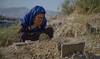
Akio Fujimoto discusses RSIFF Golden Yusr winner ‘Lost Land’ 

Akio Fujimoto at the Red Sea International Film Festival in Jeddah. (Getty Images)
Updated 19 December 2025
Follow

Akio Fujimoto discusses RSIFF Golden Yusr winner ‘Lost Land’ 

  • The Japanese filmmaker on his groundbreaking Rohingya-language feature

JEDDAH: Some stories demand to be told. Not just as narratives, but as acts of witness.  

Japanese filmmaker Akio Fujimoto’s “Lost Land” is one such story. Billed as the first feature film in the Rohingya language, the movie took home the top prize — the Golden Yusr — at this year’s Red Sea International Film Festival. 

“Lost Land” — which premiered in the Horizons section at this year’s Venice Film Festival, where it won the special jury prize — follows two young Rohingya siblings, Somira and Shafi, fleeing persecution in Myanmar as they undertake a perilous journey d to join their uncle in Malaysia. 

Shomira Rias Uddin (R) and Muhammad Shofik Rias Uddin in 'Lost Land.' (Supplied) 

Presenting the Golden Yusr to Fujimoto, RSIFF jury head, the US filmmaker Sean Baker, said the film “confronts the plight of displaced children with unflinching empathy and poetic urgency.” 

Fujimoto’s journey to this film is a profound narrative of personal reckoning. Having worked in Myanmar for more than a decade, he recognized the unspoken tensions surrounding discussions about refugee experiences but never spoke out himself due to fear of persecution. The 2021 military coup in Myanmar, he said, forced him to confront a lingering sense of guilt about his previous silence on the subject. 

“Looking back on my decade of work, I realized I had been avoiding topics I wanted to focus on as a filmmaker,” Fujimoto said in an interview with Arab News at RSIFF. 

That self-reflection became the catalyst for “Lost Land,” transforming personal hesitation into a powerful act of cinematic storytelling. 

Eschewing traditional casting methods, Fujimoto discovered his lead actors through serendipity during community fieldwork. Shomira Rias Uddin and Muhammad Shofik Rias Uddin, real-life siblings who play the film’s young leads, were found walking near interview locations, compelling the filmmaker to reshape the entire script around their natural chemistry. While the original script was written with two teenage brothers in mind, the discovery of the Rias Uddin siblings led Fujimoto to alter the script significantly. 

Communication between the cast and crew became an intricate dance of translation and cultural bridge-building. With Fujimoto speaking primarily Japanese and some Burmese, the team relied on Sujauddin Karimuddin, a Rohingya translator who did far more than linguistic conversion. “He wasn’t just translating words but conveying messages, creating trust, and establishing a collaborative atmosphere,” said Watanabe, Fujimoto’s translator. 

One of the most remarkable aspects of “Lost Land” is its linguistic significance. Beyond being a narrative, the film serves as a critical instrument of cultural preservation. Karimuddin, who is also a producer on the film, approached his role like a linguistic curator. “As a Rohingya myself, I had the privilege of choosing words carefully, trying to instill poetry, capturing linguistic nuances that are slowly disappearing. So, the film is very important when it comes to the preservation of a people’s language. It was a privilege for me to contribute to it,” he said. 

As they were making the first fiction film focused on Rohingya experiences, the team felt an immense responsibility. “Lost Land” aims to humanize a community often reduced to statistics, giving voice and complexity to individual experiences.

Shomira Rias Uddin and Muhammad Shofik Rias Uddin (R) in 'Lost Land.' (Supplied) 

“In our film, we had around 200 people — including extras — who were all part of the Rohingya community. I felt in order to show their feelings and their voice; it was really important to bring in the Rohingya people and tell the story together with them,” said Fujimoto. 

For Fujimoto, whose previous films include “Passage of Life” (2017) and “Along the Sea” (2020), the film represents more than an artistic achievement. It’s a form of personal and collective redemption. “I can now clearly talk about these people without hesitation,” he said. 

The filmmaker’s future ambitions involve expanding on this project. He sees “Lost Land” as a crucial first step, and hopes to support Rohingya filmmakers in telling their own stories directly. 

“The next phase is bringing narratives from the Rohingya perspective, directed by Rohingya filmmakers,” he said.