

Saudi Arabia could lead wellness travel, says UN Tourism

1 / 9
Saudi gigaprojects such as alula, the red Sea, and Neom are examples of Kingdom’s growing commitment to tourism experiences. (SPA)
2 / 9
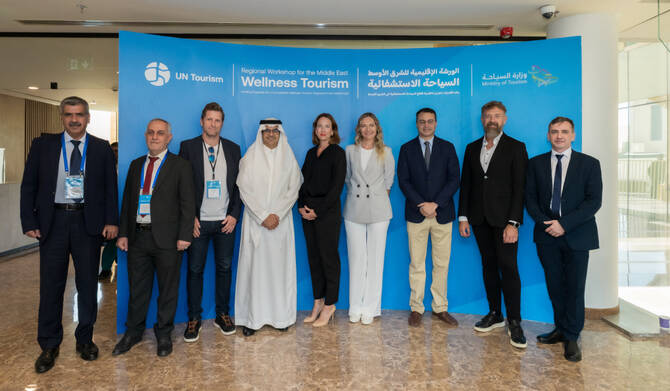
A wellness tourism workshop at the un tourism regional office for the middle east in Riyadh explored the sector’s growing potential as a driver of economic growth. (Supplied)
3 / 9
A wellness tourism workshop at the un tourism regional office for the middle east in Riyadh explored the sector’s growing potential as a driver of economic growth. (Supplied)
4 / 9
A wellness tourism workshop at the un tourism regional office for the middle east in Riyadh explored the sector’s growing potential as a driver of economic growth. (Supplied)
5 / 9
A wellness tourism workshop at the un tourism regional office for the middle east in Riyadh explored the sector’s growing potential as a driver of economic growth. (Supplied)
6 / 9
A wellness tourism workshop at the un tourism regional office for the middle east in Riyadh explored the sector’s growing potential as a driver of economic growth. (Supplied)
7 / 9
A wellness tourism workshop at the un tourism regional office for the middle east in Riyadh explored the sector’s growing potential as a driver of economic growth. (Supplied)
8 / 9
A wellness tourism workshop at the un tourism regional office for the middle east in Riyadh explored the sector’s growing potential as a driver of economic growth. (Supplied)
9 / 9
A wellness tourism workshop at the un tourism regional office for the middle east in Riyadh explored the sector’s growing potential as a driver of economic growth. (Supplied)
Short Url
Updated 09 September 2025
Follow

Saudi Arabia could lead wellness travel, says UN Tourism

  • Wellness tourism is linked to sustainability and UN’s development goals

RIYADH: Rich natural and cultural assets mean Saudi Arabia has strong potential to become a leading destination for wellness tourism in the Middle East, a UN Tourism official told Arab News on Tuesday.

Michel Julian, senior program officer for market intelligence at UN Tourism, said demand for travel centered on health and wellbeing has grown since the COVID-19 pandemic.

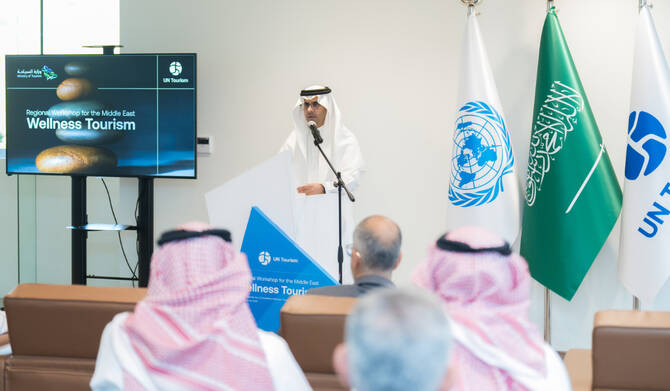
He was speaking at a wellness tourism workshop at the UN Tourism regional office for the Middle East in Riyadh which explored the sector’s growing potential as a driver of economic growth, tourism diversification and sustainability across the region.


A wellness tourism workshop at the un tourism regional office for the middle east in Riyadh explored the sector’s growing potential as a driver of economic growth. (Supplied)

“What many consumers are looking for is that authenticity touch, that local touch, and to create a positive impact at the destination,” he said. He added strong policies and strategies were needed to sustain growth in the sector.

The latest World Tourism Barometer showed global tourist arrivals reached 1.5 billion in 2024, a return to pre-pandemic levels.

The Middle East has led the recovery, exceeding pre-pandemic levels by 41 percent in 2024 and showing continued momentum into 2025, with arrivals up 29 percent in the first half of the year as compared to 2019.

HIGHLIGHTS

• The latest World Tourism Barometer showed global tourist arrivals reached 1.5 billion in 2024, a return to pre-pandemic levels.

• The Middle East has led the recovery, exceeding pre-pandemic levels by 41 percent in 2024 and showing continued momentum into 2025.

Export revenues from tourism rose to $2 trillion, 14 percent higher than 2019 in real terms, while the sector’s direct GDP contribution stood at $3.4 trillion in 2023.

Julian said Saudi Arabia’s investment in real estate and hospitality projects that integrated wellness was a “big positive step” toward diversifying tourism and generating revenue.


Julian pointed to the urgency of tackling climate change and promoting environmental, social and governance standards in tourism. (Supplied)

Addressing the main challenges, he said: “At the global level, tourism is facing geopolitical and economic challenges. At the destination level, you need the right infrastructure and the right policies to attract visitors.

“Marketing, digitalization, and having appropriate market intelligence are critical to take informed decisions and to address the needs of different traveler segments, from Generation Z to luxury to seniors.”

Highlighting Goal 3, to ensure healthy lives and promote wellbeing for all, he added: “Wellness tourism is about improving quality of life for everyone and contributing to the SDGs. Local communities need to be at the center of every tourism policy. Every policy that is sustainable, inclusive and resilient must take into consideration the needs of local communities so they can also benefit.”

Julian also pointed to the urgency of tackling climate change and promoting environmental, social and governance standards in tourism.

“The tourism sector is highly vulnerable to the impacts of climate change but also contributes to it. That’s why we are working through the Glasgow Declaration and other initiatives to reduce carbon emissions, cut food waste, recycle plastics and secure sustainable consumption patterns,” he said.

Samer Al-Kharashi, director of the UN Tourism regional office for the Middle East, echoed the importance of clear policies and regional cooperation. He told Arab News: “In the region there is a lot of history and cultures and resources that support the region to be a leading in the wellness tourism. What we need is a very clear policy from the countries and the regional support and the political wellness.”

He added wellness could be combined with gastronomy and agritourism to create richer visitor experiences, and pointed to Saudi gigaprojects such as AlUla, the Red Sea, Neom and Asir as examples of growing commitment by the Kingdom.

Riyadh was also positioning itself as a wellness and health destination, he said, while private sector participation was expanding with hotels and resorts specifically developed around wellness.

“It is a very attractive and profitable sector,” Al-Kharashi said, adding such initiatives supported both Saudi Vision 2030 and the UN Sustainable Development Goals. 

“When we aim for 150 million tourists by 2030, these kinds of products are very important for diversification. Each destination in Saudi Arabia — desert, sea, mountains — you would have a different wellness experience.”


Rebuilding lives: Saudi initiative gives fresh hope to amputees

Updated 08 December 2025
Follow

Rebuilding lives: Saudi initiative gives fresh hope to amputees

  • Baitureh Health Association has provided life-changing support to more than 1,000 people
  • Prosthetic limbs can cost up to $76,000

MAKKAH: The Baitureh Health Association for the Care of Amputees has quickly become one of Saudi Arabia’s most impactful humanitarian initiatives, transforming support for people with lost limbs.

Established in 2020, the association deals with people’s physical, psychological and social needs and fills a long-standing gap in the national health system.

CEO Badr bin Alyan told Arab News that the initiative was created in response to a growing need, driven by amputations linked to accidents, blood disorders, occupational injuries and other causes.

Its operations were “based on service integration rather than fragmentation, enabling beneficiaries to return to their lives with confidence, ability and independence,” he said.

This holistic process covers everything from initial evaluations to psychological and physical rehabilitation, family support, prosthetic fitting and ongoing maintenance.

Its psychological support programs include group sessions led by certified mentors who have undergone similar experiences, as well as field visits to support patients before and after amputation.

More than 1,000 people across the Kingdom have so far benefitted from the association’s work, about 10 percent of them children, whom Alyan said were “the most sensitive and the most in need of intensive psychological and family support.”

Its specialist programs for children — My First Step and Therapeutic Entertainment — help young people adapt to prosthetics, overcome trauma and build confidence in a safe and supportive setting.

The association has completed more than 300 prosthetic fittings, including silicone cosmetic limbs, mechanical, hydraulic, electronic and 3D-printed models. 

Alyan said the type of prosthetic selected depended on a number of factors, such as age, lifestyle, type of amputation, activity level and psychological readiness.

Children also have to undergo frequent adjustments to their new limbs to account for their growth.

Each prosthetic cost between SR20,000 ($5,300) and SR285,000, Alyan said.

The association funds its work through sponsorships, community contributions and strategic partnerships.

Despite its success, Alyan said there were still challenges to be faced, including the lack of a consolidated base for the provision of psychological support and therapy services and prosthetics development and maintenance.

There was also a shortage of local experts, he said.

In response, the association set up a rehabilitation center, which Alyan said would help to localize prosthetics manufacturing, reduce costs and accelerate fitting processes and create opportunities for local experts to develop their knowledge and experience.

But providing prosthetics was only part of the association’s work, he said.

“Rebuilding a human life is the deeper goal.”