Chancellor Merz: Germany does not need same fighter jets as France

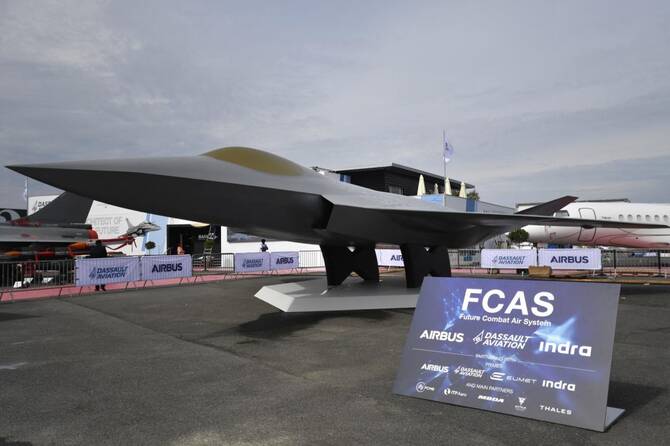
Above, a mock-up of the European New Generation under development for the Future Combat Air System during the International Paris Air Show on June 18, 2023. (AFP file photo)
Short Url
Updated 18 February 2026
Follow

Chancellor Merz: Germany does not need same fighter jets as France

  • The Future Combat Aircraft System program was launched in 2017
  • Scheme intended to replace France’s Rafale jet and the Eurofighter planes used by Germany and Spain by 2040

BERLIN: Germany does not need the same fighter jets as France, German Chancellor Friedrich Merz said in an interview broadcast Wednesday, signaling that Berlin could abandon a flagship joint defense project.
“The French need, in the next generation of fighter jets, an aircraft capable of carrying nuclear weapons and operating from an aircraft carrier. That’s not what we currently need in the German military,” Merz said on the German podcast Machtwechsel.
The Future Combat Aircraft System (FCAS) program was launched in 2017 to replace France’s Rafale jet and the Eurofighter planes used by Germany and Spain by 2040.
But the scheme, jointly developed by the three countries, stalled last year as France’s Dassault Aviation got into heated disputes with Airbus, which represents German and Spanish interests in the project.
The project has also fallen foul of wider Franco-German disagreements, with Berlin accusing Paris of not making enough effort to boost defense spending.
Merz had previously pledged a decision on FCAS by the end of last year but has postponed making the final call.
France has continued to insist the project is viable.
Merz said on the podcast that France and Germany were now “at odds over the specifications and profiles” of the kind of aircraft they needed.
“The question now is: do we have the strength and the will to build two aircraft for these two different requirement profiles, or only one?” he asked.
If this issue is not resolved, he said Germany would “not be able to continue the project,” adding that there were “other countries in Europe” ready to work with Berlin.


UK defense minister suggests Putin’s ‘hidden hand’ behind Iran tactics

Updated 51 min 24 sec ago
Follow

UK defense minister suggests Putin’s ‘hidden hand’ behind Iran tactics

LONDON: UK Defense Minister John Healey suggested on Thursday that Russia was influencing Iran’s use of drone attacks in its war with the United States and Israel.
Healey said Russian President Vladimir Putin’s “hidden hand” may be behind some of the tactics deployed by Tehran in the Middle East conflict, which started when the United States and Israel struck Iran on February 28.
He told reporters that officials were analyzing an Iranian-made drone that hit the UK’s Akrotiri air force base in Cyprus on March 1 “for any evidence of Russian or any other foreign components and parts.”
“We will update you and appropriately publish any findings from that when we’ve got them,” he said during a visit to Britain’s military headquarters in Northwood, near London.
“But I think no one will be surprised to believe that Putin’s hidden hand is behind some of the Iranian tactics, potentially some of their capabilities as well, not least because one world leader that is benefiting from the sky high oil prices at the moment is Putin,” he added.
Russia is a close ally of Iran, with the two agreeing last year to help each other counter “common threats.”
US President Donald Trump said Saturday he had no indication Russia was supporting Iran in the war, but that if they were, it was not “helping much.”
Nick Perry, the British military’s chief of joint operations, told Healey there were “definitively” signs of a link between Russia and Iran, including Iran’s use of drones “as learned from the Russians.”
No one was injured when the drone hit a hangar at Akrotiri. British warplanes shot down a further two drones heading for the base the same day.
Guy Foden, a brigadier in the British army, briefed Healey that UK troops based at a military base housing international coalition troops in Irbil, Iraq, had helped shoot down two Iranian drones on Wednesday.