RIYADH: In Saudi Arabia, the tradition of “sabi” — a seventh-day celebration marking the arrival of a newborn — continues to thrive, striking a balance between cultural heritage and religious practice, and the modern event industry.
The sabi is similar to a baby shower, but it takes place seven days after the baby is born as families traditionally wait until the birth to celebrate.
Long regarded as more than just a family gathering, the sabi is a social and spiritual milestone. The custom involves prayers for the child’s health, sharing food with relatives and neighbors, and introducing the baby to the wider community.
The ritual is also closely tied to the Islamic practice of “aqiqah,” a strongly recommended Sunnah in which two sheep are sacrificed for a boy and one for a girl. The meat is then distributed among relatives, friends, and those in need.
“Aqiqah is a way of showing gratitude to God for the blessing of a child,” said Reda Omdah, a father from Jeddah. “It is a tradition that strengthens family bonds while helping the community.”

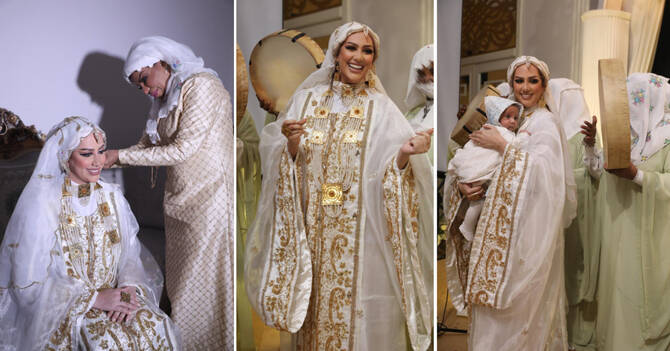
Wedding shops now offer Hijazi-style “zafa” entrances for newborns, while specialty stores such as Bamo Baby sell clothing, accessories, and themed gifts for infants and mothers. (SPA)
Alongside the sacrifice, parents often include the symbolic act of shaving the infant’s hair on the seventh day. The practice is seen as a gesture of purity and blessing, with some families keeping the hair as a memento.
For some Saudis, the sabi carries deep personal memories. Omda, from Jeddah, recalled the scale of his own celebration.
“My family still tells me stories about the sabi they held for me and my twin brother. Because we were both boys, they sacrificed four sheep. My mother described how the whole neighborhood gathered and food was shared with everyone,” he told Arab News.
When it was time to celebrate his own children, Omda kept the tradition alive but adapted it to today’s pace of life. “I made sure to perform the aqiqah, but now it’s the age of technology — the songs came from a laptop instead of a live band. I know some families still hire traditional groups, but I wanted ours to be simple. For me, the most important part is the sacrifice and sharing the food.”
For many families, the sabi is also about togetherness. Hanin Saif, a mother of two, described how the event creates lasting memories.
“We invite children to hold candles and sing songs while circling the baby’s crib. It’s a custom passed down from my grandparents. There’s always the sacrificial meal, and mothers give gifts to the baby — often gold for the mother, or jewelry if the baby is a girl,” she said.
Saif said that she prefers hosting the celebration to gather everyone at once. “I like doing it so the visits don’t become scattered. We have the dinner, the children gather around the crib, and we sing traditional songs like ‘Bless our child.’ It’s simple but meaningful.”

Despite changes in scale and style, the essence of the sabi and aqiqah remains the same: a chance to strengthen family ties, express gratitude to God, and celebrate life’s blessings. (SPA)
For Saudi media personality Razan Tareq, however, preserving the authenticity of the celebration was key. She told Arab News: “Since the sabi is something handed down from our grandmothers, I wanted to do it in the same way. I paid attention to every detail and made sure it appeared on social media to show the cultural side — the Hijazi folklore, the songs, and the heritage.”
Beyond the family circle, the sabi has also become an economic opportunity. Wedding shops now offer Hijazi-style “zafa” entrances for newborns, while specialty stores such as Bamo Baby sell clothing, accessories, and themed gifts for infants and mothers. Some events even feature children’s singing groups to keep younger guests entertained.
These businesses, combined with traditional practices, highlight how the sabi has evolved without losing its essence.
Despite changes in scale and style, the essence of the sabi and aqiqah remains the same: a chance to strengthen family ties, express gratitude to God, and celebrate life’s blessings.
Whether marked with a modest home gathering or a fully designed event complete with decor and photographers, the tradition reflects Saudi Arabia’s ability to preserve cultural heritage while adapting to contemporary lifestyles.