

Indonesia turns down ear-splitting ‘haram’ street parties

1 / 3
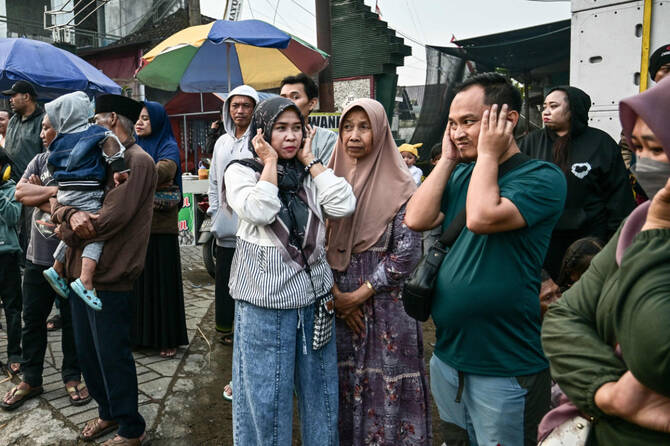
This photo taken on August 9, 2025 shows people covering their ears as a truck mounted with a tower of subwoofers drives past during a "sound horeg", which loosely means to move or vibrate in Javanese, held as part of Indonesia's 80th Independence Day celebrations in Malang, East Java. (AFP)
2 / 3
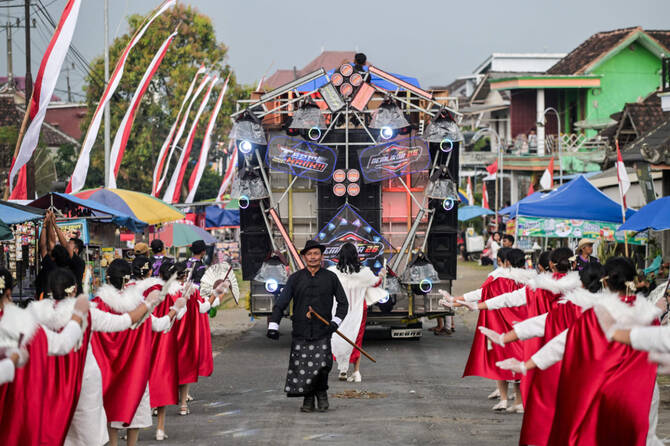
This photo taken on August 9, 2025 shows dancers performing as they follow a truck mounted with a tower of subwoofers and spotlights during a "sound horeg" held as part of Indonesia's 80th Independence Day celebrations in Malang, East Java. (AFP)
3 / 3
This photo taken on August 9, 2025 shows dancers performing as they follow a truck mounted with a tower of subwoofers and spotlights during a "sound horeg" held as part of Indonesia's 80th Independence Day celebrations in Malang, East Java. (AFP)
Short Url
Updated 24 August 2025
Follow

Indonesia turns down ear-splitting ‘haram’ street parties

  • Loudspeaker towers are commonplace on Indonesia’s main island of Java, but they have drawn the ire of local authorities and calm-seeking neighbors
  • An online backlash has forced authorities in East Java to issue an order limiting noise levels and specifying the times and locations loudspeakers can be used

MALANG, Indonesia: People in an Indonesian village watched as a tower of loudspeakers mounted on a truck rumbled through their usually serene home, blasting a thumping bass loud enough to crack windows.
Loudspeaker towers are commonplace on Indonesia’s main island of Java, blaring a repetitive mix of electronic tunes and traditional folk music at street parties, but they have drawn the ire of local authorities and calm-seeking neighbors.
The loudspeaker stacks have proven so disruptive that officials this month have restricted their use while religious bodies have declared excessive and damaging sound from them to be “haram,” or forbidden under Islamic law.
“The sound is booming from 1 p.m. to 3 am. They play loud music and drink alcohol,” Ahmad Suliyat, a resident of Ngantru village in East Java province, told AFP.
“It’s really disturbing.”
Indonesians in East Java have shared videos on social media of cracked walls, falling roof tiles and damaged stores caused by the noise impact known as “sound horeg,” which loosely means to move or vibrate in Javanese.
The online backlash forced authorities in East Java to issue an order this month limiting noise levels and specifying the times and locations loudspeakers can be used.
“It was made for health and security reasons. The noise level must be regulated so it will not disturb the public peace and order,” East Java governor Khofifah Indar Parawansa told AFP.
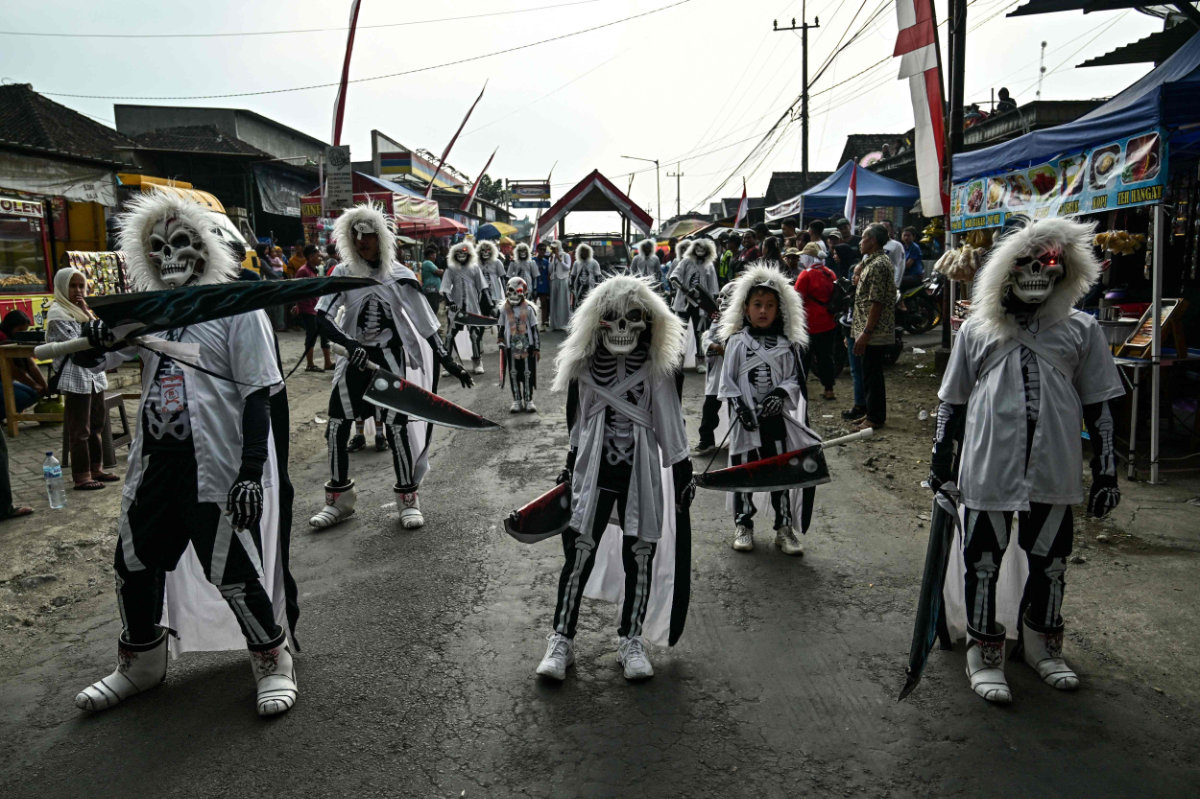


This photo taken on August 9, 2025 shows costumed dancers performing as they follow a truck mounted with a tower of subwoofers and spotlights during a "sound horeg", which loosely means to move or vibrate in Javanese, held as part of Indonesia's 80th Independence Day celebrations in Malang, East Java. (AFP)


Ear-splitting noise has been shown to have adverse health consequences, including a higher risk of heart conditions for those exposed.
And Indonesia’s loudspeaker towers, popular for little more than a decade in the world’s most populous Muslim nation, have had dire consequences for some who attend the deafening street gatherings.
A woman died this month after allegedly suffering cardiac arrest caused by loudspeaker towers at a carnival she attended, local media reported, while there has been an increase in hearing problems among those attending the events.
The East Java government has capped sound system levels at 120 decibels, while mobile units used in parades or protests are limited to 85 decibels.
Mobile units are also banned from being used near schools, hospitals, ambulances and places of worship that are in session.
In July, a local Islamic council issued a religious edict that said excessive sound at parties that is capable of causing damage is forbidden by religion.
“The use of a sound system excessively, especially during a wedding convoy, or any other events that cause noise, disturb road users, or make people neglect worshipping, is haram,” read the fatwa.
Locals typically rent the speaker towers for weddings, circumcisions and Independence Day events — all celebrations that can last until dawn.
Some like Daini, who goes by one name like many Indonesians, believe the loudspeakers are a local tradition that should be kept.
She glanced at her cracked window, held together by duct tape, as music blared from the truck in Ngantru.
“The glass cracked during a sound horeg event last year. But that’s OK, people here like loud events,” said the 61-year-old.


This photo taken on August 9, 2025 shows costumed dancers performing as they follow a truck mounted with a tower of subwoofers and spotlights during a "sound horeg", which loosely means to move or vibrate in Javanese, held as part of Indonesia's 80th Independence Day celebrations in Malang, East Java. (AFP)

But loudspeakers have continued blasting above the new limits, due to lax enforcement by local authorities.
After the rules were issued, an AFP journalist heard loudspeaker towers blaring music at an East Javan event as authorities watched on.
The World Health Organization says sound at 85 decibels and above can cause hearing damage over time, and anything above 120 decibels can cause immediate harm.
Some Indonesians posted screenshots online of apps registering loudspeaker sound levels as high as 130 decibels.
Operators of loudspeaker towers argue they are responding to demand that generates revenue for local businesses.
“I believe most people who dislike sound horeg are not from here,” David Stevan Laksamana, a 40-year-old loudspeaker rental owner in Malang, told AFP.
“In Malang alone, it employed tens of thousands of people. This business is helping the economy.”
Others who cannot stand the disruptive street parties fear reporting them, with some loudspeaker tower owners reportedly parking outside complainants’ houses to blare music for hours.
“I never complain to the village head,” said Ahmad.
“I just keep quiet. I’m afraid of intimidation if I say anything.”


Immigration raids in Minnesota fuel grassroots Somali activism

Updated 5 sec ago
Follow

Immigration raids in Minnesota fuel grassroots Somali activism

  • “You would never fathom that people would just pluck you off the streets ... and say, ‘Prove to me that you’re a citizen,’” Mohamed said
  • Trump, who ‌has described Somalis as “garbage” who should be thrown out of the country, has said the operations are necessary to combat crime

MINNEAPOLIS: When immigration agents began aggressive operations in Minneapolis last month, Kowsar Mohamed started knocking on doors, fielding late-night calls and mobilizing other Somali Americans into an ad-hoc response team.
Many feared they were being singled out, a worry that revived memories of the state surveillance and arbitrary authority they thought they had left behind when they resettled in the United States.
More than 100 volunteers now patrol south Minneapolis, distribute “Know Your Rights” guides and escort frightened elders — part of a sweeping grassroots effort to counter what many describe as constitutionally suspect raids that are destabilizing Minnesota’s roughly 80,000-strong Somali community, one of the country’s largest refugee populations.
“You would never fathom that people would just pluck you off the streets ... and say, ‘Prove to me that you’re a citizen,’” Mohamed said, referring to reports of aggressive tactics by the agents. “It’s not that we never thought it was impossible. We just believed the Constitution was going to protect us from this level of interrogation.”

TRUMP’S 3,000-AGENT PUSH SPARKS VOTER-INTIMIDATION FEARS
The deployment of 3,000 federal agents — ordered by Republican President Donald Trump — has intensified accusations from Democrats and local leaders that he is targeting ‌a politically influential community ‌ahead of the 2026 midterm elections, deepening fears that the operations amount to intimidation aimed at suppressing ‌Somali ⁠voter turnout.
Trump, who ‌has described Somalis as “garbage” who should be thrown out of the country, has said the operations are necessary to combat crime, though many of those arrested have no criminal charges or convictions. He has also cited a fraud scandal around the theft of federal funds for social-welfare programs in Minnesota to justify sending agents into the state, many of them from US Immigration and Customs Enforcement.
Democrats and community leaders accuse the agents of harassing peaceful protesters, racial profiling and searching houses without warrants. Minneapolis has been on edge since the fatal shooting of 37-year-old Renee Good by an immigration agent on January 7.
“A lot of community members escaped war and this administration is triggering another war zone,” said Abdulahi Farah, co-chair of the Somali American Leadership Table, an advocacy group formed in response ⁠to hate crimes and political attacks on Somalis. He said Trump’s history of racist rhetoric against Black and other immigrants of color has emboldened far-right activists and had a destabilizing effect on ‌small businesses and citizens’ general sense of safety.
Department of Homeland Security spokesperson Tricia McLaughlin said in ‍a statement to Reuters that immigrants who are served administrative warrants or ‍I-205 removal orders “have had full due process and a final order of removal from an immigration judge.”

PUSHING BACK AGAINST IMMIGRATION RAIDS
In Cedar-Riverside, a ‍normally bustling Somali neighborhood lined with restaurants, boutique shops and convenience stores, business owners say activity is noticeably quieter since immigration agents arrived there last month.
“It’s been really slow,” said Rashid Jama, a grocery store manager in the neighborhood, also known as the West Bank. “A lot of our suppliers are Latino and they’re scared to come to work.”
The efforts of Mohamed, a third-year doctoral student at the University of Minnesota, are part of a broader wave of grassroots initiatives to push back by filming arrests, planning peaceful protests and accelerating voter outreach.
Some Somali Americans fear the raids are a bid to suppress voter turnout before midterm elections in November, according to over a dozen grassroots organizers, local officials and residents interviewed by ⁠Reuters.
“It’s signaling that if we get rid of them, if we scare them, they’re not going to come out to vote in the 2026 midterm election. We know that’s the target,” said Farah, whose group is partnering with other grassroots organizations to train people on priorities like opposing ICE raids as well as broader issues like affordability.
Mosques and neighboring community centers are now turning into political education hubs in Minnesota, local leaders said.
Civil rights advocates and scholars say the Minneapolis immigration operations echo past crackdowns in Black and Latino neighborhoods, fueling fears of political scapegoating, said political science professor Christina Greer at Fordham University.
Somali American voters have largely supported Democrats since refugees began resettling in the US in the 1990s, before becoming more politically active in the 2000s. US Representative Ilhan Omar is the community’s most high-profile member and a frequent target of racist attacks from Trump.
Asked about that and tactics of agents decried by residents, White House spokeswoman Abigail Jackson said in a statement to Reuters that immigrants “who fail to contribute to our economy, rip off Americans and refuse to assimilate into our society should not be here.”
Minnesota Republican Party Chairman Alex Plechash denied the raids were politically driven, calling the charge “categorically false” but said complaints about aggressive tactics ‌warrant review.
Some Somali community leaders say mobilizing voters will be a priority in the months ahead.
“The power we have is to vote,” said Abdullahi Kahiye, 37, who said he became a naturalized US citizen in 2024. “ICE and whoever is trying to terrorize the Somali community will not succeed.”