Indian PM Modi vows to protect farmers, pushes self-reliance amid Trump tariff tensions

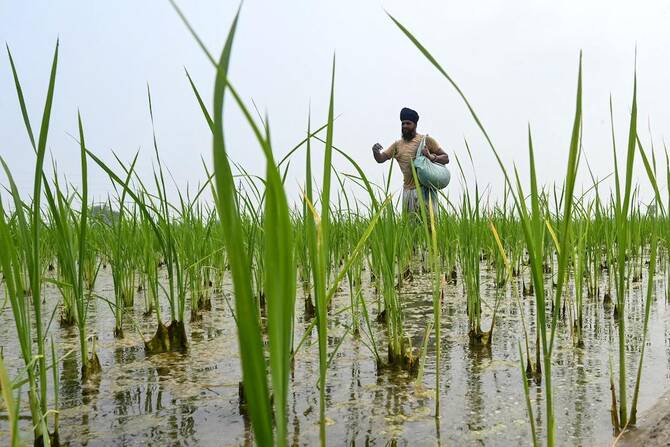
Indian Prime Minister Narendra Modi vowed to protect farmers in the face of a trade conflict with Washington. (AFP)
Short Url
Updated 15 August 2025
Follow

Indian PM Modi vows to protect farmers, pushes self-reliance amid Trump tariff tensions

  • New Delhi has been struggling with US President Donald Trump’s punishing tariffs imposed on Indian goods
  • Last week, Trump imposed an additional 25 percent tariff on Indian goods, citing New Delhi’s continued imports of Russian oil

NEW DELHI: Indian Prime Minister Narendra Modi urged the country on Friday to move toward more self-reliance, manufacture everything from fertilizers to jet engines and EV batteries, and vowed to protect farmers in the face of a trade conflict with Washington.

Modi was addressing the nation on the occasion of its Independence Day at a time New Delhi has been struggling with US President Donald Trump’s punishing tariffs imposed on Indian goods and the collapse of trade talks, largely due to differences over imports of American farm and dairy products.

“Farmers, fishermen, cattle rearers are our top priorities,” Modi said in his customary annual address from the ramparts of the Red Fort in New Delhi.

“Modi will stand like a wall against any policy that threatens their interests. India will never compromise when it comes to protecting the interests of our farmers,” he said.

Modi did not mention the tariffs or the US in his speech that lasted nearly two hours.

Last week, Trump imposed an additional 25 percent tariff on Indian goods, citing New Delhi’s continued imports of Russian oil in a move that sharply escalated tensions between the two nations.

The new import tax will raise duties on some Indian exports to as high as 50 percent – among the highest levied on any US trading partner.

Modi has never spoken about the tariffs directly, only alluding to them in a speech last week, where he swore to protect the interests of farmers, even if it came at a personal price.

The tariffs threaten to disrupt India’s access to its largest export market, where shipments totaled nearly $87 billion in 2024, hitting sectors like textiles, footwear, gems and jewelry.

Trade talks between New Delhi and Washington collapsed after five rounds of negotiations over disagreement on opening India’s vast farm and dairy sectors and stopping Russian oil purchases.

On Thursday, the Indian foreign ministry said that it hoped relations with the United States would move forward based on mutual respect and shared interests, seeking to temper worries that ties were headed downhill.


Scores killed in militant attacks in northwest Nigeria

Updated 59 min 5 sec ago
Follow

Scores killed in militant attacks in northwest Nigeria

  • The attacks came days after the state hosted the UNESCO-listed Argungu fishing festival
  • The Lakurawa group has been blamed for many of the attacks on communities

LAGOS: Militant fighters have killed scores of people and destroyed seven villages in raids in northwestern Nigeria’s Kebbi state, the police said Thursday.
Members of the Lakurawa group attacked villages in the Bui district of Arewa northern region at around 1:15 p.m. (1215 GMT) Wednesday, said Kebbi state police spokesman Bashir Usman.
A security report seen by AFP said the militants had killed “more than 30 villagers.”
Usman said: “Scores of people were killed as residents from Mamunu, Awasaka, Tungan Tsoho, Makangara, Kanzo, Gorun Naidal, and Dan Mai Ago mobilized to resist the attackers.”
The attackers had also rustled “some cattle” in the raids, he added. Police, soldiers and local militia were immediately sent to the area.
The attacks came days after the state hosted the UNESCO-listed Argungu fishing festival, about 60 kilometers (38 miles) from the Arewa region, where the attacks took place.
The Lakurawa group has been blamed for many of the attacks on communities in the northern part of the state and in neighboring Sokoto state.
Its members stage deadly attacks from their forest base, rustling livestock and imposing “taxes” on locals.
The Nigerian government said the Christmas day air strikes by the US military in Sokoto had targeted members of the group and “bandit” gangs.
Some researchers have linked the group to the Islamic State Sahel Province, which is active mainly in neighboring Niger and Mali, though others remain doubtful.
The activities of the group have compounded Nigeria’s insecurity.
The West African nation is grappling with a more than 16-year militant insurgency in the northeast, as well as a farmer-herder conflict in the north central region.
They also have to contend with a violent secessionist agitation in the southeast, and kidnappings for ransom plague the northwest.
Nigeria is now looking to the United States for technical and training support for its troops fighting the militants after a resurgence of violence strained relationships between the two countries.
The US Africa Command said 200 troops were expected to join the deployment overall.
US President Donald Trump has said the violence there amounts to the “persecution” of Christians — a framing long used by the US religious and political right wing.
Nigeria’s government and many independent experts say Christians and Muslims alike are the victims of the country’s security crises.