

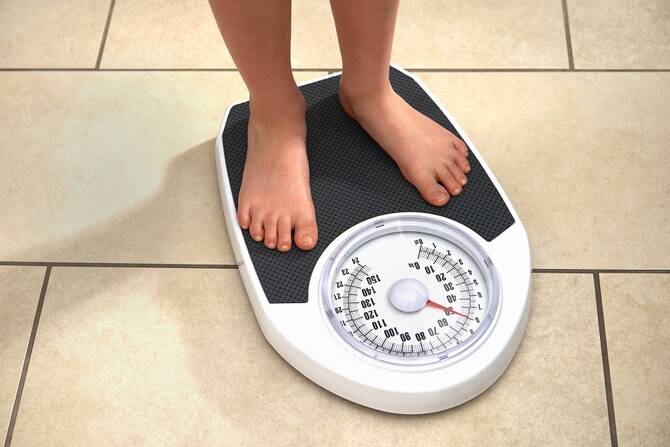

DHAHRAN: Here, Dr. Hanan Al-Shaikh discusses child obesity in a mini opinion piece for Arab News. Al-Shaikh is chair of the Women and Children’s Health Department at Johns Hopkins Aramco Healthcare in Saudi Arabia.
The received wisdom about the causes of obesity is that genetics has the strongest influence. This seems to provide comfort to parents of large children: It’s not my fault; it’s written in their DNA.
This is nonsense. Children are not born obese; obesity is induced by their environment. Yes, a child’s genetics can make them more susceptible to overeating, but are they the ones buying the food and cooking the meals?
Sorry, parents, but it is time to take responsibility for your children’s waistlines. You and you alone have the strongest influence on whether your children become overweight or obese. You choose what they eat and determine how much they exercise. Your own choices around diet and physical exertion set the example they will follow.
A recent forecast published in leading medical journal The Lancet suggests that Saudi Arabia will have one of the highest child obesity rates in the world by 2050. Separate research suggests that obesity costs the country almost $227 billion a year.
It is human nature to seek excuses for big problems by focusing on factors outside of one’s control. Yes, genetics plays a role in obesity. No, we cannot stop our children from seeing billboards advertising fried chicken buckets. Yes, the heat makes it harder to exercise outdoors for many months of the year.
It is also human nature to confer responsibility for big problems on others, particularly the state. The government needs to crack down on fast food advertising, encourage schools to raise physical activity levels, and so on.
These things may be true. But most of us retain the absolute power to choose what we eat and how much we exercise – even if we pretend we do not – and many factors are well within our control.
One of these is the role that parents have in teaching their children how to eat and exercise in their earliest years. Nothing influences a young child more than the actions of their parents, and roughly speaking, the first seven years of a child’s life are crucial for instilling lifelong habits for healthy eating and exercise.
Once a child becomes overweight or obese, it is incredibly hard for them to shed the weight. Some obese children may need surgery; most will need months, if not years, of treatment. The burden on the child, the parents, and the healthcare system is huge. Prevention rather than intervention is key.
Sadly, some kids who visit the paediatric wellness clinic at our hospital tell us they get as many as eight hours of screen time per day, eat chocolate and popcorn for lunch, and drink more than a can of soda daily. These are terrible habits that will almost certainly cross over into their adult lives.
It is time for parents to stop blaming influences outside their control and, instead, play a leading role in the fight against child obesity.


